by Eve Stevens | Dec 23, 2025 | Autos, Business |
News
Europe’s race to secure its electric vehicle future is increasingly centred on one question: how much of an EV should be made at home?
As Brussels prepares proposals to raise local content requirements for products such as cars and solar panels, senior figures from Europe’s emerging battery industry are voicing strong support, arguing that tighter rules are essential to counter China’s dominance in EV production and adjacent key technologies.
The debate has caused rifts in the automotive sector; some carmakers warn that “Made in Europe” requirements could drive up costs and slow the transition to electric vehicles. But many battery manufacturers say local sourcing is critical if the continent is to remain competitive in the long term.
That argument was underscored by two high-profile factory openings in recent weeks. Firstly, in Spain, Seat-Cupra inaugurated a new battery assembly plant in Barcelona, representing a key part of Volkswagen Group’s strategy to establish more independent EV supply chains in Europe.
Markus Haupt, Chief Executive of Seat-Cupra, said requiring a minimum share of European-made parts and materials was a “natural answer” to the competitive challenge posed by Asian manufacturers.
At full capacity, the Barcelona facility will assemble up to 300,000 battery systems a year, with around half of its battery cells sourced from Volkswagen’s own battery division. The batteries will power upcoming affordable electric models such as the Cupra Raval and the Volkswagen ID. Polo, both due to launch next year at prices starting around €25,000. Volkswagen hopes this move will help it take on lower-cost Chinese rivals from the likes of BYD and Geely.
France is taking a similarly assertive stance; battery start-up Verkor has opened its first gigafactory in Dunkirk, backed by significant state support. Its founder and chief executive, Benoit Lemaignan, argues that strict local content rules are vital to protect Europe’s battery sector and reduce dependence on Chinese imports, particularly for battery cells and critical raw materials.
French policymakers have gone further, calling for as much as 75 per cent local content in vehicles sold in Europe, aligning the EU more closely with the industrial strategies already adopted by the US and China. Verkor’s Dunkirk plant will initially focus on supplying batteries for just one model, the Alpine A390 SUV, mirroring the early-stage strategies used by Asian battery leaders.
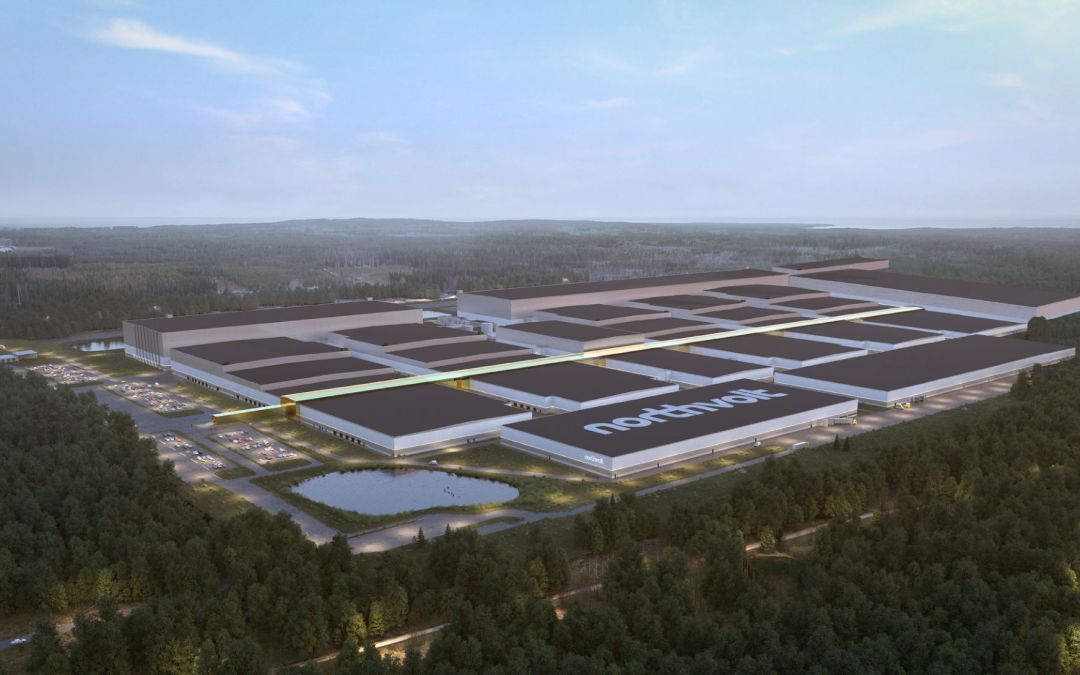
Despite recent setbacks such as the collapse of Sweden’s Northvolt, supporters of the EU’s proposal argue that without firm policy backing, Europe risks falling permanently behind in one of the most strategic industries of the electric age.
by Eve Stevens | Dec 19, 2025 | Autos, Business, Fleets |
News
Flying taxis may sound like a space-age fantasy, but they could be with us sooner than we think. China has recently approved its first flying taxis for commercial passenger service, granting EHang holdings and its subsidiary Heyi Aviation air operator certificates for short tourism routes.
As extensive piloting and some commercial operations scale in China, the future of flying taxis in the U.S and the U.K could also be just around the corner.
In Washington, the Trump administration has released a new framework designed to speed up the integration of flying taxis into U.S. airspace.
Transportation Secretary Sean Duffy positioned the decision as a strategic move to compete with the Chinese market. He said:
“America is not the only one that’s innovating. Some of our adversaries are chomping at our heels, or we’re chomping at their heels. The race is on, and that adversary, for the most part, is China.”
Among the U.S companies expanding their testing and network planning in major cities are Archer Aviation, Joby Aviation and Boeing-owned Wisk Aero.
U.S manufacturers have already begun to build out their flying taxi network in major U.S cities like Miami and Los Angeles, primarily envisioning they will be used in lieu of ultra-short haul flights or for short commutable routes and to link airports with metropolitan centres.
Across the Atlantic, UK manufacturer Vertical Aerospace believes flying taxis could be operating in London skies by 2028. Its Valo aircraft, unveiled recently, is a piloted, six-seat eVTOL designed for zero-emissions urban travel.
Capable of flying up to 150 mph with a range of around 100 miles, the company says Valo could cut journeys such as Canary Wharf to Heathrow Airport to about 12 minutes, compared with more than an hour by road.
Vertical Aerospace argues that while early services are likely to focus on premium airport transfers, costs could eventually fall to match those of traditional taxis as production scales and utilisation increases. The company plans to build 175 aircraft by 2030, although regulatory approval from the UK Civil Aviation Authority and the European Aviation Safety Authority remains a sticking point.
Whilst it may take time to win round the general public to these sci-fi contraptions if manufacturers, regulators and investors align, flying taxis may move from a promise into a practicality in recent years; U.S. firms are targeting initial operations overseas as early as 2026, while UK developers have set their sights on 2028.
by Eve Stevens | Dec 17, 2025 | Autos, Business |
News
In 2022, the European Union voted to impose a decisive vehicle emissions mandate banning the sale of all new petrol and diesel vehicles by 2035, including hybrids. The legislation reflected the EU’s united effort toward mass electrification and a clean energy transition.
Now, less than a decade out from its 2035 combustion engine ban, Europe is getting cold feet about its EV mandate, with Brussels voting yesterday to revise the goal.
Under the new revisions, 90% of new cars sold from 2035 must be zero-emission, as opposed to the original 100%. The remaining 10% of new cars sold after this date can be made up of petrol and diesel vehicles, as well as hybrids.
The move follows heavy lobbying from countries including Germany and Italy. Proponents argue that the revised figure will allow for greater flexibility for automakers and better reflect global market trends.
Many automakers, including Stellantis and Volkswagen, have been vocal about the need for greater flexibility, arguing that the current timeframe for the transition is unrealistic and out of touch with current market demand for electric vehicles. German automaker Volkswagen praised the European Commission’s new draft proposal, calling it “economically sound overall”.
Despite consistent growth in Europe, EV sales remain well behind the projected targets set out when the law was enshrined in 2023. According to the European Automobile Manufacturers’ Association (ACEA), market demand for electric vehicles is simply too low to meet the current 2035 targets and would result in “multi-billion euro” fines for manufacturers.
Opponents of the 90% figure have criticised Europe for undermining its progress towards electrification and critical clean energy goals. For many, the move represents not just an environmental setback but a commercially damaging decision that could disincentivise critical investment in EV infrastructure and production.
Chris Heron, Secretary-General of the trade association E-Mobility Europe, spoke out on the issue, saying:
“Hesitation or mixed signals risk undermining the investment certainty battery makers, manufacturers and grids need to scale.”
Automaker Volvo has criticised other OEMs for their slow approach to electrification, arguing that it has “built a complete EV portfolio in less than 10 years”. The company says it is fully prepared to go all-electric in line with the original 2035 targets, relying on hybrid vehicles only as a transitional measure.
While the current Labour government has reaffirmed its commitment to the UK’s 2035 vehicle emissions targets, it remains to be seen whether mounting pressure from automotive manufacturers will prompt a similar reassessment, or whether the UK will hold firm in the face of Europe’s ‘mixed signals’.
by Eve Stevens | Dec 1, 2025 | Autos, Business |
News
In the U.S., licensed female drivers outnumber licensed male drivers by about three million, and yet when it comes to safety features, the majority of vehicle testing is still carried out using outdated data and models designed to protect the average man.
According to government data, female drivers in the United States are 73% more likely to be severely injured in a car crash than their male counterparts, and are 17% more likely to die.
It seems that everything from seatbelt design to airbag placement has historically been determined through testing using dummies modelled on male physiques.
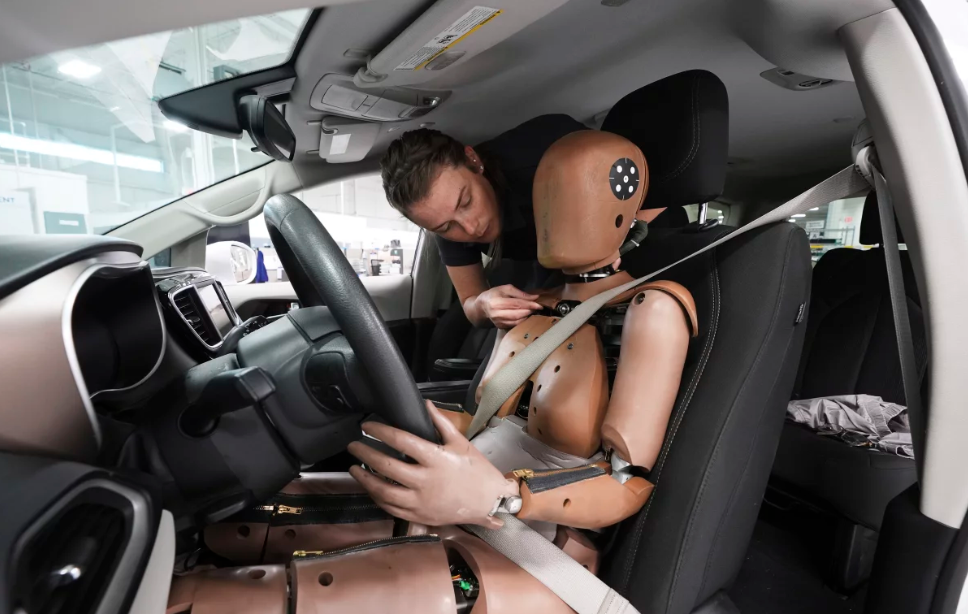
Taking into consideration the higher associated risks for female drivers, the federal Transportation Department has approved the use of a new female crash dummy, known as the THOR-05F.
The new model features more than 150 sensors and has been designed to more accurately reflect the average female body, with particular attention paid to the shape of the pelvis, breasts and legs.
Jonathan Morrison, administrator of the National Highway Traffic Safety Administration, spoke on the decision to endorse what the government has called a “more lifelike and durable” model. He said:
“Better understanding the unique ways in which women are impacted differently in crashes than men is essential to reducing traffic fatalities.”
Hitherto, the majority of safety testing in the U.S. has been carried out using the Hybrid III — a crash dummy based on the proportions of the average male in 1970: 5 feet 9 inches and 170 pounds.
In 2011, the National Highway Traffic Safety Administration updated its 5-star testing system, using a safety dummy based on female proportions; however, the majority of tests only required the female dummy to be used in the rear and passenger seats.
Despite endorsement from the U.S. government, whether the THOR-05F is adopted in National Highway Traffic Safety Administration car safety tests or Federal Motor Vehicle Safety Standards remains to be seen.
Legislation to be debated in Congress seeks to make its use compulsory, however a number of factors will dictate whether this becomes a reality. Firstly, some argue that the gap between male and female fatalities is already closing due to enhanced safety features in newer vehicles.
A representative from the not-for-profit group Insurance Institute for Highway Safety, Joe Young, opposed the decision, suggesting design improvements such as better crumple zones were largely closing the gender gap in newer cars. He said:
“While we’re continuously evaluating new tools that become available, we have no plans to adjust the dummies used in our consumer ratings crash tests at the moment.”
Whilst government endorsement is ostensibly a sign of increasingly inclusive automotive legislation, new advances in AI and virtual testing may offer more comprehensive and cheaper solutions to automotive safety concerns.
Virtual testing uses computer-generated humanoid models that allow accidents to be simulated digitally. These models can be augmented to reflect different sizes, muscle structures and bone densities, and can be run against an almost infinite number of real-life scenarios.
As advancements in AI are changing the world of automotive manufacturing, these new technologies could also have far-reaching impacts on automotive safety testing.
by Eve Stevens | Nov 24, 2025 | Business |
News
In an effort to end overreliance on imports of critical materials, the UK Government has unveiled a new strategy to invest in the domestic production of the resources essential to critical industries such as automotive.
The Critical Minerals Strategy sets out the ambition to produce 10% of the UK’s mineral needs domestically and 20% through recycling by 2035.
Many of these critical materials are vital to the automotive industry, including lithium, which is used to create the batteries that power electric vehicles (EVs), and copper, which is used in the manufacturing of vehicle braking systems.
The government has pledged to invest up to £50 million into critical mineral projects in an effort to turbocharge domestic production and processing. The move could help the UK accelerate its vision of a resilient supply chain, less vulnerable to disruption from global import tariffs and trade disputes.
Announced ahead of the Autumn Budget, the UK’s strategy follows in the footsteps of countries such as the U.S., which under the Trump administration pivoted towards the domestic production and processing of its own supplies of rare earth materials and magnets.
The government has positioned this effort to shore up its supply chains as part of a wider push to end overreliance on imports from other countries, most notably China, which currently accounts for 70% and 90% of rare earth mining and refining respectively.
In a statement issued last week, UK Prime Minister Keir Starmer said:
“Critical minerals are the backbone of modern life and our national security – powering everything from smartphones and fighter jets to electric vehicles and wind turbines.
For too long, Britain has been dependent on a handful of overseas suppliers, leaving our economy and national security exposed to global shocks.”
The new strategy takes into consideration the growing demand for critical rare-earth materials in line with the steady growth of the EV market in the UK. Accelerated by impending EV legislation, which will ban the sale of all new diesel and petrol vehicles by 2035, the demand for lithium alone is expected to rise by 1,100% by 2035.
Theoretically, the new strategy will not only deliver a significant number of jobs and boost the UK economy, but will also improve the UK’s resilience to global shocks such as natural disasters and war.
Keep up-to-date with the latest mobility news by subscribing to MOVEMNT’s free newsletter
by Eve Stevens | Nov 12, 2025 | Autos, Business |
News
In an effort to tackle the company’s reliance on Chinese markets, American automotive giant General Motors is urging its suppliers to remove Chinese parts from their supply chains.
Executives at the company have warned suppliers to rethink where they are sourcing raw materials and components used in the automotive manufacturing process, demanding that ties with China be dissolved as early as 2027.
The decision follows a recent escalation in U.S.–China trade disputes, which triggered a domino effect of tit-for-tat tariffs on Chinese and American goods.
The recent Nexperia crisis has also heightened the sense of urgency, exposing the vulnerability of global supply chains due to an overreliance on Chinese markets for vital components.
GM has emerged as one of the most proactive companies in cutting its ties with China and refocusing automotive production on the domestic sphere—a decision in line with the Trump administration’s push to stimulate national output and domestic manufacturing.
Among such projects is a recent partnership with a U.S.-based rare-earths company investing in a lithium mine in Nevada in 2024, which will specialise in the production of EV batteries.
CEO Mary Barra spoke at GM’s quarterly review in October, unveiling the company’s commitment to improving the robustness of its supply chains:
“We have been working now for a few years to have supply chain resiliency.”
Shilpan Amin, GM’s Global Purchasing Chief, echoed this sentiment:
“Resiliency is important—making sure you have more control over your supply chain, and you know exactly what is coming from where.”
The U.S. and China reached a resolution in late October, agreeing to loosen some restrictions and roll back tariffs on certain goods. Despite this apparent easing of tensions, many automakers are still rethinking their global supply chains, having witnessed the fragility of the market first-hand.
Keep up-to-date with the latest mobility news by subscribing to MOVEMNT’s free newsletter
by Eve Stevens | Nov 10, 2025 | Business |
News
China’s new trade deal with the U.S. is providing some much needed optimism for the auto industry after years of supply-chain turbulence. The agreement lowers tariffs and eases China’s export restrictions on rare-earth elements- critical materials for electric motors, sensors, and batteries- but major uncertainties remain.
The pact, signed in late October, maintains a 10 percent reciprocal tariff on Chinese imports and promises broader access to rare-earth minerals such as lithium, graphite, and dysprosium. Yet automakers are still waiting for clear guidance from U.S. Customs on when and how those rates take effect.
Robert Khachatryan, CEO of Freight Right Global Logistics, which handles customs brokerage for auto clients, spoke on the blatant uncertainties that still cloud this new development,
“Until Customs issues direction, no one knows whether the new tariff date applies to shipments arriving, departing, or filed after November 10. ”
China’s role as the world’s primary source of rare-earth materials makes this deal particularly significant for automakers. Earlier this year, Beijing imposed strict licensing rules for exports of several elements used in EV magnets and batteries, rattling global manufacturers. The new agreement appears to suspend those measures, but the White House and Chinese government have offered conflicting explanations about which restrictions are actually lifted.
“An affordable, steady stream of these minerals has to be found for the long-term survival of this industry,” said Sam Fiorani, vice president at AutoForecast Solutions.
Adding to the confusion, Europe is negotiating its own “general license” with China, raising questions about whether U.S. suppliers will gain preferential access. Analysts warn that inconsistent trade terms could create regional imbalances in the EV supply chain.
Despite the uncertainty, automakers see potential relief ahead. If exports resume smoothly, production bottlenecks for electric drivetrains and advanced materials could ease heading into 2026. Still, industry leaders are reluctant to celebrate until the fine print becomes policy.
Keep up-to-date with the latest mobility news by subscribing to MOVEMNT’s free newsletter
by Eve Stevens | Nov 7, 2025 | Business |
News
Elon Musk took to the stage on Thursday at Tesla’s annual meeting to raucous applause and chants of “Elon!” from shareholders gathered at the company’s Texas gigafactory. Behind him, lit in neon-purple lights, the words “Sustainable Abundance” glowed in a graffiti scrawl. Taking to the stage, Musk danced alongside the humanoid robots- named Optimus- that he is betting on in Tesla’s next phase of expansion.
What could have been mistaken for a rock concert or a scene from a dystopian film was, in fact, Tesla’s annual meeting, where shareholders voted to award Musk a $1 trillion pay package -a deal that could make the world’s already richest man, a trillionaire.
The pay deal, approved by 75% of shareholders, is the largest payout in history. Despite Musk’s fist-pumping jubilation at Thursday’s meeting, the award is far from a cash-in-hand deal. To receive the full amount, Musk must meet a series of ambitious developmental milestones, including sextupling Tesla’s valuation to $8.5 trillion, increasing earnings 24-fold to $400 billion, and selling millions of robots and autonomous-driving subscriptions. Until these goals are achieved, Musk will receive no salary or bonus.
The motion passed despite opposition from governance advisers: both Institutional Shareholder Services and Glass Lewis urged investors to vote against the proposal.
During his acceptance speech, Musk outlined his bold vision for Tesla’s next chapter, describing a world governed by AI and populated by humanoid robots. Speaking to the crowd of selected shareholders, he said:
“It’s going to be the biggest product of all time by far. Optimus is kind of like an infinite money glitch,” he added. “I guess what I’m saying is, hang on to your Tesla stock.”
The historic pay package is not without its opponents. New York State Comptroller Thomas DiNapoli, who led a campaign against the proposal, urged voters to consider the risks of granting a single individual such unprecedented financial power.
“This is pay for unchecked power, not pay for performance,” DiNapoli said. “The board has rewarded distraction and entrenched a CEO who answers to no one.”
Among other opponents was Norway’s oil fund- a top-10 investor with a 1.1% stake- who drew attention to the “key person risk” associated with such a massive payout.
Tesla’s annual meeting concluded a rocky year for the company, marked by a 37% fall in third-quarter profits, billions in potential lost revenue following the end of government EV incentives, and a host of political controversies stemming largely from Musk’s involvement with the Trump administration.
Musk countered the skepticism with grandiose promises about the future of humanoid robots, telling the enraptured audience that this ‘second workforce’ could advance human progress and “eliminate poverty.”
It remains to be seen whether Musk can deliver on the ambitious growth targets tied to his pay package. However, if one thing is clear from his landslide victory, it’s that when it comes to Tesla, Elon Musk is still very much in the driver’s seat.
Keep up-to-date with the latest mobility news by subscribing to MOVEMNT’s free newsletter
by Eve Stevens | Nov 6, 2025 | Autos, Business |
News
American automotive and tech company, Lucid Motors, is accelerating its move into the autonomous vehicle market with its high-tech Gravity crossover, forming a powerful alliance with Nuro, Nvidia, and Uber to challenge leaders such as Tesla and Waymo.
With a starting price of around $96,550, the three-row Gravity may harbour a hefty price tag, but its 450-mile range, ultrafast charging, and redundant safety systems make it an ideal candidate for robotaxi and driverless applications. As part of a six-year deal, Lucid will supply 20,000 vehicles to Uber, while Nuro licenses its autonomous Nuro Driver software and hardware to power the fleet.
Speaking on the potential for creating a commercially viable fleet, Nuro COO Andrew Chapin said
“The economics of a robotaxi program go beyond the vehicle’s purchase price. Operating costs, hardware, and utilisation all matter — and the Gravity has a favourable profile.”
For Uber, Lucid’s production ramp aligns perfectly with its robotaxi rollout in the San Francisco Bay Area. Nvidia adds the AI capability, enabling Lucid’s vehicles to evolve into software-defined, AI-powered machines. “Cars are becoming supercomputers on wheels,” said Nvidia CEO Jensen Huang.
While Lucid remains a newcomer to autonomous technology, it is positioning itself as a serious contender in the race to autonomous deployment. Its Air sedan already features hands-free driver assistance, and a more affordable crossover is planned for 2026, priced around $50,000.
By combining luxury EV design with advanced AI and automation, Lucid Motors is redefining what’s possible in the future of intelligent mobility, taking a bold and collaborative step toward an era of seamless, driverless transport.
Keep up-to-date with the latest mobility news by subscribing to MOVEMNT’s free newsletter
by Eve Stevens | Nov 5, 2025 | Autos, Business |
News
German carmaker Volkswagen has announced plans to develop its first in-house chip for use in its next generation of smart driving vehicles for the Chinese market.
VW will develop the AI chip as part of a joint venture between its software unit, Cariad, and Horizon Robotics, its Chinese smart driving software partner.
The decision marks VW’s latest effort to keep up with Chinese competition and consolidate its foothold in the world’s largest automotive market. Since 2022, Volkswagen has invested more than $4 billion in an attempt to shore up its Chinese business. Analysts have recognised VW as one of the few foreign automakers to demonstrate a serious intent to win back Chinese consumers.
In light of this, the German group also paid $700 million for a 5% stake in Chinese electric vehicle manufacturer XPeng. The collaboration granted VW a non-voting observer position on XPeng’s board and the opportunity to jointly develop a series of electric vehicles.
VW’s new chip will be used to process data from cameras and sensors to enhance the advanced driving capabilities of its next generation of EVs. These models will feature a single-chip computing power of 500 to 700 tera operations per second (TOPS).
The chips are commonly used in connected devices such as mobile phones and are critical in the production of advanced driver assistance and autonomous driving systems.
Volkswagen Chief Executive Oliver Blume justified the startegic decision to begin development in China, saying,
“By designing and developing the system-on-chip (SoC) here in China, we are taking control of a key technology that will define the future of intelligent driving.”
The technology is expected to become available within the next three to five years and will cost over $200 million to develop.
Keep up-to-date with the latest mobility news by subscribing to MOVEMNT’s free newsletter
by Eve Stevens | Nov 4, 2025 | Autos, Business, Fleets |
News
Waymo, owned by Google’s parent company, Alphabet, is consolidating a foothold in the Midwest. This week, the company announced it will be moving to the Motor City, bringing its self-driving robotaxi service to Detroit.
Detroit will be the sixth U.S. city to receive Waymo’s driverless service, after San Francisco, Los Angeles, Phoenix, Atlanta, and Austin.
On November 3, Waymo announced its entry into other U.S. locations, including San Diego and Las Vegas. This news follows last month’s announcement that Waymo is expanding into Europe, with plans to launch its ride-hailing robotaxis in London as early as 2026.
While the cars will begin with manual safety drivers, they will progress into fully autonomous ride-hailing vehicles after an initial trial period.
The company has already begun testing its vehicles in the cold, icy conditions of Michigan, expanding its capabilities in unpredictable, snowy weather. Having carried out testing in Michigan’s Upper Peninsula, Waymo is confident its robotaxis will be a match for the harsh winters of Detroit.
Waymo’s latest expansion has received praise from many Michiganders, who have applauded the effort for providing accessible transportation to members of the community who may otherwise be excluded from driving. One such advocate is Andrea Schotthoefer, president of the Epilepsy Foundation of Michigan, who said in a news release:
“For many people living with epilepsy, transportation is a significant barrier,” Schotthoefer said. “Waymo’s efforts show what’s possible and inspire collective action toward a future where transportation barriers no longer stand in the way of opportunity and inclusion.”
Waymo’s autonomous ride-hailing service has also received support from other groups, such as Mothers Against Drunk Driving, who have lauded the service as an accessible deterrent against dangerous drunk driving. Regional Director Alex Otte said:
“While we know that the decision to drive impaired comes down to personal responsibility, MADD is supportive of safe alternatives like planning ahead, rideshare, and non-drinking designated drivers, and we are excited for Waymo’s introduction to the Detroit community.”
Despite initial praise, Waymo’s expansion does not come without controversy. Waymo has hit headlines recently over concerns regarding the safety of its vehicles; this autumn, an investigation was launched into around 2,000 Waymo taxis after one reportedly drove around a stationary school bus.
The investigation follows a similar inquiry earlier this year by the National Highway Traffic Safety Administration, which saw 1,200 Waymo robotaxis recalled over concerns about their ability to perceive hazards under low-visibility conditions.
Waymo has also been in the news this week after one of its driverless robotaxis collided with and killed a well-loved neighbourhood cat in the Mission District of San Francisco.
Keep up-to-date with the latest mobility news by subscribing to MOVEMNT’s free newsletter
by Eve Stevens | Nov 3, 2025 | Autos, Business |
News
In a move that could ease mounting pressure on the global auto supply chain, China has announced plans to grant export exemptions for certain semiconductor products made by Nexperia, the Dutch chip manufacturer caught in the crossfire of recent trade tensions.
The decision, confirmed by China’s Ministry of Commerce on November 1, follows weeks of disruption in the automotive sector. The initial export ban forced Honda Motor Co. to temporarily halt production in North America and prompted warnings from other automakers about looming component shortages.
“We encourage enterprises encountering real operational difficulties to promptly reach out to the Ministry of Commerce or local trade authorities,” the ministry said in a statement posted online.
The announcement suggests a potential thaw in strained trade relations and offers cautious optimism for automakers that depend on Nexperia’s chips, which are used in a wide range of vehicle systems, from engine control units to infotainment hardware.
Global ripples and the impact of trade tensions
Nexperia, headquartered in Nijmegen, Netherlands, was acquired in 2019 by Wingtech Technology, a Chinese electronics company. The firm maintains major operations across Europe, Asia, and the United State but its testing and packaging facilities in China play a critical role in its supply chain.
In late September, the Dutch government seized control of Nexperia’s assets, citing national security concerns and the need to safeguard semiconductor availability for European industries. Beijing swiftly retaliated on October 4 with an export ban on Nexperia’s Chinese-made chips, triggering widespread supply chain turbulence.
The stand-off exposed just how intertwined the global automotive and technology sectors have become. Even a single policy decision can ripple through multiple continents, halting production lines and upending logistics networks that rely on precise coordination.
Trade diplomacy in motion
Media reports suggest that discussions between Washington and Beijing helped pave the way for China’s partial rollback of the export ban. Sources familiar with the talks indicated that an agreement reached during the recent Trump-Xi summit may have influenced Beijing’s decision to ease restrictions.
While the Ministry of Commerce did not provide a specific timeline for when export exemptions will take effect, officials emphasized that eligibility will be determined on a case-by-case basis, considering each company’s operational circumstances.
“We will comprehensively assess the situation of affected enterprises and approve exports for those meeting the required conditions,” the ministry added.
A lesson in supply chain fragility
The Nexperia episode underscores how geopolitical decisions can instantly disrupt automotive production. As manufacturers push deeper into electrification and digitalization, the demand for advanced semiconductors continues to climb, making supply chain stability more vital than ever.
Industry analysts note that this latest easing measure could help restore some confidence among global automakers. Still, it also serves as a reminder that supply chain diversification and regional chip production are becoming strategic imperatives for transportation manufacturers worldwide.
by Eve Stevens | Nov 3, 2025 | Autos, Business |
News
While automakers such as Volkswagen and Stellantis battle it out in the autonomous ride-hail space, American multinational General Motors (GM) has shifted its focus to developing autonomous technology for personal vehicles.
GM introduced its Super Cruise technology in 2017 as the world’s first truly hands-free driving assistance system. Since then, it has been continuously improved and has now been expanded to operate on more than 20 models from Chevrolet, Cadillac, Buick, and GMC.
The platform has garnered considerable success, with the online subscription service picking up hundreds of thousands of subscribers once the trial period ends.
“General Motors believes driving should be smarter, more convenient, and accessible to everyone. As we advance hands-free driving, our vision is to make every journey more comfortable and less stressful,” the company stated.
Like most other autonomous systems in the U.S., Super Cruise currently operates at a Level 2 autonomous capacity. GM has announced plans to deliver Level 3, or “eyes-off,” autonomous capabilities by 2028, where the driver will no longer need to continuously watch the road.
This pivot toward personally owned autonomous vehicles comes under the leadership of its new Chief Product Officer and driverless tech pioneer Sterling Anderson, the brains behind the driverless vehicle start-up Aurora.
“Autonomy will make our roads safer. It will be the cornerstone of GM’s modern portfolio going forward,” Anderson said.
While GM previously invested $10 billion into developing autonomous robotaxis over the last decade, these plans were scrapped following a devastating accident in 2023. This controversy, paired with the notoriously slim profit margins and high overheads associated with autonomous fleet management, has led GM to make a decisive switch toward personally owned vehicles.
Mary Barra, CEO of GM, echoed this sentiment in a recent statement, saying,
“When you look at owning a fleet and all the other aspects that go into running a robotaxi business, that’s not our core business today. We are focused on personal autonomy.”
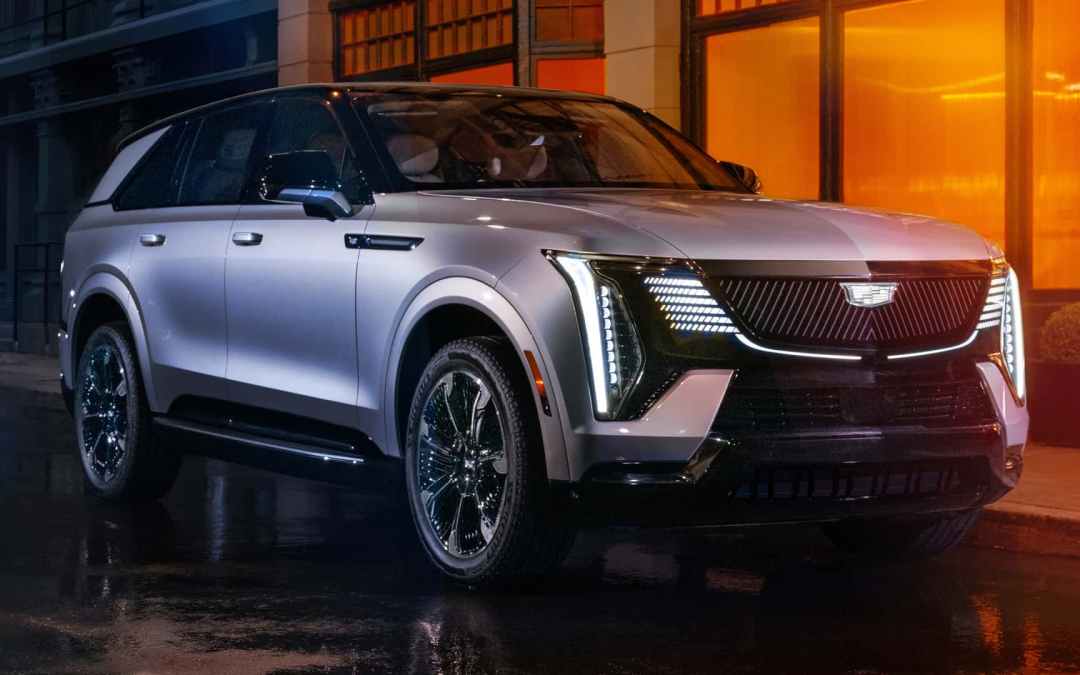
GM plans to roll out a new semi-autonomous system in the Cadillac Escalade IQ, an all-electric SUV that will be equipped with turquoise lights on the dashboard and side mirrors to alert pedestrians when Level 3 autonomous capabilities are deployed.
The Escalade IQ diverges from GM’s current autonomous models through the addition of LIDAR, or light-based radar, a considerable technological leap from the existing camera, radar, and GPS-based systems used.
With the likes of Stellantis, Tesla, and Volkswagen dominating the autonomous ride-hail space, it remains to be seen whether GM’s strategic shift toward personal vehicles will pay off. However, early indicators of high subscription numbers and financial success point to a highly commercial strategy.
At a recent earnings briefing, Barra said,
“We’re enjoying approximately 70 percent margins on the Super Cruise business,” noting that Super Cruise customers have nearly doubled year-on-year to more than 500,000″.
by Eve Stevens | Oct 31, 2025 | Autos, Business |
News
China’s electric vehicle giant BYD is hitting a few speed bumps after years of seemingly unstoppable growth. The company, once the shining star of the EV boom and a formidable rival to Tesla, reported a sharp 33% drop in third-quarter profits, underlining the pressure to accelerate its push into global markets.
The Shenzhen-based automaker posted net income of 7.8 billion yuan ($1.1 billion) between July and September, down from 11.6 billion yuan a year earlier and below analyst forecasts. That said, the figure still marked a small rebound from the previous quarter. Revenue also slipped 3%, coming in at 195 billion yuan, another sign that the domestic market may be cooling off faster than expected.
BYD’s shares have tumbled more than 30% since their May peak, when optimism ran high following advances in fast-charging and self-driving technology. But Beijing’s campaign to curb aggressive price cuts and payment tactics has taken a toll, squeezing margins and dampening demand at home.
Despite the slowdown, BYD continues to dominate China’s EV scene, accounting for roughly 30% of new electric car sales so far this year. The company’s real growth story, however, may now lie overseas. It’s building factories in countries from Brazil to Hungary and even commissioning a fleet of eight cargo ships dedicated to exporting its cars. So far this year, exports have jumped 14% to more than 700,000 units, with BYD on track to ship up to a million vehicles abroad by the end of the year.
There’s also excitement brewing around BYD’s next wave of innovation. The automaker is reportedly close to launching a model powered by semi-solid-state batteries, a technology that promises greater range and efficiency. It’s also experimenting with “gigacasting”- a manufacturing method borrowed from Tesla that stamps massive sections of a car’s underbody in one go, reducing complexity and weight.
Looking ahead, BYD plans a major design refresh in 2026 to move beyond its long-standing “dragon face” aesthetic. With China now the world’s largest car exporter, BYD’s global footprint is likely to grow even faster. The next chapter in its journey may be less about outpacing local rivals, and more about winning hearts and roads abroad.
by Eve Stevens | Oct 31, 2025 | Business |
By unifying fragmented Quality data, Pull Systems helps engineering teams act before failures become headlines.
When manufacturers and suppliers talk about quality control, they typically focus on individual data sets, such as warranty claims and diagnostic checks. However, according to Henry Furman, Founder and Chief Product Officer of Pull Systems, that fragmentation is a multi-trillion dollar problem that the industry can no longer afford to ignore.
“Iteration speed is the reason China is winning right now. They release a new-and-improved vehicle every 18 months, compared to seven years for an American or a German OEM. It’s all made possible by a very strong data model that isn’t siloed by department.”
Pull Systems is building AI platforms to deliver even faster insight generation for quality teams. By unifying telematics, diagnostic, production, and service data into proprietary knowledge graphs, Pull Systems helps Quality, Aftersales and Service teams identify root causes, failure indicators, and product improvements in minutes instead of months. “Major European and American automotive manufacturers will be saving thousands of hours this year by using our products,” Furman told MOVEment.net at Move America.
From a business and operations perspective, the speed at which Pull Systems’ customers can identify these insights is what moves the needle. “It’s all about getting the right information to the right place at the right time,” says Furman. “With quality incidents, every second matters. Our partners count on our products to deliver insights that can help them respond effectively when they’re in the hot seat. That means fewer repairs, fewer warranty claims and happier customers. At the end of the day that’s what drives seven- and eight-figure value to the bottom line.”
But Pull Systems is not just AI platforms and software products, they’re also firm believers in the forward-deployed engineering model. “We see exponential value creation when we work alongside our partners,” Furman explained, “this problem space requires deep human and technical integration, so being on-site is a must.”
Pull Systems’ cutting edge AI tools and real-world experience with elite manufacturing teams make production-scale integrations easier and more secure than ever before.
Pull Systems earned its credibility in automotive, partnering with OEMs on some of the industry’s most complex product launches. Today, that same embedded model is being applied across the broader industrial landscape—from heavy equipment and trucking to energy, defense, construction, mining, aerospace and agriculture, and next-generation mobility—where reliability defines performance. The goal remains constant: better machines, built faster.
As manufacturers face rising cost and reliability demands, Pull Systems is working alongside engineering and quality teams to close the gap between insight and action. For those exploring how to improve performance without adding cost, the team welcomes a conversation.
Contact Pull Systems here.
by Eve Stevens | Oct 29, 2025 | Autos, Business |
News
Japanese automaker Toyota Motor Corp. has outlined a plan to invest $10 billion in U.S. auto plants.
On Tuesday, the U.S. government released a document detailing an investment framework between Japan and the United States.
The factsheet contained plans for several major investment projects with a total value of up to $400 billion, including a $10 billion pledge to build auto plants “all over” the United States.
The statement said:
“Toyota plans to export its U.S.-made vehicles to Japan and open its distribution platform in Japan to U.S. automakers, as a result of Japan’s commitment to accept for sale in Japan U.S.-manufactured and U.S. safety-certified vehicles without additional testing.”
The decision follows talks between Prime Minister Sanae Takaichi and U.S. President Donald Trump in Tokyo on Tuesday.
The investment framework represents the U.S.’s latest effort to reduce its trade deficit.
Japan’s decision to expand opportunities for American exports has been praised by analysts and by Japan’s Ministry of Economy, Trade and Industry, which celebrated it as a pragmatic step to quell trade tensions between the two nations.
During his trip to Asia, Donald Trump urged American troops to buy cars from the Japanese automaker – a radical walk-back of his “America First” stance.
According to the Japan Automobile Manufacturers Association, Japan sold over 1.37 million vehicles to the U.S. last year alone, making automobiles Japan’s largest export to the U.S. In contrast, American models have been harder to sell; Japan imported fewer than 17,000 American cars last year, according to the Japan Automobile Importers Association.
This lack of uptake could be due to several factors, including the larger size of American vehicles, which makes them less suitable for Japan’s narrower roads, and the fact that American cars have left-hand steering.
Toyota’s investment in U.S. auto plants marks a closer alliance between the two nations’ automotive industries. Despite her short time in office, Japanese Prime Minister Sanae Takaichi has demonstrated a strong commitment to bolstering trade relations between the U.S. and Japan.

by Eve Stevens | Oct 23, 2025 | Business, Energy & Charging |
News
Dutch chipmaker Nexperia has warned Japanese automotive customers that it may no longer be able to guarantee supply, heightening fears of new disruptions across the global auto industry.
The Japan Automobile Manufacturers Association (JAMA) confirmed that several Japanese parts suppliers received notifications from the company warning them of the disruption.
JAMA released a statement in response to the episode, saying,
“These semiconductors are essential for electronic control units and other key vehicle systems. This incident could have a serious impact on global production, and we hope for a swift and practical resolution.”
Nexperia, headquartered in Nijmegen in the Netherlands, has become a flashpoint in escalating trade tensions between the Netherlands, the United States, and China. Earlier this month, the Dutch government seized control of the company- previously owned by Chinese parent Wingtech Technology Co.- to safeguard domestic semiconductor supplies.
Beijing responded by imposing new export controls on Nexperia’s China operations, insisting that its subsidiary continues to operate “in an orderly manner” and in compliance with Chinese law. The standoff has effectively divided the company’s European and Chinese units and placed automakers in a precarious position.
Automakers worldwide are assessing their resilience to the disruption to the supply chain. Volkswagen has formed a task force to map vulnerabilities, while Toyota and Honda are monitoring developments closely. Mitsubishi Electric said its reliance on Nexperia is limited and that it is preparing to switch to alternative components if needed.
The crisis comes amid a broader landscape of trade strains. China has threatened tighter export controls on rare earth minerals, vital for electric vehicle motors and batteries. The European Union’s trade chief, Maros Šefčovič, confirmed that Chinese officials will travel to Brussels soon to discuss these restrictions.
Financial analysts warn that the dispute could affect automakers’ earnings outlooks as they prepare to release quarterly results. “If political tensions drag on, the impact could spread across the sector,” said Citi analyst Arifumi Yoshida.
This disruption underscores the fragility of global supply chains and how deeply geopolitical conflicts now shape the economics of car manufacturing.
by Eve Stevens | Oct 23, 2025 | Autos, Business |
News
On Wednesday, Tesla announced that its profits had fallen by 37%, to $1.4 billion, compared with the previous year.
Despite the drop in profits, Tesla sold more cars between July and September than it did in the third quarter of the previous year. Many analysts have attributed this surge in sales to the reversal of the EV tax credit under the Trump administration, which saw many buyers rushing to buy EVs while the incentives were still in effect.
Tesla’s profit downturn is the result of several contributing factors, notably the its recent decision to cut the price of many of its models in an attempt to boost sales.
The company, headed by Elon Musk, reduced the price of its Model 3 sedan and Model Y sport utility vehicles and rolled out low-interest loans for many of its popular models.
Many buyers took advantage of this discount, which saw many Tesla vehicles retailing at $5,000 less than the previous month.
Another key reason for Tesla’s sliding profits is the impact of Trump’s tariffs. Whilst Tesla manufactures all of its vehicles domestically, in California and Texas, rising costs of imported raw materials have dealt a blow to the company’s profit margins.
The ongoing Trade disputes between China and the USA have seen hefty tariffs placed on rare-earth materials that are used in the manufacturing process of electric vehicle batteries and other vital components. Tariffs have wreaked havoc on the global supply chain, driving up manufacturing costs for many automakers.
Tesla issued a statement responding to shareholder anxieties saying,
“It is difficult to measure the impacts of shifting global trade and fiscal policies on the automotive and energy supply chains, our cost structure and demand for durable goods and related services.”
Higher overheads have not been the only challenge for Tesla; the company have also lost out on a major source of revenue through the reversal of the clean air credit scheme, which allowed companies to purchase and sell carbon credits. In 2024, the company made $2.76 billion from selling clean air credits alone. With Trump’s rollback of climate policy, Tesla has lost a significant stream of income.
Tesla will hold its annual meeting on Nov. 6.
by Eve Stevens | Oct 22, 2025 | Autos, Business |
Feature
The luxury car market has long been associated with speed, extravagance, and above all, the ‘roar’ of combustion engines. Dominated by automakers with legacies in high-end manufacturing, it is an area of the industry that has historically been slow to embrace innovation, favouring tradition and brand integrity over pioneering technological advancement.
Now, in 2025, with many automakers embracing the transition to electric, the high-end car market is almost universally struggling to keep pace.
While Tesla capitalised on a niche of environmentally conscious luxury buyers, many high-end nameplates have struggled to strike the right chord with a consumer base that still prefers the roaring power of the internal combustion engine over the environmental bragging rights of an electric equivalent.
Car enthusiast Graham Royle, owner of several supercars including a Lamborghini, a Mclaren and a Ferrari, captured the sentiment of many high-end car drivers saying,
“There is no pleasure from a whining electric motor compared to a throbbing V12 or V8 [engines] with gorgeous exhaust notes. Unless Ferrari keeps petrol in their line-up, they will lose my business.”
For many, it seems the link between supercars and petrol is a non-negotiable.
Responding to fluctuations in the global EV market
Back in 2023, the global EV market witnessed a period of rapid growth as investors scrambled to fund the next big mobility trend. But after weathering the initial EV hype cycle, enthusiasm for electrification has waned.
The reversal of the EV tax credit in the U.S., combined with disruption to global battery supply chains caused by trade disputes, has plunged the EV market into uncertainty. While global appetite for electric vehicles remains relatively stable, the explosive growth once projected has not materialised. It’s clear that the road to electrification may not be as smooth as once hoped.
Now, in 2025, the EV market is a different story. For many automakers, the push to electrify has eroded profit margins and forced a partial retreat to internal combustion and hybrid models. Porsche, for instance, has repeatedly delayed several electric releases.
Whilst some high-end automakers steam ahead with an electric transition, others have been forced to roll back on the ambitious and idealistic goals laid out during the EV “golden age”.
Porsche U-turns on ambitious EV strategy
Porsche has rolled back its ambitious EV policy following heavy losses from an overly zealous electrification strategy, which led to a profit margin forecast of only 2%, down from the previously guided 5% to 7% for 2025.
Now, under new leadership, Porsche is scaling back its EV plans, scrapping the development of a battery-powered flagship SUV positioned above the Cayenne.

Michael Leiters has been appointed as the new CEO of Porsche
The company has appointed Michael Leiters, a seasoned engineer with experience at McLaren and Ferrari, as its next CEO. Leiters, who takes over in January from Oliver Blume, has long advocated for hybrid models and was instrumental in the success of the Cayenne SUV during his earlier tenure at Porsche.
To restore profitability and brand confidence, Leiters is expected to focus on hybrid and ICE models to strengthen Porsche’s line-up. While the company won’t abandon electrification altogether, continuing to promote models like the Taycan and Macan Electric, its new EV strategy is markedly more conservative than previously imagined.
Ferrari treads cautiously into an electric future
For iconic Italian luxury automaker Ferrari, the path to full electrification has faced similar roadblocks. The company may have pledged three years ago that fully electric vehicles would make up 40% of its line up by 2030, however they have since rolled back on this commitment, promising a revised figure of 20%.
The new Ferrari Ellectrica will debut in 2026
Despite this apparent U-turn, Ferrari isn’t shelving its electric ambitions. The company has announced plans to deliver its first all-electric model, the Ferrari Elettrica, as early as this spring.
Although the vehicle has yet to be unveiled, rumours suggest it will take the form of an SUV-style model rather than a traditional sports car- pointing to a lower price tag and higher volume strategy.
Chief marketing officer Enrico Galliera, praised the new model for maintaining Ferrari’s unique identity:
“This is not an electric car developed by Ferrari. This is a Ferrari powered with an electric power train.”
Ferrari’s comparatively strident strategy follows strong profit margins in recent years. Even after its shares plummeted a record 15% in New York last week, the company remains a front-runner in the luxury car sector, with order books filled through 2026- demonstrating that, despite market turbulence, demand continues to outstrip supply.
Lamborghini reconsiders its EV future
Another luxury carmaker putting its electric strategy into reverse is Italian automaker, Lamborghini, who announced their intention to use internal combustion engines in their vehicles for at least the next ten years.
Chairman and CEO Stephan Winkelmann cited customer sentiment and market demand as reason for rethinking the company’s EV strategy and refocusing on hybrid powertrains.
Winkelmann maintained that its loyal customer base still wanted “the sound and the emotion” of an internal combustion engine and were not ready for a fully-electric transition.
Lamborghini is yet to decide whether the Lanzador will be an electric vehicle or a hybrid
When Lamborghini first announced its new model, the Lanzador, back in August 2023, the grand tourer was marketed as the first fully-electric vehicle under the Lamborghini brand.
However, by December 2024, Winkelmann had revised the plan, stating that the car’s 2029 launch would depend on pervading trends.
Now in 2025, as demand for EVs falters, Lamborghini has walked back its initial commitment, saying it has yet to decide whether the Lanzador will be electric or a plug-in hybrid.
Speaking with Autocar, Winkelmann said,
“With Lanzador, we need to decide whether it will be a PHEV or electric in the next few weeks.”
Responding to environmental criticism, Lamborghini has argued that its limited production volumes make its environmental footprint comparatively small in the face of the multibillion-dollar automotive industry.
“We are selling 10,000 cars in a world that is producing 80 million cars a year, so our impact in terms of CO2 emissions is not that important”.
What’s next for the luxury car market?
Europe and the UK have announced their intentions to ban the sale of new petrol and diesel vehicles by 2035, including plug-in hybrids. The decision has sparked backlash in the EU, where lobbyists in the manufacturing sector have pushed for a relaxation of the deadline to reflect current geopolitical trends.
Some automakers will be exempt under the “low-volume” exclusion, allowing manufacturers that register fewer than 2,500 vehicles per year to continue producing petrol and diesel cars after the ban takes effect.
For brands like Lamborghini, which operate on a scarcity-based business model, this loophole provides at least another decade of combustion-engine production. For larger automakers, however, the looming regulatory deadlines will force an accelerated transition, whether they’re ready or not.
Certainly, most luxury automakers now accept that an electric future may be commercially divisive but remains, ultimately, inevitable. Whilst the current market may have slowed the charge to electrify, luxury automakers must race to adapt or risk losing relevance in an increasingly electric world.
by Eve Stevens | Oct 16, 2025 | Autos, Business |
News
Stellantis, the automotive multinational behind Jeep and Fiat, has announced a $13 billion investment across four U.S. states – the company’s largest investment in more than 100 years of U.S. operations.
The new venture is set to create 5,000 new jobs in Ohio, Michigan, Indiana, and Illinois, reopening facilities such as the Belvidere Assembly Plant in Illinois, which is scheduled to recommence production in 2027.
$130 million of the $13 billion investment will go toward the Detroit Assembly Plant, the Michigan-based facility that will produce the next-generation Dodge Durango in 2029.
Many Michiganders have expressed enthusiasm for the project which is centring large-scale production in the Midwest. Among them is Michigan Governor Gretchen Whitmer, who said of Stellantis’ project:
“I am grateful to Stellantis for betting on Michigan once again, building on our work to bring more manufacturing back home. Over the last few years, Stellantis has expanded in Michigan, and we will continue working with them to make it easier to manufacture in Michigan.”
She added:
“We don’t care what you drive—gas, diesel, hybrid, or electric—as long as it’s made in Michigan. Together, let’s keep bringing manufacturing home, growing the middle class, and putting the world on wheels.”
Antonio Filosa, Stellantis CEO and North America COO, pledged his commitment to U.S. production, saying:
“This investment in the U.S. – the single largest in the company’s history – will drive our growth, strengthen our manufacturing footprint, and bring more American jobs to the states we call home.”
The announcement has sparked controversy among Canadian officials, who have raised concerns that the decision will compromise Stellantis’ production in Canada. Under the new plan, production of the Jeep Compass will move from Brampton, Ontario, to Illinois.
The move is likely influenced by trade tensions that began during Donald Trump’s administration, which imposed hefty tariffs on Canadian goods.
Want to keep seeing which stories are sparking the mobility community? Sign up to our MOVEMNT newsletter for weekly updates.