Author: Eve Stevens

MOVE 2026 WIM Awards: Meet the women forging the future of automotive and tech

After a record number of nominees, voting is now open to crown the winner of MOVE 2026’s WIM Awards. The winner of this year’s award will be announced at MOVE 2026, June 17 at London’s ExCeL.

We are shouting out a handful of the inspiring female voices who are forging the future of automotive and tech, through their hard work, creativity and determination.

Read More

Spain becomes key testbed for Stellantis and Leapmotor’s expanded alliance

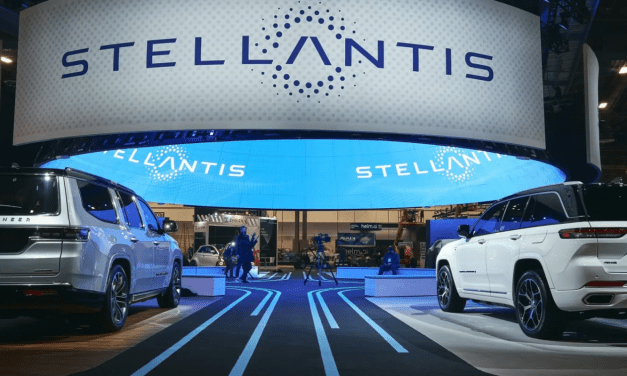
Stellantis and Chinese electric vehicle brand Leapmotor are preparing to deepen their allegiance as both companies angle to expand their electric vehicle footprint across Europe. 

The partnership began in 2023 when Stellantis purchased an approximately 21% stake in Leapmotor and launched a joint venture focused on selling and manufacturing Leapmotor vehicles outside of China. The companies now say they are exploring new ways to increase production efficiency while reducing manufacturing costs. 

Read More

Speakers in the news: Meet the companies making headlines ahead of MOVE 2026

The world’s #1 auto tech event is returning to London, June 17–18. MOVE focuses on the technology that sits behind the automotive sector, specialising in autonomous, electric and software-defined mobility. MOVE is all about showcasing the leading agents of innovation and progress, from automotive OEMs, fleets, CPOs, transport operators, investors, start-ups and battery manufacturers, across 15 conference stages. Existing in a fast-paced and dynamic sector, industry change is an expectation rather than an anomaly when it comes to automotive and tech. To help you keep abreast of the latest developments, we have put together a shortlist of current news updates from some of the biggest disruptors speaking at the event this year.

Read More

WeRide and Lenovo announce expanded partnership to deliver 200,000 autonomous vehicles by 2031

Announced at Auto China 2026, Chinese tech firms WeRide and Lenovo have revealed an expanded partnership to develop 200,000 autonomous vehicles over the next five years. Of these 200,000 vehicles, many will be robotaxis operating at Level 4 autonomous capability, or “driver-out.”

Based in the Chinese city of Guangzhou, WeRide has already been a leader in China’s autonomous push, with established R&D and pilot projects in 40 cities across 12 countries globally.

Read More

Lotus joins luxury automakers pivoting to hybrids, forecasting “long-term trend”

The luxury automotive segment has long struggled to decouple itself from petrol. In 2026 alone, several major automakers walked back their EV targets or revised their electrification timelines: Lamborghini axed plans for its fully electric model, Lanzador, whilst Rolls-Royce pledged to continue selling petrol vehicles beyond 2030.

In an interview with the Financial Times, chief executive of Lotus Group, Qingfeng Feng, said that EVs would account for under half of their entire lineup—the rest coming from hybrids. This is a much more conservative estimate than previously predicted by the company, now owned by Chinese conglomerate Geely, which had banked on a lineup of 90% EV sales by 2028.

Read More

Tesla grapples with self-driving shortfall, promising “micro factory” upgrade plan

Tesla has found itself in hot water again as it recalibrates its long-promised path to full autonomy. The electric vehicle giant recently acknowledged that millions of its older cars, equipped with what it calls Hardware 3, won’t be able to achieve fully self-driving capability, despite earlier assurances. 

The statement marks a notable shift for Tesla, which had long maintained that its earlier vehicles already contained the necessary cameras and computing power pending the inevitable software advancements. 

Read More

Rivian begins production of first mass-market EV, the R2

Rivian Motors has officially begun customer production of the long-awaited R2, its mid-size all-electric SUV. Originally revealed in March 2024, it has taken two years and reportedly “thousands of hands” before the first R2 rolled off the production line yesterday at Rivian’s Normal, Illinois plant. 

Rivian CEO RJ Scaringe said the company was “on track” to deliver the first of its five-seater EVs later this spring.

Read More

CATL unveils 1,500 km EV battery with record-breaking range

Last month, BYD made headlines with its updated Blade battery, a lithium iron EV battery boasting super-fast charging times and ranges of up to 1,000 km in a single charge.

As of Tuesday, BYD’s battery supremacy was toppled by Chinese battery manufacturer and technology company CATL, which announced its latest Qilin battery, capable of delivering a range of 1,500 km in a single charge.

Read More

Voting opens for MOVE 2026’s Women in Mobility Award

Across the mobility industry, women play a vital role in driving innovation, shaping policy and inspiring transformative change. MOVE’s Women in Mobility Award recognises the leaders, visionaries and change-makers who are accelerating innovation in automotive and technology.

Vote for your winner of the Women in Mobility Award and help us honour the women who are transforming the auto tech industry with their expertise, leadership and determination.

Read More

BMW and Mercedes scrap plans for Level 3 autonomy, citing lack of consumer demand

Two multinational OEMs, Mercedes and BMW, have decided to postpone, and likely cancel, plans for Level 3 autonomy in personal vehicles, citing regulatory challenges and a lack of consumer demand as the reasons. 

Both automakers have been in the process of developing Level 3 autonomy in their vehicles, a level of assisted driving that allows consumers to take their hands and eyes off the road while remaining ready to resume control at a moment’s notice. Achieving this level of autonomy is a lengthy and expensive project that requires cars to be fitted with costly LiDAR sensors. 

Read More

Wayve receives fresh backing from chipmakers Qualcomm, AMD and Arm

British autonomous driving firm Wayve is strengthening its position in the race toward driverless vehicles, announcing fresh backing from chip giants Qualcomm, AMD, and Arm. The trio contributed $60 million in a follow-on investment, adding momentum to the company’s earlier $1.2 billion raise revealed in February.

Although modest compared to that larger round, the latest funding carries strategic weight, bolstering Wayve’s tech-forward, end-to-end AI approach. Wayve is building a distinct autonomous strategy that is rooted in AI and avoids reliance on high-definition maps or hyper-localized geomapping.

Read More

Rolls Royce develops 100 highly bespoke EVs for super-rich clientele

In the world of the super-wealthy, hyper-personalisation ensures ultimate exclusivity, promising a completely unique driving experience that sometimes even money cannot buy. This is the strategy that Rolls-Royce is banking on when it comes to its luxury EV segment, pledging to produce just 100 highly bespoke vehicles for a small number of super-rich customers.

These custom-built, two-seater vehicles will be developed alongside clients in a four-year-long process that began back in 2024. 

Read More

UK automotive industry expects £4.6 billion uplift by 2030, new predictions suggest

According to the latest report from the Society of Motor Manufacturers and Traders (SMMT), the UK automotive industry could deliver a £4.6 billion injection to the UK economy by 2030.  

The uplift is driven by the UK’s commitment to ban the sale of all new petrol vehicles by 2035, a decision that is pushing automotive manufacturers towards electric vehicles with prescriptive rule of origin laws. Much like EU content laws, the UK government will offer preferential trade conditions for cars that exceed a threshold for UK or EU manufactured content.  

The SMMT forecasts that this strategy will increase demand for UK-made parts by 80% by 2030, providing considerable opportunities for investment and a healthy boost to domestic supply chains.  

Read More

Government backs 8 projects to drive UK autonomous mobility sector

Eight autonomous projects have received funding from a UK government-backed initiative aimed at driving the progress of autonomous solutions in the emerging UK market.

The eight projects, announced yesterday, will receive financial backing from the government-backed £150 million CAM Pathfinder programme, as part of the Feasibility Studies 2 competition. The funding marks a significant step in advancing the country’s Connected and Automated Mobility (CAM) industry—already valued at £3.7 billion.

Read More

GM’s electrification long game: The Detroit automaker still banking on EVs

As many U.S. automakers walk back on their ambitious EV targets, General Motors Co. is remaining steadfast in its commitment to expand its electric segment. Since the end of the federal EV tax credit and the rollback of fuel economy regulations, the U.S. EV industry has been clouded by uncertainty.

More recently, soaring gas prices , driven in part by the Iran War, have exposed the vulnerability of an economy built on fuel-intensive ICE engines. Against this backdrop, many automakers are turning to hybrid powertrains in an effort to meet market demands and remain profitable in an unpredictable market.

Read More

Trump administration denies Ford tariff relief despite aluminium supply disruption

It has been over a year since President Trump announced a sweeping suite of country-by-country tariffs on imported foreign goods. After many reversals, walk-backs, and changes of mind, some industries have emerged largely untouched by these unpredictable and, at times, erratic shifts in trade and foreign policy.

For industries that rely on steel, aluminium, or semiconductors—of which automotive is one—the story is different. Owing to Section 232, materials deemed critical to matters of national security are subject to Trump’s high and unwavering tariffs.

A year after “liberation day,” many OEMs are calling for a reappraisal of Trump’s stringent tariffs due to mounting pressure caused by aluminium supply disruptions. Among these is legacy automaker Ford, which, under the leadership of CEO Jim Farley, has been vocal in its opposition to import tariffs.

Read More

NHTSA drops investigation into Tesla’s “Actually Smart Summon” autonomy

The National Highway Traffic Safety Administration has closed its investigation into Tesla’s divisive “Actually Smart Summon” feature, an autonomous system that allows vehicles to collect passengers from parking lots or garages remotely using an app. 

The feature requires the passenger to select a location within a short radius and claims to be able to navigate out of tight parking spaces or from the other side of a busy car park to collect waiting riders. 

Read More

Volvo begins testing hydrogen-powered long haul trucks in multipronged decarbonization effort

Volvo Trucks is making headway in its mission to decarbonize the heavy transport segment, beginning on-road testing of its hydrogen combustion engine trucks. Rather than relying on a single solution, the company aims to reduce emissions across its operations through a combination of electrification, green hydrogen technology and other renewable fuels.

Read More