Category: Autonomous Vehicles

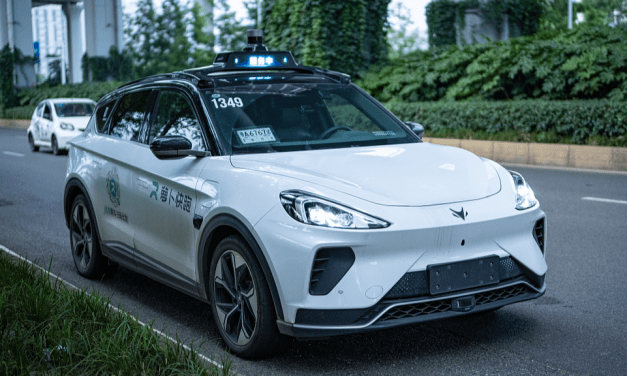
WeRide and Lenovo announce expanded partnership to deliver 2,000 autonomous vehicles by 2031

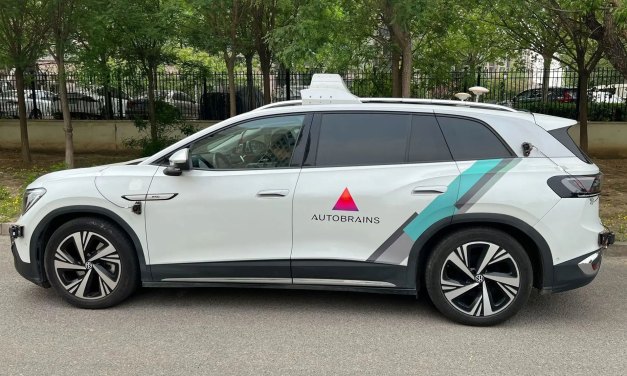
Announced at Auto China 2026, Chinese tech firms WeRide and Lenovo have revealed an expanded partnership to develop 200,000 autonomous vehicles over the next five years. Of these 200,000 vehicles, many will be robotaxis operating at Level 4 autonomous capability, or “driver-out.”

Based in the Chinese city of Guangzhou, WeRide has already been a leader in China’s autonomous push, with established R&D and pilot projects in 40 cities across 12 countries globally.

Read More

Tesla grapples with self-driving shortfall, promising “micro factory” upgrade plan

Tesla has found itself in hot water again as it recalibrates its long-promised path to full autonomy. The electric vehicle giant recently acknowledged that millions of its older cars, equipped with what it calls Hardware 3, won’t be able to achieve fully self-driving capability, despite earlier assurances. 

The statement marks a notable shift for Tesla, which had long maintained that its earlier vehicles already contained the necessary cameras and computing power pending the inevitable software advancements. 

Read More

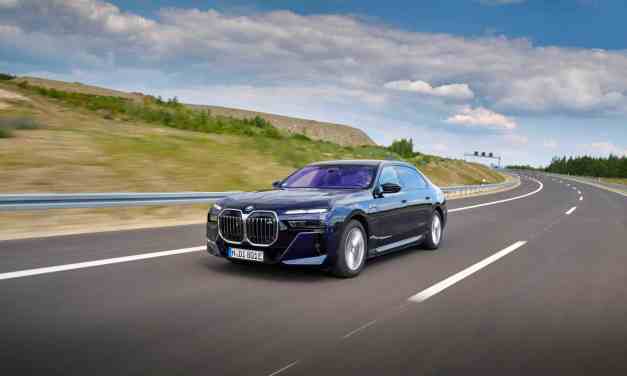
BMW and Mercedes scrap plans for Level 3 autonomy, citing lack of consumer demand

Two multinational OEMs, Mercedes and BMW, have decided to postpone, and likely cancel, plans for Level 3 autonomy in personal vehicles, citing regulatory challenges and a lack of consumer demand as the reasons. 

Both automakers have been in the process of developing Level 3 autonomy in their vehicles, a level of assisted driving that allows consumers to take their hands and eyes off the road while remaining ready to resume control at a moment’s notice. Achieving this level of autonomy is a lengthy and expensive project that requires cars to be fitted with costly LiDAR sensors. 

Read More

Wayve receives fresh backing from chipmakers Qualcomm, AMD and Arm

British autonomous driving firm Wayve is strengthening its position in the race toward driverless vehicles, announcing fresh backing from chip giants Qualcomm, AMD, and Arm. The trio contributed $60 million in a follow-on investment, adding momentum to the company’s earlier $1.2 billion raise revealed in February.

Although modest compared to that larger round, the latest funding carries strategic weight, bolstering Wayve’s tech-forward, end-to-end AI approach. Wayve is building a distinct autonomous strategy that is rooted in AI and avoids reliance on high-definition maps or hyper-localized geomapping.

Read More

Government backs 8 projects to drive UK autonomous mobility sector

Eight autonomous projects have received funding from a UK government-backed initiative aimed at driving the progress of autonomous solutions in the emerging UK market.

The eight projects, announced yesterday, will receive financial backing from the government-backed £150 million CAM Pathfinder programme, as part of the Feasibility Studies 2 competition. The funding marks a significant step in advancing the country’s Connected and Automated Mobility (CAM) industry—already valued at £3.7 billion.

Read More

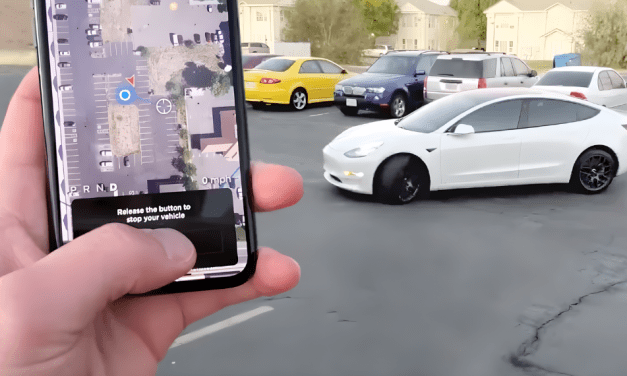
NHTSA drops investigation into Tesla’s “Actually Smart Summon” autonomy

The National Highway Traffic Safety Administration has closed its investigation into Tesla’s divisive “Actually Smart Summon” feature, an autonomous system that allows vehicles to collect passengers from parking lots or garages remotely using an app. 

The feature requires the passenger to select a location within a short radius and claims to be able to navigate out of tight parking spaces or from the other side of a busy car park to collect waiting riders. 

Read More

Baidu robotaxi malfunction causes disruption on the streets of Wuhan

On Tuesday, disruption was reported on the streets of Wuhan following a malfunction in Baidu’s Apollo Go robotaxi fleet.

Videos on social media captured the vehicles as they stopped in the middle of lanes of traffic, with passengers trapped inside. Some of the footage appears to show a vehicle involved in a highway collision, although police reports suggest no one was injured during the incident.

Read More

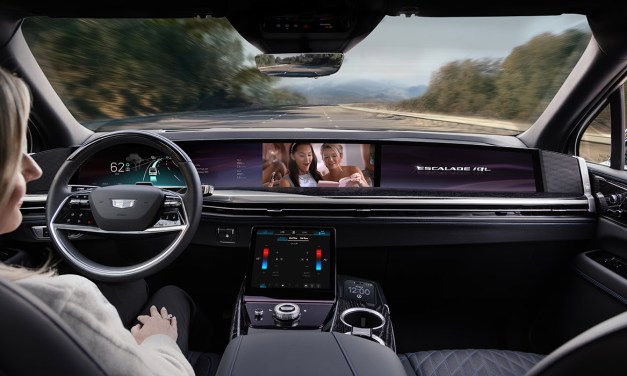
General Motors begins testing “hands-free, eyes-off” personal autonomy on public highways

General Motors may have taken a back seat in the robotaxi race after the collapse of autonomous robotaxi venture Cruise back in 2024, but the company is not resting on its self-driving laurels.  

Since then, the Detroit automaker has turned its attention to developing autonomy in personal vehicles, announcing yesterday that it would begin testing its hands-free, eyes-off driving system on public highways this week.

Read More

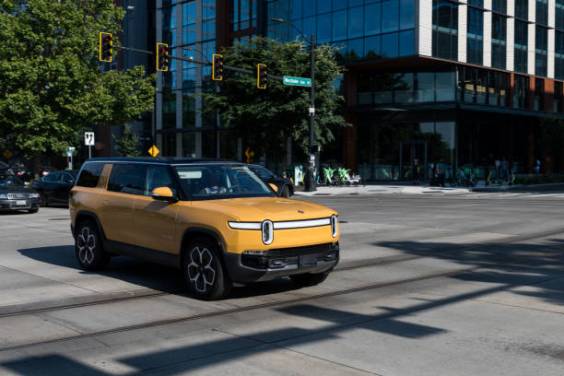
Uber partners with Rivian in $1.25bn robotaxi deal, promising 50,000 vehicles by 2031

Uber is forging ahead with its vision for a driverless future through a new partnership with American EV maker Rivian Motors.

The agreement outlines plans for Uber to invest an initial $300mn, potentially rising to $1.25bn by 2031, contingent on Rivian hitting key autonomy milestones. Alongside the investment, Uber intends to purchase up to 50,000 autonomous vehicles, beginning with 10,000 robotaxi-ready versions of Rivian’s upcoming R2 SUV. The remaining 40,000 could follow from 2030.

Read More

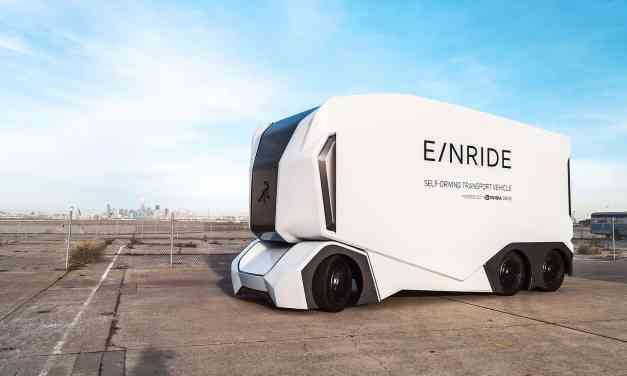
Einride paves the way for autonomous “smart corridors” in Texas

Founded in 2016, autonomous trucking company Einride is forging ahead with a partnership with the State Highway 130 corridor, a major toll road in Texas. This strategic collaboration aims to build out a smart freight corridor between Austin and San Antonio, operating as a testbed for Einride’s cab-less autonomous freight vehicles.

The project will represent the first time an autonomous truck company has partnered with a toll road operator to deliver this kind of service. Einride’s vision includes plans to build out Texas’ EV infrastructure through the co-development of next-generation rest stops with electric charging facilities and autonomous truck docking infrastructure.

Read More

Hyundai and Kia deepen strategic partnership with leading chipmaker NVIDIA

On Tuesday, Hyundai Motor Group announced it is accelerating its advancements in the autonomous mobility space by deepening its collaboration with world-leading chipmaker NVIDIA. This partnership represents a wider shift in the industry, as automakers are increasingly turning to the tech world to accelerate the development of autonomous and software-defined vehicles through partnerships with chipmakers, AI firms, and software companies.

Hyundai Motor Group, made up of Hyundai Motor and Kia, has positioned this strengthened partnership as a means to drive forward progress on its Level 4 all-electric robotaxis through its joint self-driving venture, Motional.

Read More

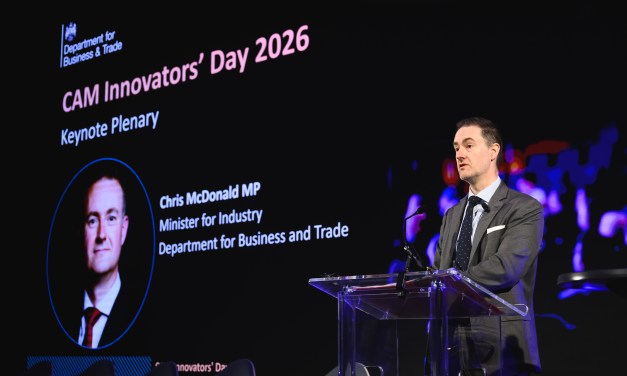
Industry experts herald 2026 as “pivotal year” for UK autonomy at CAM Innovators’ Day

Industry experts gathered at the IET in London yesterday to discuss the key obstacles and scalable, practical use cases of autonomy within the UK.

The annual CAM Innovators’ Day, hosted by Zenzic, brought together some of the industry experts driving innovation in autonomy and connected mobility. Among those attending were representatives from government, industry leaders, scale-ups and key stakeholder groups, with speakers from Google, Waymo and several autonomous startups, including Oxford-based group Oxa.

Read More

Wayve secures $1.2 billion in investment to scale “generalisable” self-driving tech

Autonomous driving company Wayve, founded in 2017, has officially raised $1.2 billion in funding following a successful Series D investment round. This new development accelerates Wayve’s post-money valuation to $8.6 billion, making it one of the UK’s most valuable AI startups.

The investment round was backed by investors including Microsoft, world-leading chipmaker Nvidia, ride-hail provider Uber, and automakers including Nissan, Mercedes-Benz, and Stellantis.

Read More

Hyundai joins the physical AI race, promising humanoid robots and autonomous mobility

A year ago, Hyundai Motor Company appeared to be trailing behind its rivals in the race to fuse artificial intelligence with the automobile. While competitors such as Tesla and BYD showcased advances in humanoid robotics and autonomous driving, Hyundai’s leadership openly acknowledged it had been slow off the starting line.

At the Consumer Electronics Show, earlier this year, Hyundai demonstrated that the tides were beginning to turn, exhibiting an ambitious physical AI project, Atlas—a humanoid robot developed by its US subsidiary Boston Dynamics.

Read More

Tesla forced to drop “Autopilot” branding in California after “misleading” marketing ruling

Tesla has removed the term “Autopilot” from its marketing campaign in order to comply with Californian regulators. The electric vehicle and robotics group found itself in hot water last December after the California Department of Motor Vehicles deemed its Autopilot feature misleading to potential consumers.

Tesla’s Autopilot platform includes features such as Traffic-Aware Cruise Control and Autosteer, systems designed to assist drivers with tasks like braking, steering, and accelerating, but they do not equip the car with fully autonomous capabilities, as the name may suggest.

Read More

UN draft agenda on autonomy promises a unified approach to global self-driving regulation

As autonomous innovation accelerates towards widespread deployment and robotaxis roll out in record numbers, global regulation has historically lacked a clear or decisive approach. Instead, countries have determined their own legislation, resulting in a patchwork of fragmented regulation across geographies.

By 2030, Boston Consulting Group predicts there will be over 2.5 million robotaxis in commercial operation. If the world is to respond to this increasing demand, many sceptics have called for a more unified global strategy.

Read More
Loading