News
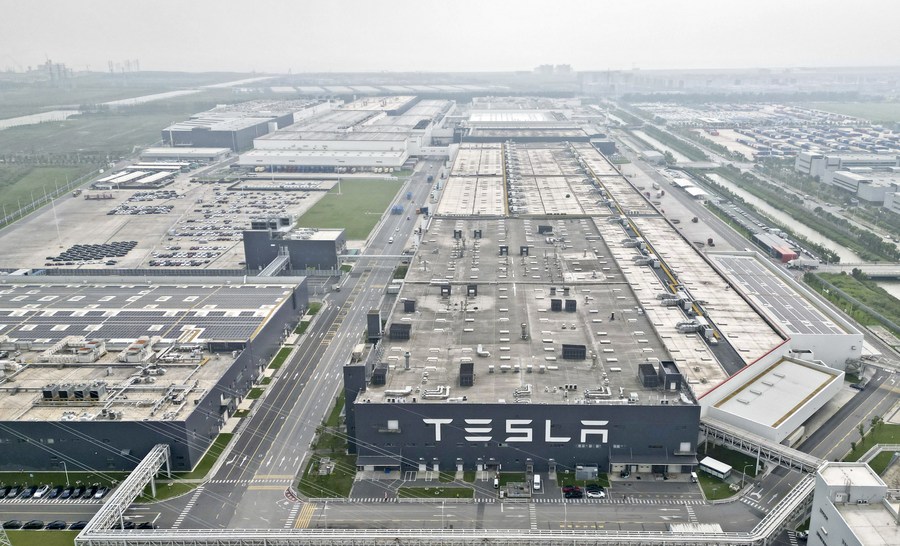
After years of regulatory discussion, Tesla has officially introduced its Full Self-Driving (FSD) technology in China, marking a significant step in the company’s long-running effort to gain a foothold in one of the largest autonomous markets.
The announcement arrives shortly after Elon Musk’s visit to Beijing, where he joined a U.S. business delegation during President Trump’s summit with Chinese President Xi Jinping.
In a post shared on X, Tesla confirmed that its driver-assistance platform, marketed as FSD Supervised, is now available in several markets including China.
The company’s approach differs from more traditional autonomous systems by relying on artificial intelligence trained through millions of real-world driving video clips rather than depending on costly Lidar sensors and extensive sensor geo-mapping.
Some sceptics have levelled criticism at this approach, questioning the safety of the technology under low visibility or extreme weather conditions. Following safety concerns, the state of California ruled that the term “Fully Self-Driving” could not be used to market the product as it did not accurately describe the systems delivery of autonomous capabilities, which still required the driver to remain alert and ready to take control at a moment’s notice.
The launch is strategically important for Tesla; China remains the largest and one of the most competitive EV markets globally, and broader access to FSD could strengthen Tesla’s position as it works to accelerate its autonomous offerings on a global scale.
Chinese automakers have increasingly invested in advanced driver-assistance and autonomous driving technologies. While several domestic brands are developing similar systems, analysts suggest only XPeng currently approaches Tesla’s level of capability in this category. Other Chinese players include Pony.ai, WeRide and Baidu.
Many expect Tesla’s entry to intensify competition and accelerate innovation across the sector.
CCB’s International analyst Qu Ke commented on the matter, saying:
“The move is a positive catalyst for China’s auto industry as it’s going to speed up the autonomous driving technology development in China.”
The timing comes as China’s automotive sector faces softer consumer demand and increasingly intense EV competition. According to data from the China Passenger Car Association, retail passenger vehicle sales fell 21.5% year over year in April to 1.38 million units.
Tesla also noted that FSD availability extends beyond China to markets including the United States, Canada, Mexico, Australia, New Zealand, and South Korea.
The company’s autonomous push is part of broader company-wide pivot into AI and robotics with Elon Musk banking on the success of his humanoid robots, named Optimus Prime, to help accelerate Tesla’s ambitious expansion.
Speaking at the World Economic Forum in Davos earlier this year, Musk outlined the roadmap and planned scale of the Optimus project, saying that Tesla is “planning to make its Optimus robots available for sale to the public by the end of 2027.”
He added, “My prediction is there will be more robots than people” .
Keep up-to-date with the latest mobility news by subscribing to MOVEMNT’s free newsletter