News
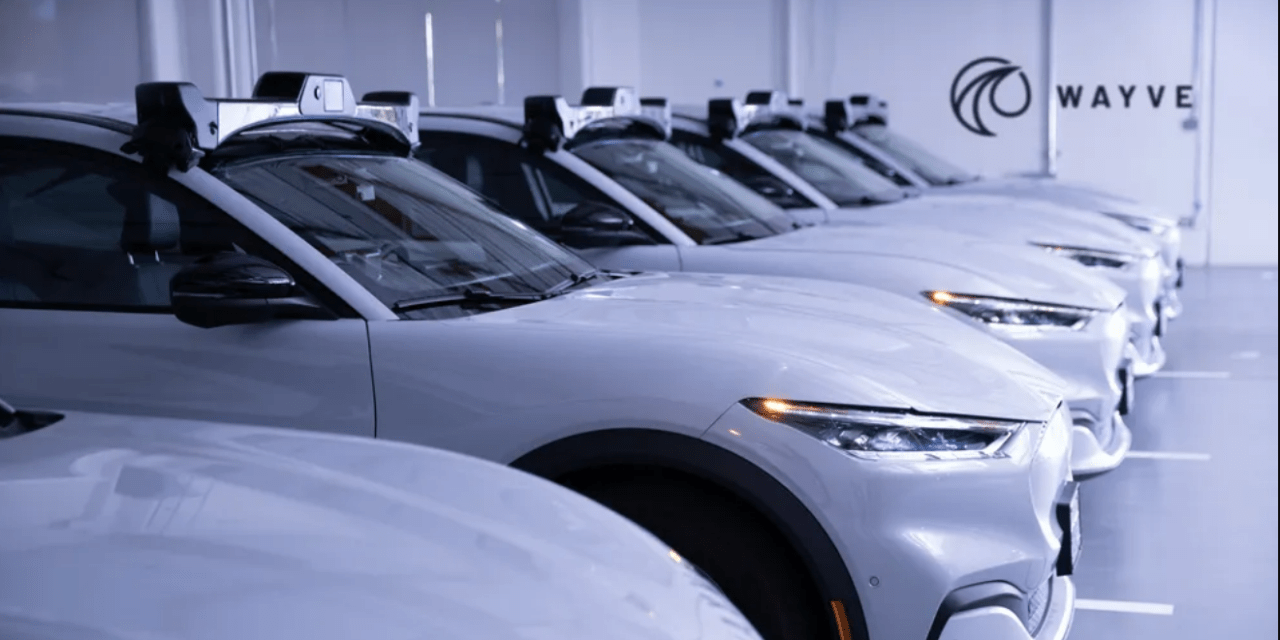
British autonomous driving firm Wayve is strengthening its position in the race toward driverless vehicles, announcing fresh backing from chip giants Qualcomm, AMD, and Arm. The trio contributed $60 million in a follow-on investment, adding momentum to the company’s earlier $1.2 billion raise revealed in February.
Although modest compared to that larger round, the latest funding carries strategic weight, bolstering Wayve’s tech-forward, end-to-end AI approach. Wayve is building a distinct autonomous strategy that is rooted in AI and avoids reliance on high-definition maps or hyper-localized geomapping. This contrasts with competitors such as Waymo, which typically depend on detailed mapping and large quantities of data.
The new investment also reflects a broader industry alignment between chip makers, tech providers and automakers. Car manufacturers rely on a mix of semiconductor platforms, from Nvidia to Qualcomm, to power their driverless systems. By bringing in multiple chipmakers, alongside earlier backing from Nvidia, Wayve is positioning itself to integrate seamlessly with multiple hardware providers.
CEO Alex Kendall emphasized this flexibility, noting, “What’s exciting for us is it gives our customers choice of which silicon platform they want to work with. And it lets us work with what’s already being used across the industry.” He added, “We can meet the industry where they are. It just increases the speed and scale of our adoption.”
Wayve’s technology is already being tested internationally, with trials underway in the U.K. (London), Germany (Stuttgart), Japan (Tokyo), and the U.S. (San Francisco). The company has also secured a commercial partnership with Nissan to embed its AI into driver-assistance systems. In collaboration with Nissan and Uber, Wayve is also working toward developing robotaxi services.
Wayve is up against fierce competition, particularly from Alphabet-owned rival Waymo which has begun testing vehicles in London and Japan. At the same time, Chinese firms such as Baidu, WeRide, and Pony.ai are accelerating their global expansion.
Kendall hinted at further developments ahead, declining to detail upcoming automaker partnerships but predicting widespread adoption: “It’s going to be a matter of time before every vehicle has this kind of capability.”
Keep up-to-date with the latest mobility news by subscribing to MOVEMNT’s free newsletter