Insights from CAM Innovators’ Day
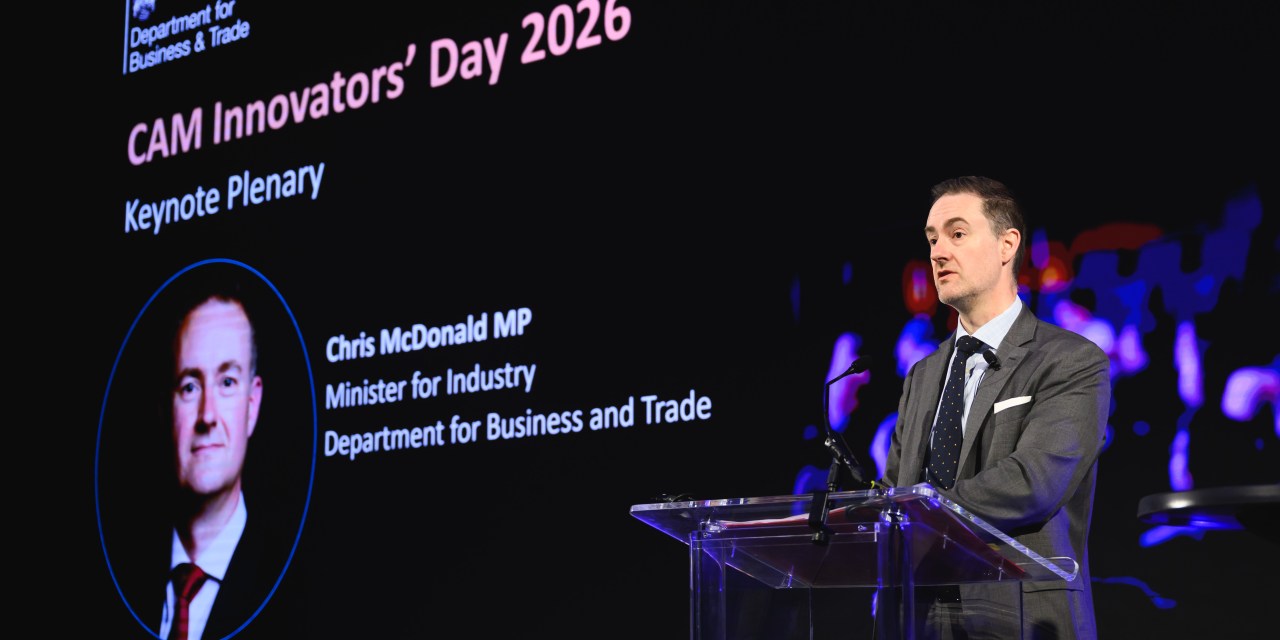
Industry experts gathered at the IET in London yesterday to discuss the key obstacles and scalable, practical use cases of autonomy within the UK.
The annual CAM Innovators’ Day, hosted by Zenzic, brought together some of the industry experts driving innovation in autonomy and connected mobility. Among those attending were representatives from government, industry leaders, scale-ups and key stakeholder groups, with speakers from Google, Waymo and several autonomous startups, including Oxford-based group Oxa.
Zenzic is the UK organisation established by government and industry to accelerate the development of Connected and Automated Mobility (CAM) technologies, helping UK organisations play a pivotal role in shaping the future of autonomous mobility. Their CAM Pathfinder programme provides £150 million in funding opportunities to grow the UK CAM ecosystem.
Programme Director of Zenzic, Mark Cracknell, described 2025 and 2026 as “pivotal years” if the UK hopes to consolidate its position as a world leader in autonomous mobility. He said:
“The next 12 months will be key for the autonomous sector here in the UK.”
His thoughts were echoed by the UK Minister for Industry Chris McDonald MP, who described the government’s attitude towards autonomous innovation as overwhelmingly supportive. He said:
“Autonomy is an effective way to complement public transport whilst working towards our climate goals. We want to create the right environment for autonomy to thrive.”
Certainly, autonomous solutions have begun to scale at pace in the UK. Robotaxi trials have taken off in the UK capital, while across the country off-highway autonomous solutions are being integrated into industrial and mass transit applications.
Waymo, Baidu and UK startup Wayve all have autonomous trials ongoing in the UK capital, hoping to scale to fully commercial fleet operations as early as September this year.
Aside from commercial fleets, the event platformed autonomous use cases being integrated in off-highway or enclosed spaces such as airports, hospitals, conference centres and ports. These automated solutions offer opportunities for mobility in contexts where human-driven services may be commercially unviable or unsafe.
James Connolly, UKC Future Transport Officer at Solihull Metropolitan Borough Council, championed autonomous solutions within the off-highway space as a means to offer accessible mobility to the many, not the few. He said:
“We need to consider what is the best or most important use case, with the customer and end user always in mind.”
Oxford-based startup Oxa develops off-highway autonomous solutions in specific closed environments, automating industrial driving tasks such as the towing and carrying of goods in ports, airports and factories.
Ross James, Director of Solutions at Oxa, spoke on the favourable regulatory conditions for off-highway autonomous use cases. In a statement to MOVEmnt he said:
“One of the key things for us is areas where we think there is high value to be gained from autonomy. We are looking at really high utilisation use cases, often 24/7. It is also an area where there is more regulatory certainty, which allows us to develop automation today rather than waiting for regulation to fall into place.”
The event maintained that social acceptance continues to be one of the biggest challenges for autonomous mobility within the UK, both on and off highway. As autonomous mobility ramps up in 2026, experts predict that public trust will likely increase in line with greater exposure.
More details surrounding Zenzic and their CAM Pathfinder funding project can be found here.
Keep up-to-date with the latest mobility news by subscribing to MOVEMNT’s free newsletter