Author: Eve Stevens

Tesla’s Fully Self-Driving (Supervised) technology gains regulatory approval in China

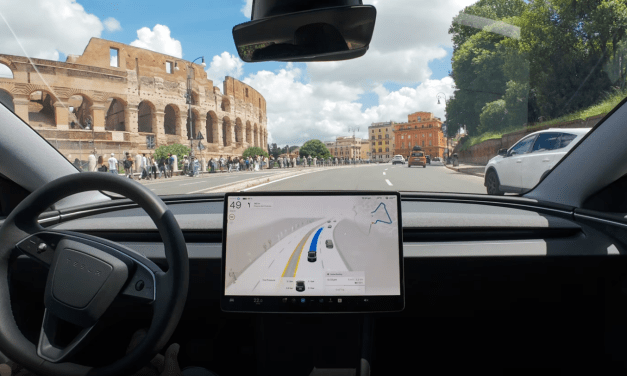
After years of regulatory discussion, Tesla has officially introduced its Full Self-Driving (FSD) technology in China, marking a significant step in the company’s long-running effort to gain a foothold in one of the largest autonomous markets.  

The announcement arrives shortly after Elon Musk’s visit to Beijing, where he joined a U.S. business delegation during President Trump’s summit with Chinese President Xi Jinping. 

Read More


The MOVEmnt Podcast Episode 3: Jeremy Bird

In Episode 3 of The MOVEmnt Podcast, we sit down with Lyft’s EVP of Global Growth, Jeremy Bird, to explore his vision for a hybrid autonomous network. As autonomy ramps up in the UK and Europe welcomes its first commercial robotaxi deployment in Croatia, our conversation couldn’t come at a more critical time in the industry.  

Read More

The MOVEmnt Podcast Episode 2: Nancy Skinner

In Episode 2, MOVEmnt’s Eve Stevens sits down with a legend in the world of legislature and public service, Commissioner Nancy Skinner of the California Energy Commission. 

With a career spanning several decades and a portfolio of landmark legislation, Skinner reflects on her long and influential career, sharing some of her proudest achievements and her personal connection to sustainability, policy and equitable transportation.  

Read More

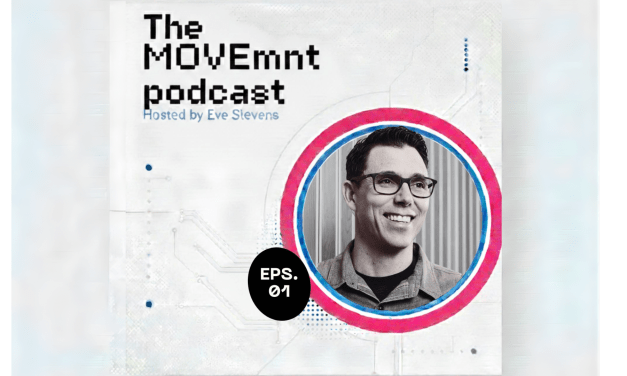
The MOVEmnt Podcast Episode 1: RJ Scaringe

What better way to kick off our 2026 interview series than with the CEO and Founder of Rivian Motors, RJ Scaringe?

Ahead of the launch of Rivian’s first mass-market vehicle, the R2, RJ sat down with MOVEmnt Editor and podcast host Eve Stevens to discuss Rivian’s roadmap for autonomy, their signature zonal architecture, and RJ’s deep-rooted fascination with the automotive world.

Read More

Will a dual-use defence strategy revive Europe’s struggling automotive industry?

As Europe’s car industry struggles in the face of intensifying Chinese competition and Trump’s imposed tariffs, some industry experts expect the historic symbiosis between the automotive and defence is set to deepen. This shift comes at a time when Europe is preparing to ramp up its military investment in the face of global conflict, an increasingly volatile relationship with the U.S., and the fracturing of the NATO alliance following Trump’s invasion of Greenland earlier this year. Last year, EU President Ursula von der Leyen described 2025 as an “era of rearmament”, a trend which has only escalated with recent disruption in the Middle East.

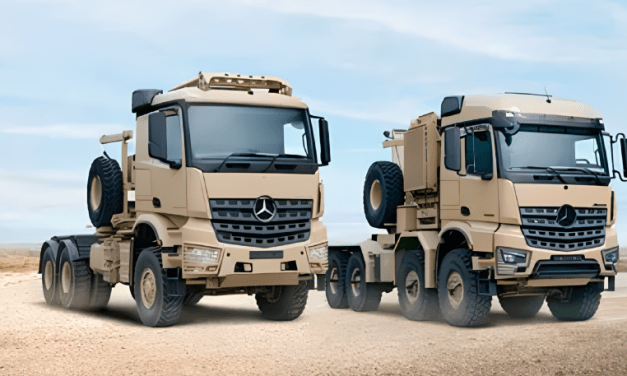
One such automaker considering this dual-use approach is German automotive brand Mercedes-Benz, which announced on Friday that it would be open to exploring military use cases.

Read More

MOVE 2026 WIM Awards: Meet the women forging the future of automotive and tech

After a record number of nominees, voting is now open to crown the winner of MOVE 2026’s WIM Awards. The winner of this year’s award will be announced at MOVE 2026, June 17 at London’s ExCeL.

We are shouting out a handful of the inspiring female voices who are forging the future of automotive and tech, through their hard work, creativity and determination.

Read More

Spain becomes key testbed for Stellantis and Leapmotor’s expanded alliance

Stellantis and Chinese electric vehicle brand Leapmotor are preparing to deepen their allegiance as both companies angle to expand their electric vehicle footprint across Europe. 

The partnership began in 2023 when Stellantis purchased an approximately 21% stake in Leapmotor and launched a joint venture focused on selling and manufacturing Leapmotor vehicles outside of China. The companies now say they are exploring new ways to increase production efficiency while reducing manufacturing costs. 

Read More

Speakers in the news: Meet the companies making headlines ahead of MOVE 2026

The world’s #1 auto tech event is returning to London, June 17–18. MOVE focuses on the technology that sits behind the automotive sector, specialising in autonomous, electric and software-defined mobility. MOVE is all about showcasing the leading agents of innovation and progress, from automotive OEMs, fleets, CPOs, transport operators, investors, start-ups and battery manufacturers, across 15 conference stages. Existing in a fast-paced and dynamic sector, industry change is an expectation rather than an anomaly when it comes to automotive and tech. To help you keep abreast of the latest developments, we have put together a shortlist of current news updates from some of the biggest disruptors speaking at the event this year.

Read More

WeRide and Lenovo announce expanded partnership to deliver 200,000 autonomous vehicles by 2031

Announced at Auto China 2026, Chinese tech firms WeRide and Lenovo have revealed an expanded partnership to develop 200,000 autonomous vehicles over the next five years. Of these 200,000 vehicles, many will be robotaxis operating at Level 4 autonomous capability, or “driver-out.”

Based in the Chinese city of Guangzhou, WeRide has already been a leader in China’s autonomous push, with established R&D and pilot projects in 40 cities across 12 countries globally.

Read More

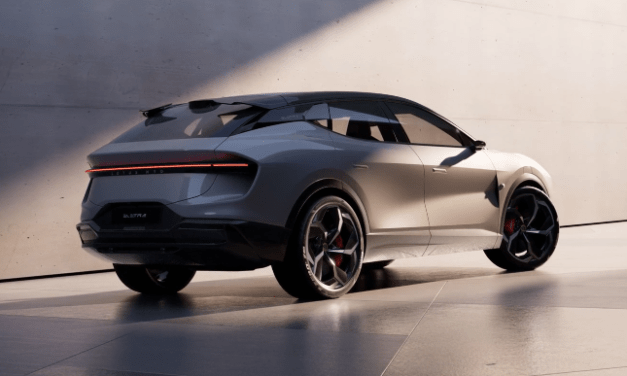
Lotus joins luxury automakers pivoting to hybrids, forecasting “long-term trend”

The luxury automotive segment has long struggled to decouple itself from petrol. In 2026 alone, several major automakers walked back their EV targets or revised their electrification timelines: Lamborghini axed plans for its fully electric model, Lanzador, whilst Rolls-Royce pledged to continue selling petrol vehicles beyond 2030.

In an interview with the Financial Times, chief executive of Lotus Group, Qingfeng Feng, said that EVs would account for under half of their entire lineup—the rest coming from hybrids. This is a much more conservative estimate than previously predicted by the company, now owned by Chinese conglomerate Geely, which had banked on a lineup of 90% EV sales by 2028.

Read More

Tesla grapples with self-driving shortfall, promising “micro factory” upgrade plan

Tesla has found itself in hot water again as it recalibrates its long-promised path to full autonomy. The electric vehicle giant recently acknowledged that millions of its older cars, equipped with what it calls Hardware 3, won’t be able to achieve fully self-driving capability, despite earlier assurances. 

The statement marks a notable shift for Tesla, which had long maintained that its earlier vehicles already contained the necessary cameras and computing power pending the inevitable software advancements. 

Read More

Rivian begins production of first mass-market EV, the R2

Rivian Motors has officially begun customer production of the long-awaited R2, its mid-size all-electric SUV. Originally revealed in March 2024, it has taken two years and reportedly “thousands of hands” before the first R2 rolled off the production line yesterday at Rivian’s Normal, Illinois plant. 

Rivian CEO RJ Scaringe said the company was “on track” to deliver the first of its five-seater EVs later this spring.

Read More

CATL unveils 1,500 km EV battery with record-breaking range

Last month, BYD made headlines with its updated Blade battery, a lithium iron EV battery boasting super-fast charging times and ranges of up to 1,000 km in a single charge.

As of Tuesday, BYD’s battery supremacy was toppled by Chinese battery manufacturer and technology company CATL, which announced its latest Qilin battery, capable of delivering a range of 1,500 km in a single charge.

Read More

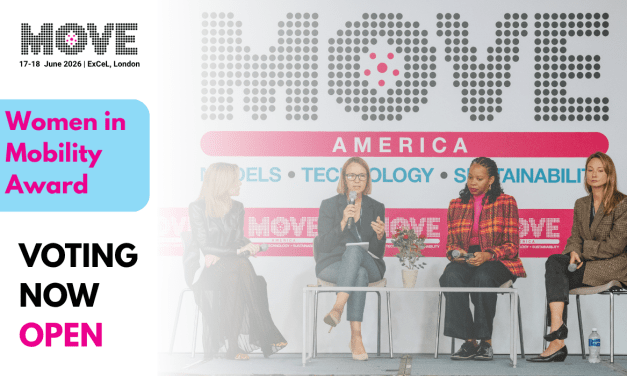
Voting opens for MOVE 2026’s Women in Mobility Award

Across the mobility industry, women play a vital role in driving innovation, shaping policy and inspiring transformative change. MOVE’s Women in Mobility Award recognises the leaders, visionaries and change-makers who are accelerating innovation in automotive and technology.

Vote for your winner of the Women in Mobility Award and help us honour the women who are transforming the auto tech industry with their expertise, leadership and determination.

Read More

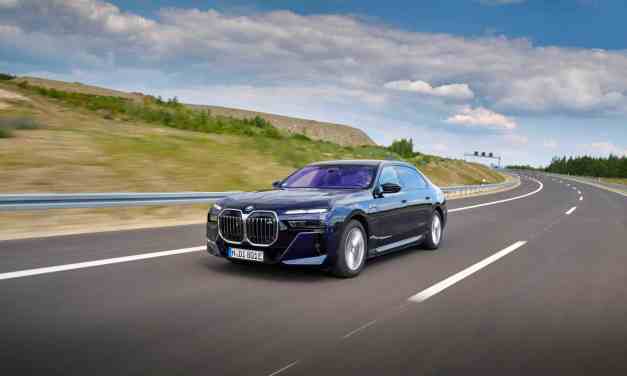
BMW and Mercedes scrap plans for Level 3 autonomy, citing lack of consumer demand

Two multinational OEMs, Mercedes and BMW, have decided to postpone, and likely cancel, plans for Level 3 autonomy in personal vehicles, citing regulatory challenges and a lack of consumer demand as the reasons. 

Both automakers have been in the process of developing Level 3 autonomy in their vehicles, a level of assisted driving that allows consumers to take their hands and eyes off the road while remaining ready to resume control at a moment’s notice. Achieving this level of autonomy is a lengthy and expensive project that requires cars to be fitted with costly LiDAR sensors. 

Read More

Wayve receives fresh backing from chipmakers Qualcomm, AMD and Arm

British autonomous driving firm Wayve is strengthening its position in the race toward driverless vehicles, announcing fresh backing from chip giants Qualcomm, AMD, and Arm. The trio contributed $60 million in a follow-on investment, adding momentum to the company’s earlier $1.2 billion raise revealed in February.

Although modest compared to that larger round, the latest funding carries strategic weight, bolstering Wayve’s tech-forward, end-to-end AI approach. Wayve is building a distinct autonomous strategy that is rooted in AI and avoids reliance on high-definition maps or hyper-localized geomapping.

Read More