Latest News
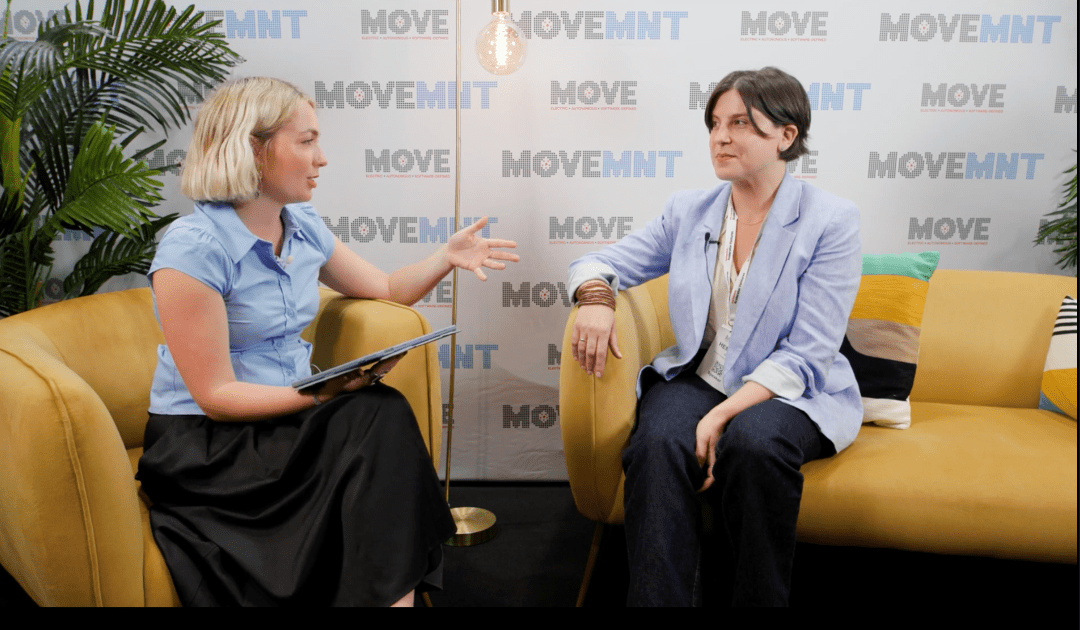
Meet the winner of MOVE 2026’s Women in Mobility Award
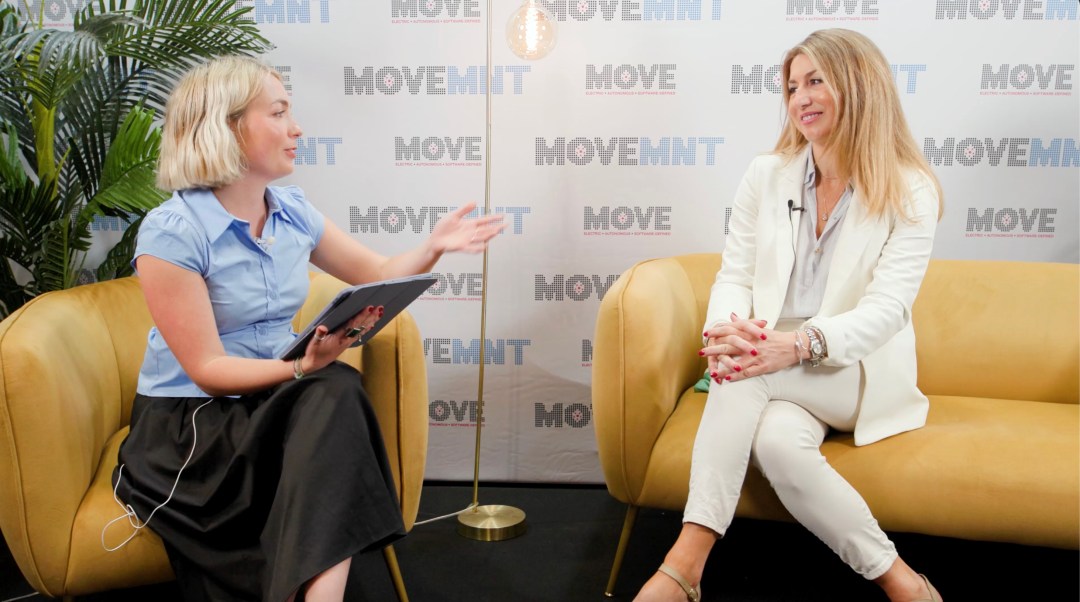
To honour the women who are driving the auto tech industry forward, we crowned this year’s winner of the MOVE Women in Mobility Award at the MOVE Groove after party.
This year’s winner is Lola Ortiz who joined MOVEmnt.net’s Eve Stevens in the Press Lounge to to discuss what winning the award meant to her.
Meet the MOVE 2026 Start-up Pitch Competition winner
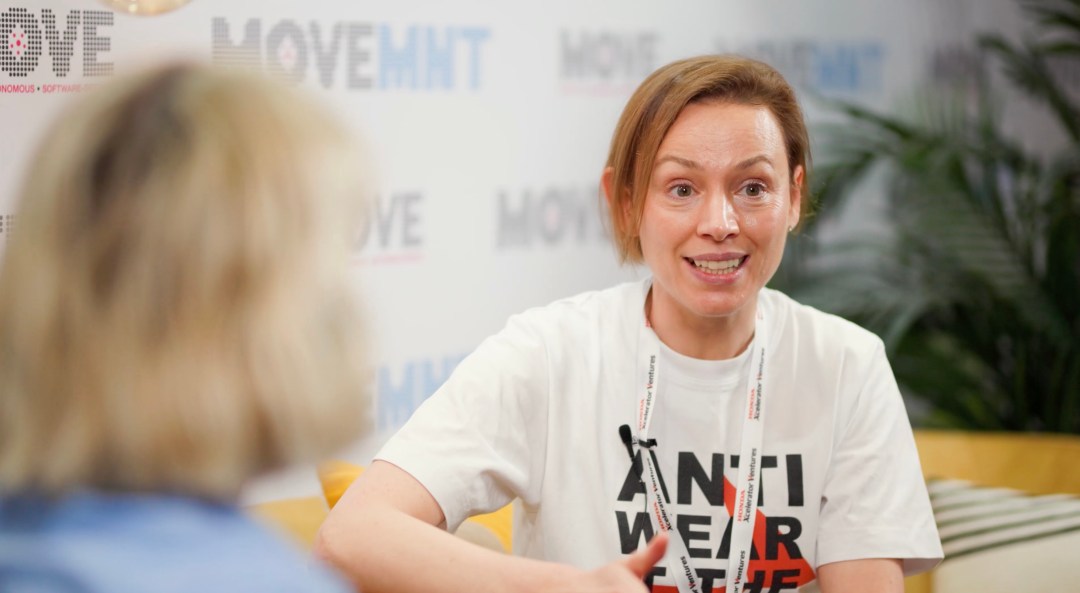
The MOVE 2026 start-up village once again showcased some of the most exciting emerging tech and solutions in the auto tech space. Meet the winner of this year’s Start-up Pitch Competition, Neol Copper Technologies, the start-up reimagining technical lubricants
“Human-centred AI” and the importance of a user-led autonomous approach with Toyota Research Institute
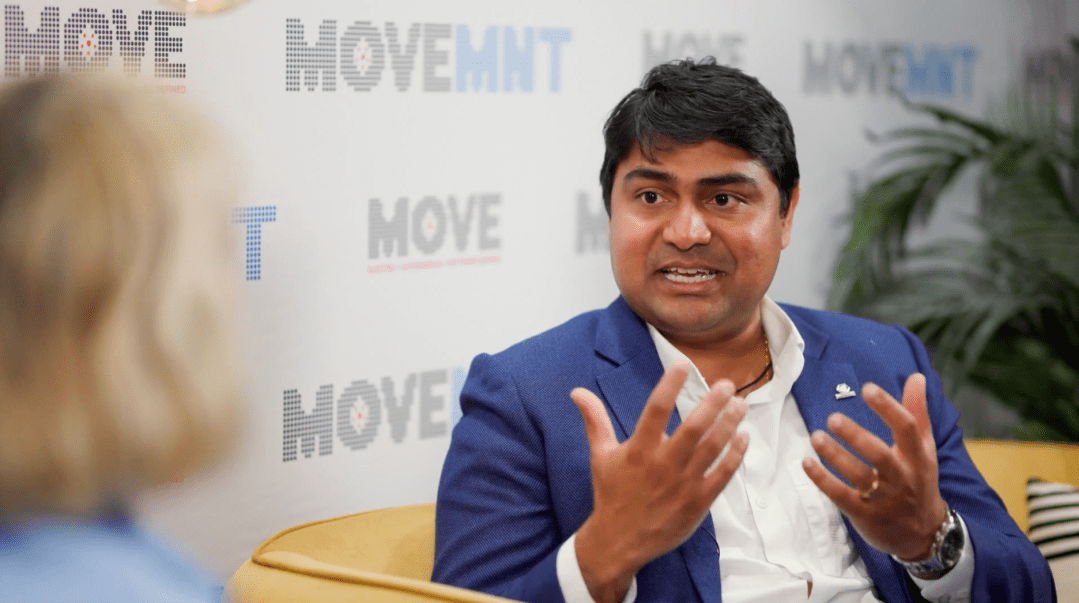
Avinash Balachandran, Vice President of Toyota Research Institute (TRI), joins us in the Press Lounge at MOVE 2026 to discuss Toyota’s collaborative approach to autonomy, exploring the importance of customer-led research and strategic partnerships in navigating a complex and evolving industry.
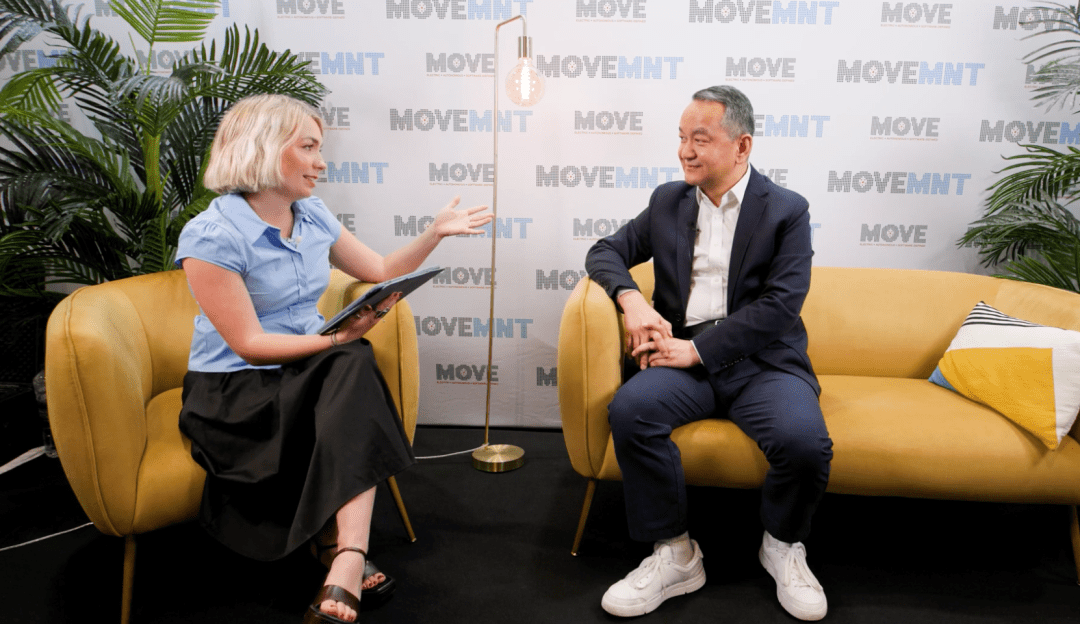
CEO and Co-Founder of Pony.ai James Peng speaks on European expansion and the hybrid network
Speaking with us at MOVE 2026, we heard from the brilliant James Peng, co-founder and CEO of Pony.ai, who shared his insights on global expansion, regulatory alignment, and the evolving role of AI in autonomous driving.
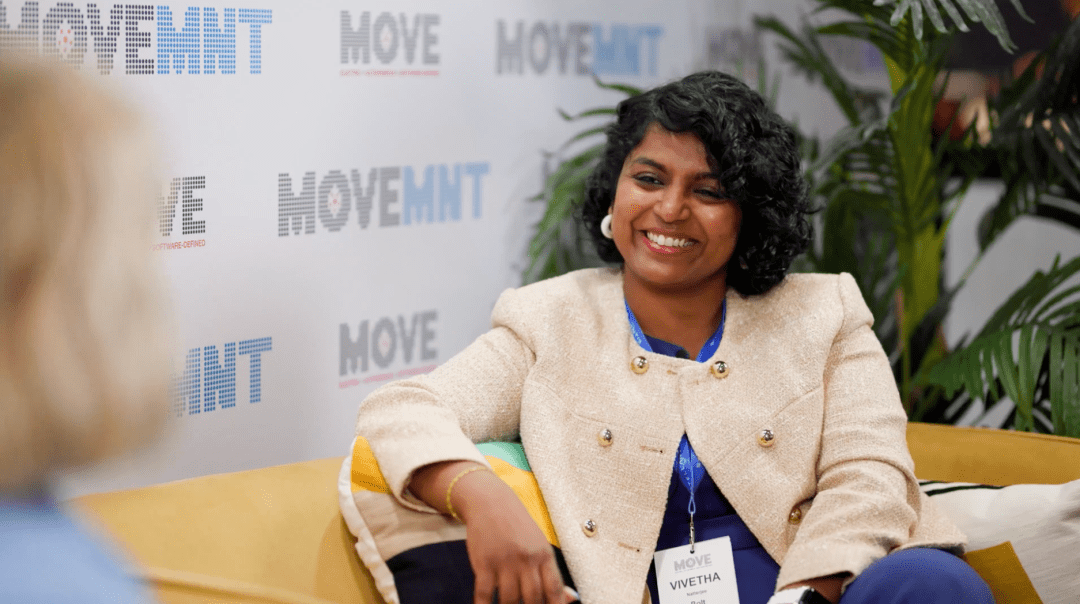
Future-ready autonomy and Bolt’s vision for scalable deployment with Vivetha Natterjee
At MOVE 2026, MOVEmnt.net caught up with Vivetha Natterjee, Head of Autonomous Product and Deployment for Autonomous Vehicles at Bolt.
Following her heavily attended morning presentation, we sat down to discuss the major developments taking place in the world of driverless scaling and Bolt’s upcoming plan to launch operational autonomous vehicle services across five distinct European markets within the next year.
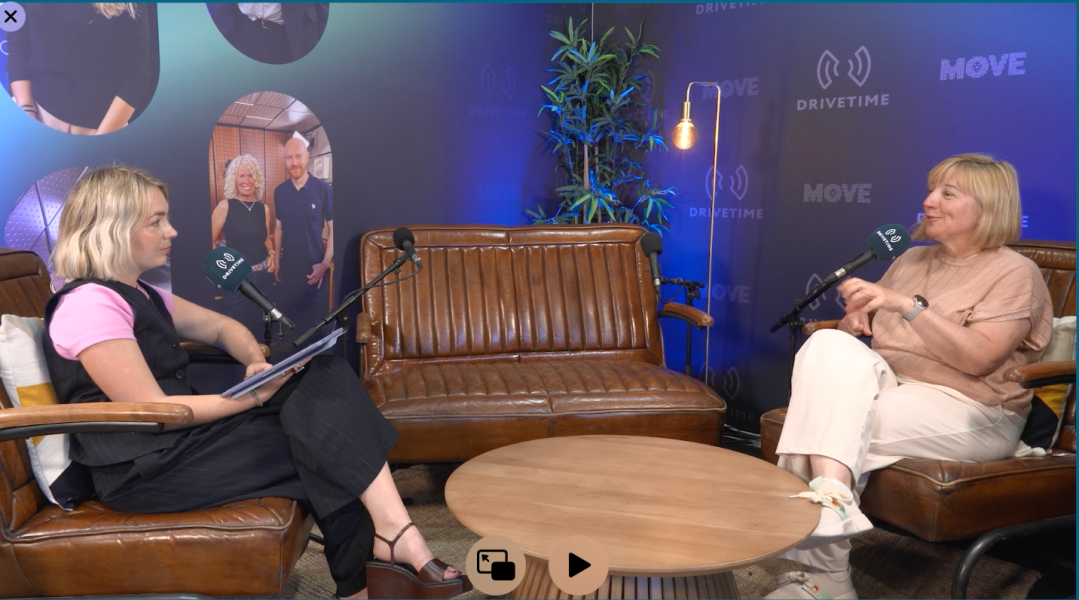
‘The future is now’: Fastned COO on Europe’s green transition
“The transition is here — I mean, I often say it, but the future is now, and you’re rather part of now, or you’re not.”
Speaking with us at MOVE 2026, we heard from the brilliant Françoise Poggi, COO of Fastned, who shared her insights on the state of European electrification, overcoming infrastructure bottlenecks, and why the green transition is entirely unstoppable.

Rethinking automotive design: Insights from Toyota Connected Europe’s Art Director
Moses Gunarman, Art Director at Toyota Connected Europe, joins us on the MOVE 2026 sofa to share his vision for the future of automotive design, one where digital interfaces move past frivolous aesthetics to focus entirely on functionality and seamless integration.
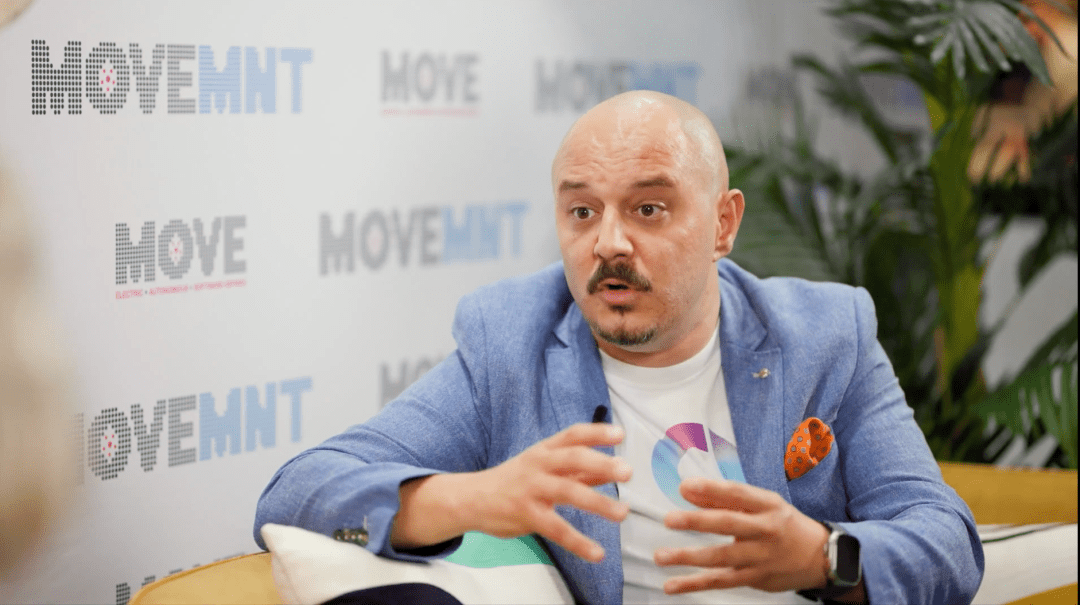
Reimagining customer experience as a growth engine with Aymen Ismail of Smart
In the automotive world, customer service has historically meant frustrating dealership upsells, call centres and faulty agents. For Smart, the goal is to flip that narrative entirely, reimagining customer service as a powerful growth engine. We sat down with Aymen Ismail, Customer Services Director at Smart Europe, at MOVE 2026, to discuss how data-driven personalization and proactive tech are turning the entire ownership journey into a vehicle for growth.
Nurturing the mobility innovation of the future with VW Group’s Konnect Innovation Hub
The path to automotive innovation lies in breaking down the walls of corporate isolation. That is the philosophy behind Konnect Innovation Hub, the Volkswagen Group’s scout for cutting-edge tech. We sat down with Managing Director Hemdat Sagi at MOVE 2026 to discuss how external partnerships are accelerating the future of software-defined and sustainable vehicles.

MOVE exclusive: Stellantis and Wayve announce strengthened robotaxi partnership at MOVE 2026
Wayve and Stellantis chose MOVE 2026 as the exclusive platform to announce the next phase of their strategic partnership.
Alex Kendall, CEO of Wayve, and Ned Curic, Chief Engineering Officer and CTO at Stellantis, took to the Keynote Stage to announce their shared vision for Level 4 autonomy, presenting a strengthened partnership committed to delivering robotaxis on a global scale.
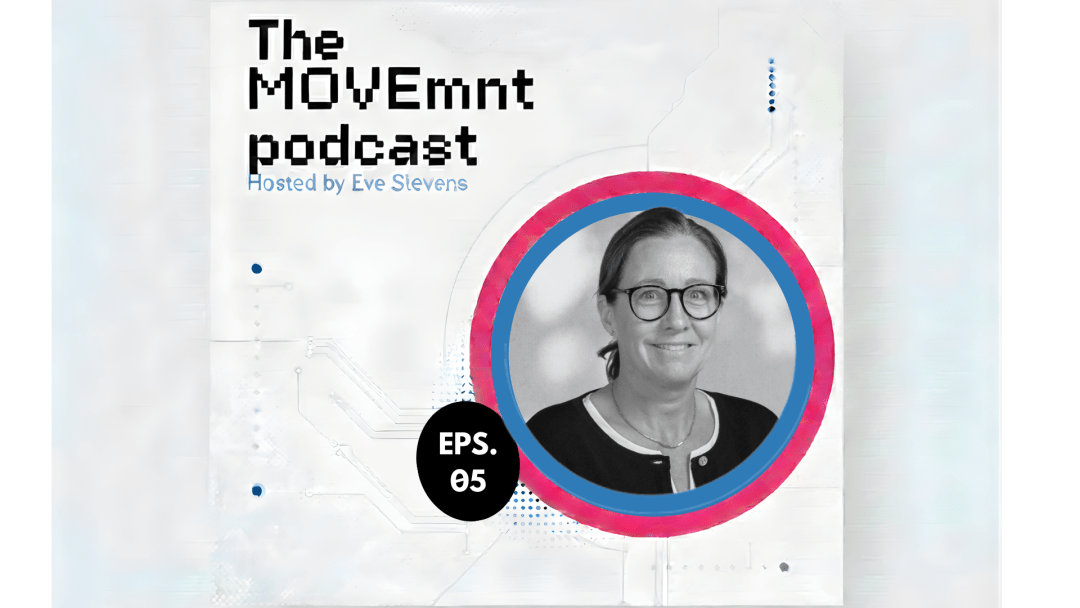
MOVEmnt Podcast Episode 5: Evalena Falck
MOVE 2026 is now just a week away, and what better time than to hear from one of our fantastic Keynote speakers?
In Episode 5, MOVEmnt’s Eve Stevens sits down with a powerhouse in the world of heavy transport and automotive, Evalena Falck, Vice President and Head of Strategic Business at Scania Group.

Uber and Wayve to deliver commercial robotaxi service in London this summer
News For those living in London, the sight of a robotaxi navigating the city streets has moved from the space age to the everyday. Since earlier this year, Alaphabet-owned Waymo and UK start up Wayve have been piloting their autonomous robotaxis in the UK capital,...
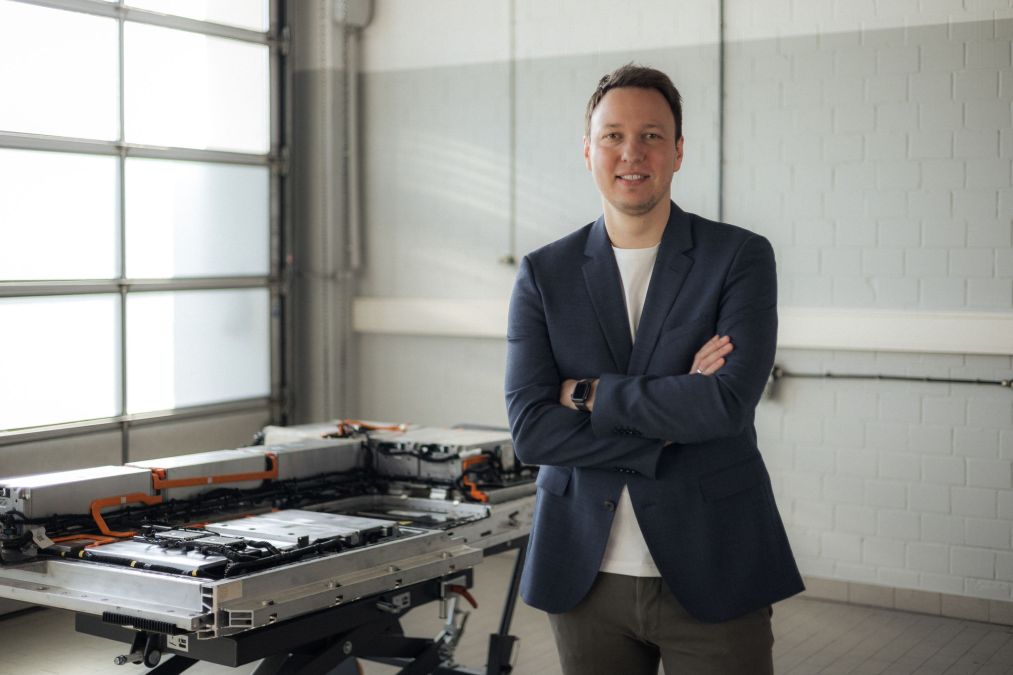
Understanding the data behind battery trading: In conversation with Circunomics CEO Felix Wagner
Battery volumes are growing. So is the number of companies trying to buy, sell, and finance them, with no reliable way to assess what a battery is worth. Felix Wagner built Circunomics to solve that. Ahead of MOVE London 2026, he spoke with MOVEmnt about the state of battery trading, what it takes to make transactions work, and why batteries need to become a proper asset class.

Meet the press attending MOVE 2026
MOVE is welcoming a host of tier-1, independent and local press to cover this year’s event. Expect world-class moderation from some of mainstream media’s most influential players, alongside emerging voices from local press and veteran automotive podcasters.
Meet some of the top media voices on the ground at London’s ExCeL.
Meet the official partners of MOVE 2026
As the global auto tech industry evolves at pace, the role of trusted partners in informing, connecting and inspiring the industry has never been more important. At MOVE, we are proud to work alongside a diverse network of leading publications, platforms and industry voices that help amplify the conversations shaping the future of transport.
We are delighted to spotlight our valued media and association partners, whose coverage, insights and research play a vital role in supporting the event and connecting our global community with the latest innovations, trends and thought leadership across the mobility ecosystem.

Uber and Autobrains partner to develop robotaxi programme in Munich
Uber has made its autonomous directive clear in recent months following the announcement of several autonomous vehicle partnerships, including a $1.25 billion robotaxi collaboration with Rivian Motors.
The major ride-hailing platform’s latest autonomous team-up is with Israeli AI company Autobrains Technologies. Through a strategic collaboration, the two companies hope to strengthen Uber’s foothold in the European autonomous vehicle market, with plans to launch an autonomous pilot programme in the German city of Munich.

BYD accelerates its self-driving vision with first in-house autonomous chip
Chinese electric vehicle giant BYD has introduced a new autonomous-driving semiconductor as it angles to gain a deeper foothold in the advanced vehicle technology space. The move comes amid intensifying competition in the EV market.
During a technology showcase in Shenzhen, the automaker revealed the Xuanji A3, a 4-nanometer chip developed to power next-generation intelligent driving systems. According to the company, the processor is already being manufactured at scale and is engineered to support both Level 3 and Level 4 autonomous capabilities.

Ferrari unveils hotly anticipated first electric car, the Luce
Italian sportscar brand Ferrari has announced the arrival of its first fully electric car, the Luce, retailing for $640,000 or £474,320.
As luxury automakers Lamborghini and Porsche scale back their EV strategies, citing low demand, Ferrari is ploughing ahead with its electric vision, offering a futuristic five-seater in vibrant hues.

The MOVEmnt Podcast Episode 4: Mark Tapscott
Our guest this week is Mark Tapscott, Co-Founder of British automotive start-up Longbow. A pioneer in electrification, Tesla alumnus and a self-confessed ‘car guy’, Mark joins us on The MOVEmnt Podcast to discuss Longbow’s commitment to electrification and feather-weight EV design.
Mark and the Longbow team are on a mission to restore some of the theatre and emotion of the classic British sports car to the electric segment, focusing on light-weighting and the driver experience in a market that too often overlooks the joy of driving
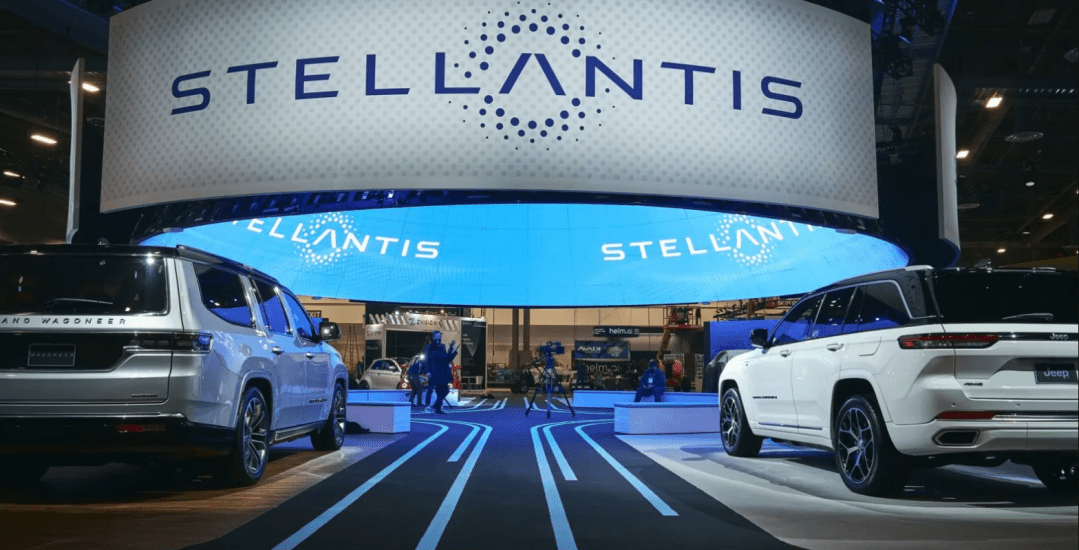
Stellantis partners with Wayve to accelerate hands-free driving ambitions
Stellantis is deepening its investment in the autonomous space through a new partnership with UK autonomous tech provider Wayve. Through this collaboration, Stellantis, whose portfolio includes Jeep, Peugeot and Fiat, aims to bring more advanced hands-free capabilities to future vehicles across several of its brands.
The collaboration will see Wayve’s end-to-end AI Driver software integrated into the STLA AutoDrive platform, Stellantis’ foundational architecture for advanced driver assistance systems.
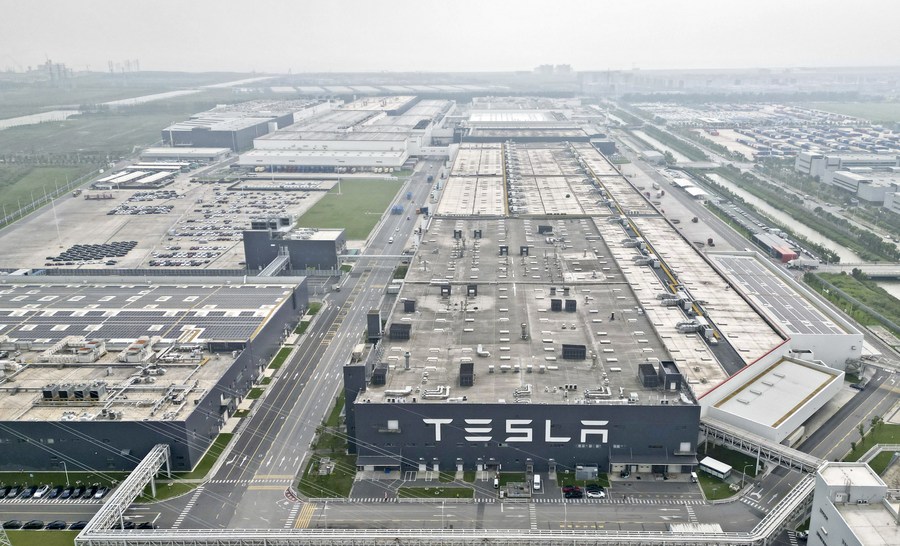
Tesla’s Fully Self-Driving (Supervised) technology gains regulatory approval in China
After years of regulatory discussion, Tesla has officially introduced its Full Self-Driving (FSD) technology in China, marking a significant step in the company’s long-running effort to gain a foothold in one of the largest autonomous markets.
The announcement arrives shortly after Elon Musk’s visit to Beijing, where he joined a U.S. business delegation during President Trump’s summit with Chinese President Xi Jinping.

The MOVEmnt Podcast Episode 3: Jeremy Bird
In Episode 3 of The MOVEmnt Podcast, we sit down with Lyft’s EVP of Global Growth, Jeremy Bird, to explore his vision for a hybrid autonomous network. As autonomy ramps up in the UK and Europe welcomes its first commercial robotaxi deployment in Croatia, our conversation couldn’t come at a more critical time in the industry.

The MOVEmnt Podcast Episode 2: Nancy Skinner
In Episode 2, MOVEmnt’s Eve Stevens sits down with a legend in the world of legislature and public service, Commissioner Nancy Skinner of the California Energy Commission.
With a career spanning several decades and a portfolio of landmark legislation, Skinner reflects on her long and influential career, sharing some of her proudest achievements and her personal connection to sustainability, policy and equitable transportation.

The MOVEmnt Podcast Episode 1: RJ Scaringe
What better way to kick off our 2026 interview series than with the CEO and Founder of Rivian Motors, RJ Scaringe?
Ahead of the launch of Rivian’s first mass-market vehicle, the R2, RJ sat down with MOVEmnt Editor and podcast host Eve Stevens to discuss Rivian’s roadmap for autonomy, their signature zonal architecture, and RJ’s deep-rooted fascination with the automotive world.

Introducing The MOVEmnt Podcast, MOVEmnt’s definitive auto tech podcast
We are launching The MOVEmnt Podcast, the definitive auto tech podcast from the brains behind our digital publication.
The MOVEmnt Podcast gives voice to the brilliant minds leading conversations around electric, autonomous and software-defined mobility, platforming the stories behind the industry’s top movers and shakers.

Stellantis banks on “small, stylish” E-Cars to boost sales in European EV market
Fiat and Jeep owner Stellantis is making a bet on smaller, more compact electric vehicles in a bid to boost sales in Europe’s car market.
The venture, known as E-Car, will begin production in 2028 at the Pomigliano d’Arco plant in Naples, Italy.
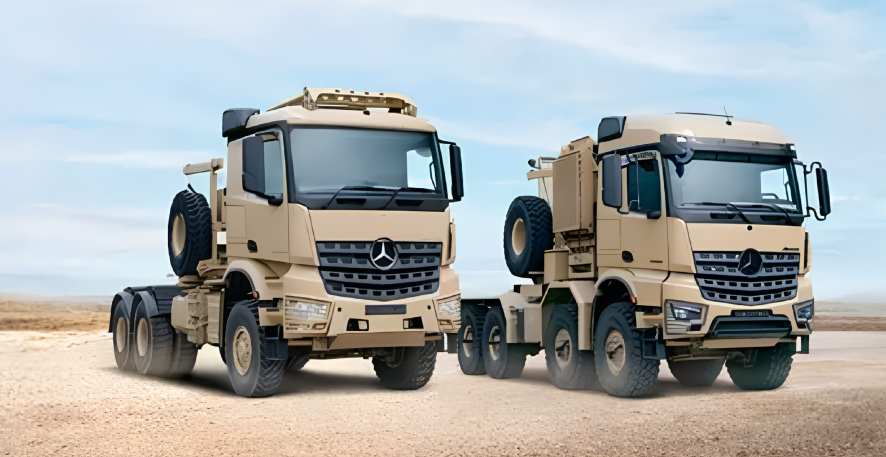
Will a dual-use defence strategy revive Europe’s struggling automotive industry?
As Europe’s car industry struggles in the face of intensifying Chinese competition and Trump’s imposed tariffs, some industry experts expect the historic symbiosis between the automotive and defence is set to deepen. This shift comes at a time when Europe is preparing to ramp up its military investment in the face of global conflict, an increasingly volatile relationship with the U.S., and the fracturing of the NATO alliance following Trump’s invasion of Greenland earlier this year. Last year, EU President Ursula von der Leyen described 2025 as an “era of rearmament”, a trend which has only escalated with recent disruption in the Middle East.
One such automaker considering this dual-use approach is German automotive brand Mercedes-Benz, which announced on Friday that it would be open to exploring military use cases.

MOVE 2026 WIM Awards: Meet the women forging the future of automotive and tech
After a record number of nominees, voting is now open to crown the winner of MOVE 2026’s WIM Awards. The winner of this year’s award will be announced at MOVE 2026, June 17 at London’s ExCeL.
We are shouting out a handful of the inspiring female voices who are forging the future of automotive and tech, through their hard work, creativity and determination.

Follow us!