In the Motor City, the mobility innovations of tomorrow aren’t just happening on assembly lines in the brick-and-mortar automobile factories that made Detroit famous around the world.
The Regional Transit Authority of Southeast Michigan (RTA) is leading the charge to connect our region through accessible, inclusive transit. Connecting a four-county region of more than 4 million people and thousands of square miles cannot be done with a hammer and nail.
As laid out by our Regional Transit Master Plan, the RTA and Southeast Michigan’s transit providers are rolling out solutions that fit people’s lives and meet our communities’ needs for today and beyond.
In the first half of the 20th century, Detroit boasted a booming population and economy that led the nation, which saw our region grow rapidly and outwardly. The installation of the nation’s first expressway led the way to a transportation system centred around the automobile.
Now, the demand for reliable public transportation is steadily growing once again, and efficient, accessible transit options are evolving. Transit has proven to be essential in attracting and retaining people, including young workers and aging populations.
The RTA was established in 2012 through state legislation to bring together a fragmented system and provide Southeast Michigan with a clear path forward.
We partner with transit providers, communities, businesses, and residents to shape a vision of what public transit can be—and what it can do for our economy, neighbourhoods, and people. Our mission is to develop new and better ways to move and connect people, with the ultimate vision of a region where advancements in transit generate prosperity for all.
We’re implementing that vision through three primary roles: as drivers and doers, transit subject matter experts, and community connectors.
Our work is most visible through the services we operate. That includes the QLINE, a free, 3.3-mile streetcar on Woodward Avenue, one of Detroit’s most iconic corridors. When it launched in 2017, the QLINE was the first streetcar in 61 years on a major Detroit thoroughfare.
Based on years of data and research, there was a demand for nonstop, express transit connections. So, we acted, introducing pilot services. We launched D2A2, which connects Detroit and Ann Arbor—welcoming university students, commuters, and visitors.
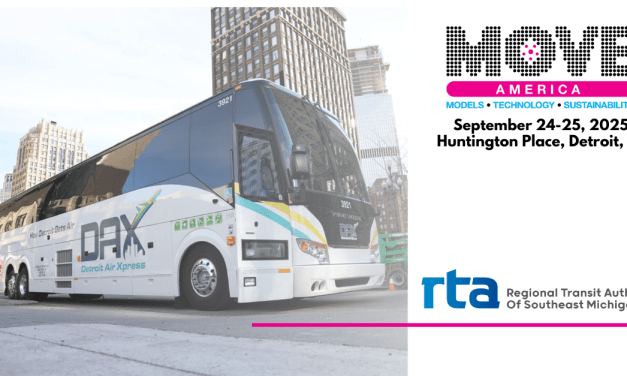
Next, we implemented the Detroit Air Xpress (DAX), the first nonstop transit link to Detroit Metropolitan Airport. It has quickly gained popularity among residents, tourists, and airport employees.
The work behind the scenes makes this all possible. Long before these projects touched down, they were action items and recommendations in our Regional Transit Master Plan. Now, a combined 15,000 riders a month rely on D2A2 and DAX. We’re not resting on our laurels.
Guided by our master plan, we’re following national trends and responding to residents’ wishes by making payments and navigation easier and improving service coordination.
When people see transit work, they use it. In November 2022, Oakland County residents passed a 10-year transit millage that filled service gaps in critical areas by expanding and creating new bus routes. Other places are following suit.
Our partners at the Detroit Department of Transportation (DDOT) and Suburban Mobility Authority for Regional Transportation (SMART) are fine-tuning their networks so routes serve more people and match travel patterns. They’re also testing micro transit services, which run smaller vehicles on rider-tailored routes, to respond to real-time needs.
Momentum is building. Every new rider on D2A2, every family that benefits from expanded Oakland County service, every senior who can make it to a doctor’s appointment thanks to transit represents progress toward a more connected region.
Our achievements are not just wins for transit – they are investments in economic growth, workforce development, and quality of life.
Southeast Michigan residents deserve a transit system as innovative as the city that put the world on wheels. Together with our partners, we are laying the foundation for a region where people can move more freely, where opportunity is within reach, and where mobility fuels prosperity for generations to come.
Joining us in September? Check out the RTA’s website for up-to-date travel options, for conference days and beyond.
Now only 9 days to go until America’s #1 converged mobility event. Be part of the MOVEmnt and register for tickets today!
Kyndryl the world’s largest technology infrastructure services provider, and Microsoft today announced a joint effort to enable the adoption of enterprise-grade generative AI solutions for businesses on The Microsoft Cloud.
Leveraging the partnership’s Joint Innovation Centers, Kyndryl’s growing patent portfolio in data and AI, and its access to Microsoft 365 Copilot, Azure OpenAI Service and Microsoft Fabric, the two companies will rapidly design, develop and drive new generative AI innovations and solutions across their enterprises. To further the advancement of new AI capabilities, Kyndryl is also committing to utilize the Kyndryl University for Microsoft to educate thousands of Kyndryl employees on new Microsoft AI technologies.
Advancing Customer AI-Readiness
Central to enabling the expanded collaboration, Kyndryl is launching an AI-readiness program within Kyndryl Consult that is dedicated to responsibly exploring the adoption of generative AI solutions. Highly skilled Kyndryl experts will help new and existing customers build a trusted data foundation and navigate the complexity of using new generative AI technologies.
Leveraging its deep domain and enterprise-grade AI expertise — spanning across industries and solution areas — the company will help customers evaluate the benefits of generative AI through key service areas, including:
Collaborative Innovation: Customers can tap into Kyndryl Vital and the Microsoft and Kyndryl Joint Innovation Centers to explore and co-create custom use cases and identify unique ways to leverage generative AI in their enterprises and unlock business value.
Enhanced Customer and Employee Experience: Using its expertise in managing complex IT environments, Kyndryl will pilot new technologies and develop industry specific models, use cases and solutions that further build on its existing capabilities to help customers improve enterprise automation and workplace productivity.
Of note, Kyndryl has supported several customers, as well as itself, in leveraging AI and a virtual assistant to automatically summarize problem descriptions and dynamically surface relevant information to improve efficiency and response rates.
Build a Strong Data Foundation: Kyndryl will work with customers to provide end-to-end services — from building a trusted data foundation and architecture, to managing customers’ data from the point of creation to the time of consumption, enabling higher quality data and improved reliability.
Execution & Management: Leveraging its data and AI architectural expertise, Kyndryl will deploy bespoke frameworks for customers to derive value from data and generate AI insights at scale, in a responsible and optimal manner.
“With over three decades of experience in delivering data services, advanced security capabilities and managing complex IT environments, we are well-positioned to work alongside Microsoft to help organizations confidently apply generative AI at scale and positively impact their businesses while being mindful of known risks,” said Stephen Leonard, Global Alliances and Partnerships Leader, Kyndryl.
“Kyndryl is creating a trusted environment for organizations to explore the benefits and value it can bring to organizations as they look to drive efficiencies, grow and deliver greater business outcomes,” said Stephen Leonard, Global Alliances and Partnerships Leader, Kyndryl. “With over three decades of experience in delivering data services, advanced security capabilities and managing complex IT environments, we are well-positioned to work alongside Microsoft to help organizations confidently apply generative AI at scale and positively impact their businesses while being mindful of known risks.”
“Together with Kyndryl, we have a shared vision to responsibly enable our customers to jointly explore, design and deploy generative AI solutions across their enterprises, and to do it in a way that enables them to realize business value,” said Stephen Boyle, GM Global Partner Solutions, Microsoft. “As a leader in the delivery of generative AI and data platforms, we believe partners such as Kyndryl are critical to the successful use of emerging technologies for business.”
“As a leader in the delivery of generative AI and data platforms, we believe partners such as Kyndryl are critical to the successful use of emerging technologies for business,” said Stephen Boyle, GM Global Partner Solutions, Microsoft.
Together, Kyndryl Consult, Kyndryl Bridge and Kyndryl Vital represent a cohesive approach to helping customers envision the outcomes they want, design and implement solutions, and assess results, while continuously evolving their IT infrastructures for the future.
As greater volumes of data and analysis require more computing power, Kyndryl Bridge will enable customers to easily manage their complex technology estates through services such as AIOps and FinOps, and will leverage AI to help customers achieve their business goals in a cost-effective, insightful and security rich manner. Kyndryl also will continue to enrich its advanced delivery capabilities through additional generative AI services.
The strategic partnership with Microsoft was Kyndryl’s first global strategic alliance upon becoming an independent public company. Together, the companies continue to unlock new areas of innovation that drive better business outcomes for customers, and taps into incremental multi-billion-dollar revenue opportunities in fast-growing areas such as data modernization, governance and AI.
Kyndryl is uniquely qualified to offer customers a first-hand perspective on AI implementations as it continuously tests, innovates, improves, and becomes an expert in AI and other technologies before they are integrated into customers’ businesses. For instance, after becoming an independent company, Kyndryl embarked on its own technology transformation journey and has integrated AI across its operations, on Kyndryl Bridge and through its workforce productivity tools. The company plans to continue to develop new use cases for deploying generative AI internally and for its customers across industries.
Article written and supplied by Tata Consultancy Services (TCS), Platinum Sponsors of MOVE America 2024 at the Austin Convention Center, 24-25 September, Austin, TX. Get more exclusive insights from them at the event and make sure you meet them there. Authors: Naresh Mehta, CTO, Manufacturing, TCS and Rohaan Mishra, Global Head of Marketing, Manufacturing, TCS.
The automotive industry, once synonymous with unbridled power and freedom, now faces a pivotal moment in its evolution.
The environmental impact of traditional vehicles has spurred a global call for change, pushing the industry to reimagine its role in a sustainable future. While the challenges are undeniable, they also present an unprecedented opportunity for innovation and transformation. Electrification, advanced battery technology, sustainable supply chains, and autonomous vehicles are not just technological advancements; they are the building blocks of a new era of automotive excellence. Emerging technologies like Generative AI and Quantum Computing add another layer of intrigue, promising to accelerate this transition and unlock unimaginable possibilities. The road ahead is filled with both promise and questions. Can we harness these technologies to create a truly sustainable automotive ecosystem? How will we balance innovation with responsibility? The answers to these questions will shape the future of mobility, and the stakes couldn’t be higher.
Electrification and Battery Technology: Powering a Sustainable Future
The Rise of Electric Vehicles (EVs): A Silent Revolution
The internal combustion engine, a marvel of engineering that once propelled us into the modern age, now faces a formidable challenger: the electric motor. Electric vehicles (EVs) are rapidly gaining mainstream acceptance, with global sales doubling in 2021 to reach 6.6 million units. Experts predict that EVs will dominate new car sales by 2030, and Bloomberg NEF’s Electric Vehicle Outlook 2023 projects that they will represent 77% of global passenger vehicle sales by 2040. The allure of EVs lies in their promise of cleaner air and reduced greenhouse gas emissions. The International Council on Clean Transportation estimates that EVs can reduce greenhouse gas emissions by up to 50% compared to conventional vehicles, depending on the electricity source. The widespread adoption of EVs can lead to substantial improvements in air quality, potentially preventing up to 110,000 premature deaths in the United States alone by 2050.
Advancements in Battery Technology: The Quest for the Holy Grail
The battery remains a critical area of focus in the EV revolution. It’s the heart of the vehicle, but also its Achilles’ heel – heavy, expensive, and with a limited range. The quest for the perfect battery is the automotive industry’s holy grail. Solid-state batteries, lithium-sulfur, and advanced lithium-ion technologies offer tantalizing possibilities, but challenges persist in sourcing raw materials and developing efficient recycling processes. To overcome these hurdles, the industry is turning to data & analytics, harnessing real-world battery performance data to inform design and optimization. Generative AI is also playing a role, accelerating the discovery of new materials and battery architectures. Additionally, quantum computing holds the potential to revolutionize battery research by enabling the simulation and analysis of complex chemical reactions at the atomic level, potentially leading to breakthroughs in battery chemistry and performance.
Sustainable Supply Chains: From Linear to Circular
The Complexities of Automotive Supply Chains
Automotive supply chains are intricate networks that span the globe, with the average car containing over 30,000 parts sourced from all corners of the world. This complexity makes them vulnerable to disruptions, as evidenced by recent events like the 2022 Suez Canal blockage and the conflict in Ukraine, which impacted vehicle production worldwide. Beyond disruptions, these supply chains have significant environmental and social impacts, contributing to around 17% of global greenhouse gas emissions. The extraction and processing of raw materials can lead to resource depletion and environmental degradation, while concerns persist regarding labor practices in certain parts of the supply chain. The carbon footprint of lithium-ion battery production alone can range from 61 to 106 kg CO2-equivalent per kWh of battery capacity.
The Shift Towards Circularity
Recognizing the need for change, companies are adopting sustainable supply chain practices. Some are embracing circular economy models, aiming to minimize waste and maximize resource utilization throughout the product lifecycle. Renault’s closed-loop recycling system for its electric vehicle batteries and Volvo’s partnerships with battery recycling companies exemplify this trend. Others focus on ethical sourcing, ensuring that their suppliers adhere to strict standards. Initiatives like the Drive Sustainability partnership further promote responsible sourcing and sustainable practices throughout the automotive supply chain.
Technology as an Enabler
Technology is a key enabler in creating more transparent, traceable, and efficient supply chains. Blockchain technology enhances traceability, with Ford exploring its use to track cobalt sourcing for EV batteries and Volkswagen using it to track the carbon footprint of its supply chain. The Internet of Things (IoT) provides real-time visibility into supply chain operations, as demonstrated by BMW’s use of IoT sensors to track vehicles in transit. AI-powered analytics aids in informed decision-making and operational optimization, with Daimler Trucks North America using AI to predict maintenance needs and Renault using it to optimize spare parts inventory. Furthermore, Generative AI can simulate various scenarios and predict potential disruptions, enabling proactive risk mitigation and ensuring supply chain resilience. Quantum computing, with its immense computational power, holds the potential to revolutionize supply chain logistics and optimization, enabling real-time decision-making and resource allocation for a more sustainable future.
The Autonomous Future: Redefining Mobility
The advent of autonomous vehicles (AVs) promises to reshape the transportation landscape, offering potential benefits that extend beyond safety and convenience.
The transition to an autonomous future, however, necessitates careful management to address concerns about sprawl, equitable access, and job displacement.
The Promise of AVs
The environmental implications of widespread AV adoption are substantial. Optimized driving patterns in AVs can reduce fuel consumption and emissions by up to 40%. Reduced congestion can lead to improved air quality, while shared autonomous fleets can decrease overall vehicle ownership and production needs, further contributing to a greener future. The potential impact on urban planning and infrastructure is immense. With AVs, we may see a decrease in the need for parking spaces, leading to the repurposing of urban land for green spaces or affordable housing. Public transportation could be revolutionized with on-demand autonomous shuttles, improving accessibility and reducing reliance on personal vehicles. The transformation of the transportation industry is also inevitable, with new business models and services emerging around autonomous mobility.
Data as the Driving Force
Data and analytics are crucial in realizing the full potential of AVs. By collecting and analyzing vast amounts of data from AVs on the road, including driving patterns, traffic conditions, and energy consumption, we can gain invaluable insights that inform the development of more efficient and eco-friendly autonomous driving algorithms. This data-driven approach empowers us to optimize routes, minimize energy waste, and reduce emissions. Additionally, Generative AI can enhance the safety and efficiency of AVs by simulating real-world scenarios and generating synthetic training data, enabling the testing and refinement of autonomous driving algorithms in a safe and controlled environment. The ability to generate adversarial scenarios and simulate anomalies can further enhance the robustness and reliability of AV systems. The advent of quantum computing also holds immense potential for the AV industry. Its unparalleled computational power could enable real-time processing of complex traffic scenarios, leading to safer and more efficient navigation.
Navigating the Societal Impact
However, this transition also raises important questions. The potential for job displacement in the transportation sector is a significant concern. Ensuring equitable access to AV technology is another challenge. The cost of autonomous vehicles and the infrastructure required to support them may create barriers for low-income communities, exacerbating existing transportation inequities. Furthermore, the ethical and legal considerations surrounding AVs are complex and multifaceted. Questions of liability in accidents, the role of human oversight, and the potential for misuse of AV technology all need to be carefully addressed through thoughtful policy and regulation. Governments and regulatory bodies will play a crucial role in shaping the development and deployment of AVs, ensuring that they are safe, equitable, and contribute to a sustainable future.
The Way Forward
The automotive industry stands on the brink of a new era, driven by the imperative for sustainability.
Electrification, advanced battery technology, sustainable supply chains, and autonomous vehicles offer a glimpse into a future where mobility is not just convenient and efficient, but also clean, equitable, and responsible. Emerging technologies like Generative AI and Quantum Computing are poised to accelerate this transformation. But technology alone is not enough. We need bold leadership, collaborative innovation, and a shared commitment to building a sustainable future. The power of data and analytics weaves these advancements together, fueling innovation and guiding decision-making.
The road ahead is filled with both challenges and opportunities. The transition to a sustainable automotive ecosystem will require addressing complex issues such as ethical sourcing, responsible recycling, job displacement, and equitable access to new technologies. But the potential rewards are immense: cleaner air, reduced greenhouse gas emissions, safer roads, and a more equitable and accessible transportation system.
Let us embrace this journey with courage and determination, steering the automotive industry towards a greener horizon. The choices we make today will shape the world of tomorrow. The time for action is now. Let us work together to create a future where mobility is not just a privilege but a right, and where innovation serves the greater good of both people and the planet.
The references cited in the article are as follows:
International Energy Agency. (2022). Global EV Outlook 2022.
Union of Concerned Scientists. (2020). Cleaner Cars from Cradle to Grave.
Norwegian Road Federation (OFV). (2022). Electric car sales statistics.
Amnesty International. (2016). This is what we die for: Human rights abuses in the Democratic Republic of the Congo power the global trade in cobalt.
University of Michigan Transportation Research Institute. (2016). Fuel Economy Impacts of Connected and Automated Vehicles.
McKinsey & Company. (2022). The semiconductor shortage continues to impact the automotive industry
CDP. (2020). The automotive supply chain’s decarbonization challenge
Renault Group. (2022). Re-Factory: a second life for vehicles and their components
Volkswagen Group. (2022). Volkswagen expands partnership with Minespider for responsible sourcing of battery raw materials
Maersk. (2023). Remote Container Management
Renault Group. (2021). Renault uses Artificial Intelligence to optimize its spare parts inventory
Daimler AG. (2018). Daimler and IBM explore quantum computing to advance next-generation lithium-sulfur batteries and materials for automotive applications.
QuantumScape. (2023). About Us
BloombergNEF. (2023). Electric Vehicle Outlook 2023
International Council on Clean Transportation. (2021). Global Comparison of the Life-Cycle Greenhouse Gas Emissions of Combustion Engine and Electric Passenger Cars
American Lung Association. (2020). Zeroing in on Healthy Air: Electric Vehicles and the Future of Transportation
Automotive Industries Association of Canada. (2023). The Automotive Industry in Canada
Hawkins, T.R., Singh, B., Majeau-Bettez, G. et al. (2017). Comparative environmental life cycle assessment of conventional and electric vehicles. J Ind Ecol , 21 , 53–64.
Boston Consulting Group. (2017). Revolution Versus Evolution: How Autonomous Vehicles Could Change the Global Automotive Industry
Greenblatt, J. B., & Saxena, S. (2015). Autonomous taxis could greatly reduce greenhouse-gas emissions of US light-duty vehicles. Nature Climate Change , 5 (9), 860-863.
World Economic Forum. (2020). The Future of Jobs Report 2020.
Waymo. (2023). Simulation: The Key to Unlocking the Potential of Autonomous Vehicles.
Job creation indicates a surge in technical and skills trade work to support EV and renewable energy sectors by 4.2% over the past year, twice as fact as the U.S. economy overall.
With companies scaling back their programs to support the growth in Electric Vehicles (EVs) the need for advanced systems to develop these technologies is on the rise, supported by a high level of job creation YoY for the talent and skills necessary to create these products. So says Bill Newman, Industry Executive Advisor for Automotive at SAP.
“While companies are retooling their program schedules in the wake of ebbing consumer hype for EVs, there is no end in sight to the need for engineering and systems talent as well as skilled trade workers to support the growth expected long-term in the EV and renewable market,” Newman suggests.
Newman’s comments come as data released on August 29 from the Department of Energy that shows clean energy jobs in EV and renewable sectors, as well as solar and wind, grew 4.2% last year, twice as fast as the U.S. economy overall. These jobs also accounted for 56% of those created by the energy sector according to several outlets covering the DOE release.
In a recent Automotive News article, Newman considered the need for talent across all levels of the organization citing “complexity, technology and speed of change, and displaying what is possible in the realm of leadership development” according to the article.
One bright spot in the EV world is the consistency of technology advances in the Commercial Vehicle and Heavy Equipment space, where some vehicle makers have been electrified for decades.
“All of these industry segments play a key role in the overall development of talent and the modernization of enterprise systems to take the industry forward. Different segments will lead at different times, despite what media pundits may say,” Newman observes. “Sometimes you need to ignore the hype and get behind the headlines to what is really happening in the industry.”
Artificial intelligence (AI) is much more than a “buzz phrase” and is set to have a deep and wide impact across all industrial sectors. While many mobility companies already are using traditional AI approaches, the rapid adoption of generative AI (GenAI) has raised awareness of AI’s capabilities and potential to transform and disrupt.
Despite uncertainty, we have identified five key steps mobility leaders can take today to confirm that their companies are AI ready. These initiatives address the challenges to AI deployment and differentiate between how companies can “act now” vs. “evolve later.”
Initiative 1. Establish an “AI value realization office” and evolve into a control tower
The value realization office coordinates knowledge sharing and shapes governance, but its primary goal is to realize benefits, conduct project and risk management, and optimize resources.
Act now: Set up an AI value realization office with a focused scope to test and learn
One way to experiment with AI is to create a value realization office via a simple project management office within a single business unit. This should involve stakeholders with different specializations, with C-suite support, focused on high-priority or quick-win projects. Leveraging easier-to-use technologies, such as GenAI and low-code or no-code, can lower technical barriers to experimentation, enabling nontechnical people to participate earlier.
Evolve later: Scale up the value realization office into a control tower
As the office grows in creditability and scope, companies can increase its autonomy and responsibility to scale up AI deployment with increasing C-suite oversight. It should evolve into a control tower, with formal positions, governance and resources.
Initiative 2. Explore future scenarios to align the approach to AI
There is no shortage of potential use cases for AI, but organizations often struggle to align these use cases with overall strategy and vision.
Act now: Use future-back planning linking AI to business value
To develop focused initiatives aligned with an overall AI vision, companies should begin with future-back planning to identify the potential impact of AI. Future scenarios should consider regulatory, macroeconomic, supply chain and resource constraints and link AI activities to business value.
Evolve later: Allocate resources continuously
To transition the value realization office into a control tower, link the top-down scenario planning and capital allocation with bottom-up learnings and activities. Scenarios can also inform which skills are needed for reskilling plans, data requirements for data architecture upgrades and which competency white spaces exist for ecosystem strategies.
Initiative 3. Develop a workforce reskilling plan
AI is widely anticipated to have a sweeping impact on work and talent, as its rapidly advancing capabilities allow it to perform a wider variety of work with increasing ease and sophistication.
Act now: Create a skills assessment to identify reskilling needs
Begin by assessing what tasks AI is likely to take on and what competencies are required for workers.
Evolve later: Develop and implement a reskilling plan
Organizations should strive to create a continuous learning culture to enable them to adapt to constantly changing skill needs. Incentives can play an important role, linking reskilling to career advancement and financial compensation.
Initiative 4. Create a data architecture assessment and upgrade roadmap
Having the right data architecture is critical for the effective deployment of AI across an organization. The challenge is compounded by the different kinds of data used by traditional AI (structured data) and GenAI (which excels at working with unstructured data). To use GenAI across the workforce, large language models (LLMs) should be trained on operating procedures and leading practices — building a “knowledge graph” for the organization.
Act now: Conduct a data architecture assessment
The data architecture should be evaluated to identify process design, dependencies, and data quality and security. Appropriate benchmarks can provide a performance baseline and support future AI business cases. Map the potential system upgrade scenarios by pairing phased upgrades with the potential ROI of corresponding use cases.
Evolve later: Execute a data strategy with phased upgrades
After the infrastructure is mapped, companies need a strategy to collect, store and manage the data needed for AI applications. The first step is to identify and implement processes for boosting data quality. Secondly, they can adopt an ROI-driven, phased approach to capture data and introduce new use cases.
Initiative 5: Develop AI ecosystem partnerships
AI partnerships bring greater complexity and depth of integration because AI solutions need to connect to central systems, be adaptable and be managed over time.
Act now: Map AI ecosystems and complementary capabilities
When choosing partners for AI projects, companies should compare their AI capabilities, maturity and ecosystems against emerging leading practices. Partners and ecosystems with complementary capabilities and experience can augment gaps in skills, technology and implementation. However, new partner and ecosystem relationships also require new governance. By establishing early partnerships with multiple entities, and identifying small pilot project opportunities, companies can build experience ahead of larger projects.
Evolve later: Use key evaluation criteria to support a narrow but strong AI ecosystem
As the AI partner ecosystem evolves, it is essential to establish key criteria to evaluate relationships. This helps to select and develop relationships with priority partners and act decisively to remove unnecessary partners that fail to deliver value.
In summary
Many of the benefits AI can bring to mobility companies come from the foundational work that needs to happen inside companies pre-deployment: It’s not solely a technology upgrade; it’s also an organizational and cultural upgrade.
Some see AI as a buzz phrase, but it’s worth remembering that AI isn’t a switch, it’s a journey. Read the full white paper on AI use cases and implementation here.
To learn more about implementing AI in your mobility business, come hear from EY professionals on the Finance and Business Models stage during day 1 of MOVE America.
The views reflected in this article are the views of the author and do not necessarily reflect the views of Ernst & Young LLP or other members of the global EY organization.
The Current State of the Commercial Vehicle Industry and Its Challenges
The commercial vehicle industry is undergoing a significant transformation. Traditional fuel-powered vehicles are giving way to electric and hybrid alternatives, driven by the need to reduce carbon emissions and combat climate change. However, this transition is not without challenges. According to data from the International Energy Agency (IEA), the transport sector accounted for 24% of global CO2 emissions in 2022, with a sizable portion coming from freight and commercial vehicles. While electrification presents a huge opportunity, fleet operators face issues like high upfront costs, infrastructure limitations, and fragmented support networks. Moreso, the industry’s complexity—where manufacturers, service providers, energy companies, and policymakers operate in silos—further impedes progress.
The Need for Change: Why Traditional, Siloed Approaches Are No Longer Sufficient
Historically, the commercial vehicle sector has operated within siloed ecosystems where manufacturers focus on producing vehicles, energy providers manage fuel and charging infrastructure, and fleet operators handle logistics. This fragmented approach limits the efficiency and innovation needed to advance sustainable mobility. The introduction of electric vehicles (EVs) has amplified the challenges, exposing gaps in collaboration between stakeholders. Without an integrated approach, businesses struggle with vehicle procurement, charging infrastructure access, maintenance, and ensuring grid resilience.
Defining the Ecosystem Approach: What It Means and Why It is Crucial for the Future of Mobility
An ecosystem approach involves creating a network of interconnected players—including vehicle manufacturers, energy companies, software providers, infrastructure developers, and regulatory bodies—working collaboratively to enable smooth transitions to new mobility models. Unlike traditional linear models, where each entity works in isolation, an ecosystem fosters synergies that enhance the overall value proposition.
Key Participants in the Sustainable Mobility Ecosystem include:
OEMS, Upfitters, and Distributors: Starting with the vehicles, these companies ensure vocation-specific, ICE alternatives are readily available for a variety of commercial trucking needs.
Energy Providers and Grid Operators: The backbone of EV adoption, these entities ensure that charging infrastructure is resilient and widely available.
Charging Infrastructure Providers: From EPCs to full-fledged CaaS providers, these partners are crucial for deploying both private and public charging solutions.
Telematics and Software Providers: Fleet management software integrates telematics, vehicle diagnostics, route optimization, and predictive maintenance to maximize efficiency.
Regulators and Policymakers: Their role is to create supportive policies that encourage electrification and provide the necessary financial incentives to drive adoption.
These stakeholders – and often many more – must operate in harmony, ensuring that every element of the mobility chain is efficient and future-proof.
Benefits of an Ecosystem Approach: Efficiency, Sustainability, Innovation
An ecosystem approach offers several key advantages:
Efficiency: By bringing stakeholders together, businesses can streamline operations and reduce friction in vehicle procurement, maintenance, and energy management.
Sustainability: Effective collaboration will expedite electrification, reducing the carbon footprint of fleet operations. According to BloombergNEF, adopting EVs and integrated charging solutions could reduce global CO2 emissions from road transport by up to 60% by 2050.
Innovation: Ecosystems foster collaboration and the exchange of knowledge, driving technological innovation to unimaginable heights.
Potential Impact of Widespread Adoption of an Ecosystem Approach
As more stakeholders embrace an ecosystem approach, the commercial vehicle industry is poised for rapid change. Widespread ecosystem collaboration could lead to up to a 40% reduction in total cost of ownership (TCO) for EV fleets by 2030, according to research by Deloitte. This could be a tipping point for global fleet operators to fully transition to electrification, driven by not just regulatory pressures but also by clear financial benefits.
Call to Action for Industry Collaboration
The future of mobility hinges on the commercial vehicle industry’s ability to adopt an ecosystem approach. A shift away from siloed thinking will empower stakeholders to collaborate, innovate, and drive meaningful change in a rapidly evolving landscape. SHAED, a leader in innovative commercial vehicle procurement, exemplifies this with its holistic solutions that integrate vehicle financing, charging solutions, and telematics under one umbrella. The industry must follow suit, embracing collaboration and co-creation to realize the full potential of electrification and innovation.
As the commercial vehicle market moves toward zero emissions, now is the time for fleet operators, manufacturers, energy providers, and policymakers to join forces and power the future of mobility.
Hardly a day goes by without artificial intelligence grabbing the headlines. Be it in process automation, medical diagnosis, autonomous transportation, language processing or even gaming, applications of advanced machine learning algorithms are ubiquitous. Outside of highly publicised advances such as ChatGPT, machine learning has equally spread across all branches of science and continues to provide a rich source of innovative research work. In this sense, batteries are no exception – AI has become commonplace in fields such as materials discovery and characterisation, optimisation of experimental design and manufacturing, as well as state of charge (SOC) and state of health (SOH) estimation.
Given the all-pervasive character of AI/ML in current state-of-the-art battery research, it is worthwhile to take stock and critically assess the added value of these methods vis-à-vis their more conventional counterparts. With all the hype, it can be difficult to see the wood for the trees – where does the value of these ‘black-box’ methods lie? Can their performance in real-world scenarios be expected to match expectations from the sandbox (lab) settings? Here we offer brief insight into the potential benefits of AI/ML based methods in the field of SOH estimation, and highlight where they fall short, ultimately making the case that only through fusion of data-driven and model-driven approaches can we provide robust solutions for real-world battery systems.
Benefits of AI/ML
Machine learning methods can be broadly categorised into supervised and unsupervised learning algorithms. The former seeks to construct an arbitrary (usually non-linear) mapping from a set of inputs to their corresponding outputs, through minimising the input-output error. The latter methods in turn seek to learn patterns in the absence of labelled data. SOH estimation in battery systems is, in general, treated as a supervised learning problem, where the set of inputs consists of either raw current, voltage and temperature telemetry data or specific ‘features’ calculated from them. The output is then either the current or future SOH of the battery, both of which are difficult to accurately estimate in real-world operating environments, where accurate reference performance tests are unavailable and usage patterns and operating conditions vary.
The data-driven paradigm stands in contrast to the more conventional ‘model-driven’ approach, which parameterises an explicit model describing the input/output response of a battery, and the gradual changes in parameters reflect the evolution of SOH. For the purpose of forecasting state of health, or remaining useful life, another model is required, which usually associates degradation in health with usage patterns (charging/discharging and storage behaviours) and environmental conditions (such as temperature).
Figure 1 – Two contrasting approaches to SOH estimation – conventional, ‘model-driven’ approaches have explicit models describing battery i/o responses as well as battery ageing. Purely data-driven or AI/ML methods forego explicit models and employ supervised learning methods to learn mappings between inputs and outputs.
Aitio, A. (2023). Bayesian methods for battery state of health estimation [PhD thesis]. University of Oxford.
The main advantage of AI methods over their ‘model-driven’ counterparts is their flexibility – they make very few assumptions with respect to underlying functional forms that describe the input-output mappings. They can therefore express very complex relationships between say, usage and battery degradation, in a manner that would be difficult to reproduce through empirical or semi-empirical models2. In addition, ML models can be comparatively easy to parameterise with standard off-the-shelf methods. In contrast, accurate battery and ageing models, especially those based on physical first principles, can be time-consuming to simulate and very difficult to parameterise.
The price of flexibility
The major advantage of AI based models comes with a significant drawback. The infinite flexibility to map complicated input-output relationships, foregoing conventional models relying on domain knowledge (or indeed any fixed functional form), means that one can always find a good fit.
Given the arbitrariness of the solution, there is then no guarantee of predictive performance outside the dataset used for training. While many techniques exist to mitigate this overfitting to training data, usually within the commonly used cross-validation cycle, they require significant tuning or ‘steering’ effort on behalf of the human modeller. In other words, human effort is essential in narrowing down the flexibility.
Figure 2 – There is often more human input to AI/ML methods than practitioners would care to admit – feature selection and tuning of the cross-validation cycle are determined by human input.
Limiting the ML search space is also done through ‘feature-engineering’, that is, the construction of inputs from raw data that modellers consider likely to affect the output in a meaningful manner. The adage ‘garbage in, garbage out’ applies here – it is arguably the case that finding meaningful input data outweighs the specifics of the chosen machine learning paradigm in achieving good performance. Domain knowledge becomes key. Moreover, it is not always clear to what extent modellers are in fact leveraging the flexibility of ML, as external (human) tuning of hyperparameters and model selection play a significant additional supervising role in the fitting process. True ‘end-to-end’ learning has yet to be demonstrated for battery SOH estimation.
The issue with data
Supervised learning algorithms require a labelled input-output data to train, and predictive performance in situ is largely determined by the coverage of the training set. For SOH estimation in lab conditions, this is relatively easy to obtain by conducting experimental ageing campaigns with periodic reference performance tests such as constant current discharge tests for capacity or pulse tests to measure DC resistance and EIS to measure complex impedance. However, in real-world operating conditions these are not usually available. The lack of validation data is particularly acute in trying to predict extreme or rare events, such as thermal runaway.
To mitigate against the lack of labelled data, it is possible to collect training data in the lab — in practice, however, this is not practical. For example, on RUL forecasting, accelerated ageing campaigns using large numbers of cells have been used to identify features in voltage data during early life that determine the probability of early failure. However, it is dubious whether such experimental work is of use in the real world. To shorten the duration of ageing campaigns, the chosen cycling profiles are clearly not representative of automotive or standard stationary use cases. In reality, battery systems experience broad ranges and complicated combinations of temperatures, C-rates, storage SOCs etc. – it is not feasible to collect experimental data for all possible combinations of stress factors encountered in situ. Even in the purely diagnostic case, having access features related to current state of health (devised in lab conditions) is by no means guaranteed in the real-world, where cell current and voltage measurements may be sampled at lower frequencies and for parallel configurations, where the net effect is to blur out many features of interest.
Expressive, yes, but insightful?
While AI methods are by design highly expressive, their black-box nature inevitably reduces the insight derived from them. For example, sensitivity analysis, gauging the effect on predictions due to changes in inputs, only applies locally in the nonlinear case. In other words, the sensitivity to a single input depends on the specific combination of all the others. This makes it challenging to gain intuition on model behaviour. This type of insight is crucial in the eventual decision process faced by stakeholders, who seek to understand which factors most significantly affect the estimates of the current (and future) health of their assets — a monolithic, one-dimensional health estimate is insufficient when it is impossible to deconstruct to its components.
Shades of grey
A purely data-driven approach to SOH estimation comes with several pitfalls. However, its inherent flexibility can be hugely valuable. A well targeted application of AI, in our view, is advantageous only when combined with battery domain knowledge. But machine learning should not be the starting point. Instead, we prefer a ‘bottom-up’ approach, relying on comprehensive first-principles understanding of battery systems, ranging from cell electrochemistry to pack integration. This allows us to prioritise well-targeted insights incorporating the state-of-the-art of battery research. AI/ML can then be applied to describe those relationships we know are not adequately modelled by first-principles.
Figure 3 – They grey box: the optimal combination of model-driven and AI achieves a balance between flexibility, reliability, and interpretability.
The AI element can be incorporated into the framework in a mathematically consistent manner using, for example, a probabilistic approach. Under this framework, a prior prediction of a variable of interest can be produced from a first-principles, physics-based analysis. This prediction may then be conditioned using observed data in conjunction with AI, yielding a refined posterior prediction, which matches the data more accurately. What is more, we strive to rigorously assess the uncertainty in predictions, which is a function of both confidence in the first principles and AI led components.
With this hybrid ‘grey-box’ approach, we capture the flexibility of AI while retaining the benefits from first principles. When operating within the range of data used for training the AI algorithm, we can count on accuracy beyond first-principles models, augmented by machine learning. As we move further from the training data, we can increase reliance on first principles in preference to the data-driven prediction, making extrapolation intuitive and reliable.
The net effect of our balanced approach is to provide stakeholders such as OEMs and fleet operators with accurate estimates of the current and future SOH. More specifically, by incorporating a deep first-principles understanding of battery behaviour, drawing from both academic research and our in-house experience from building battery systems for a broad range of applications, we can efficiently detect faults and predict onset of failure early into the life of a battery. Our estimate does not consist of a single metric – we can deconstruct degradation into separate mechanisms and identify limiting factors affecting performance. The advantage of using this high-dimensional health metric is substantial. With immediate advantages being enhanced safety and reliability, this type of analysis also enables reduced test programmes for OEMs, improved economics of second-life applications and optimisation of warranties.
So… it’s not all bad news
AI is transforming the battery SOH estimation landscape. But in doing so, researchers and industry alike face the risk of putting the cart before the horse – the role of AI should not necessarily be to re-invent existing physics-based or empirical models, but rather to augment them where appropriate. In this sense, there are enormous gains to be had in improving SOH diagnostic and prognostic accuracy, while retaining the intuitive understanding of battery behaviour, which will ultimately improve the decision-making process for those seeking to extract the most of their battery storage assets.
1 Zhang, D., Mishra, S., Brynjolfsson, E., Etchemendy, J., Ganguli, D., Grosz, B., Lyons, T., Manyika, J., Niebles, J. C., Sellitto, M., Shoham, Y., Clark, J., Perrault, R. (2021). 2021 AI Index Report.
2 Schimpe, M., von Kuepach, M. E., Naumann, M., Hesse, H. C., Smith, K., Jossen, A. (2018). Comprehensive Modeling of Temperature-Dependent Degradation Mechanisms in Lithium Iron Phosphate Batteries. Journal of The Electrochemical Society (2), A181–A193.
3 Severson, K. A., Attia, P. M., Jin, N., Perkins, N., Jiang, B., Yang, Z., Chen, M. H., Aykol, M., Herring, P. K., Fraggedakis, D., Bazant, M. Z., Harris, S. J., Chueh, W. C.; Braatz, R. D. (2019). Data-driven prediction of battery cycle life before capacity degradation. Nature Energy 4 (5), 383–391.
The travel and transportation industry is a complex web of interconnected systems, relying on a vast array of assets to keep people and goods moving. From cars and airplanes to trains and buses, the efficient manufacturing and operation of these assets and the surrounding infrastructure is critical to ensuring a smooth and safe travel experience. However, managing these assets across their entire lifecycle is a daunting task, requiring careful planning, execution, and maintenance.
Market Condition and Challenges:
Transportation and Automotive leaders are experiencing unprecedented challenges:
The transportation sector is under increasing pressure to reduce its contribution to nearly 24% of global CO2 emissions1
Preventive maintenance and run-to-failure are still common: 56% of the market today either run their assets to failure or practice traditional, time-based preventive maintenance2
The cost of unplanned downtime soared 50% in just two years from 2020 to 20223
50% of transportation CEOs identify IoT, mobile and connected devices as the technologies that will help deliver results over the next 3 years4
What’s the solution?
This is where Asset Lifecycle Management (ALM) comes in – a holistic approach to managing the whole lifecycle of your assets – including planning, deployment, operation, optimization, and disposal make it possible to reduce operational cost and risk, improve workforce productivity and asset reliability, while reducing environmental impact.
IBM’s ALM solution brings together core technologies such as Enterprise Asset Management (EAM), Asset Performance Management (APM), Reliability Center Maintenance (RCM), sustainability reporting and MRO IO (Maintenance, Repair and Operations Inventory Optimization) to fully equip organizations with the data, AI and tools to unify operations and mitigate risks.
A prime example of the power of Asset Lifecycle Management (ALM) is Transport for London’s (TfL) initiative to optimize the city’s public transportation fleet, encompassing buses, boats, bicycles, and the tube. By leveraging ALM technology, TfL can proactively identify and address potential issues, thereby extending the lifespan of its existing assets and reducing the need for replacement parts. This proactive approach also minimizes the risk of catastrophic failures, which can have significant consequences for commuters and the city’s economy. According to TfL’s estimates, the implementation of ALM is expected to yield net savings of £21 million over the next decade, specifically for its London Underground operations.
We would love to hear what your challenges are
On Day 1 of MOVE, from 12:10 – 12:50 PM in Theater 4, we’ll be hosting a dynamic workshop led by transportation and automotive experts. We invite you to be part of this discussion to explore solutions to the pressing issues you face in the field. To make sure your specific concerns are addressed, we invite you to send your challenges in advance to Connor.Russell@ibm.com.
Want to learn more about asset lifecycle management, AI and how IBM Maximo can support the travel and transportation industry? Check out Day 1 of the Tech, Data and Innovation track where you can hear from IBM SMEs across Automotive, Aerospace, Fleet and Infrastructure. Join us at booth 545 to see our new Gen AI assistant in action.
1 International Transport Forum, 2023.
2 IDC SaaS Path, IDC, 2023.
3 The True Cost of Downtime, Siemens, 2023.
4 Alicke, Knut, Tacy Foster, Katharina Hauck, and Vera Trautwein. Tech and regionalization bolster supply chains, but complacency looms. McKinsey & Company. Nov 2023.
Thoughtworks, a global technology consultancy that integrates strategy, design and engineering, today announced the launch of Software-Defined Vehicle (SDV) Pulse, an inaugural annual report informed by Thoughtworks’ and AWS’ observations, conversations and front-line experiences helping their global clients in the automotive industry transition to SDV.
With software deeply embedded in modern vehicles enabling capabilities in everything from passenger infotainment to autonomous driving, the report compiles the most relevant technologies, practice and other key trends for auto manufacturers and suppliers to consider for their SDV strategy.
The SDV Pulse report has forty insight each represented as a“pulse point”, that reflects a technology, practice or trend. Thoughtworks and AWS experts have also identified an adoption stage for where each pulse point currently stands. Broadly, these stages are “concept phase” for pulse points that are emerging yet their potential remains largely unproven; “early adoptions” for pulse points that represent a significant differentiation opportunity for potential early adopters; and “mass adoption” for pulse points that are becoming widespread across the industry so the window to translate them into differentiated value is closing.
“The relationship between the automotive industry and software engineering is, to say the least, complex. One thing everyone agrees on is that this relationship is inescapable. To remain competitive and future-proof, everyone needs to understand the challenges, but also the immense opportunities,” said Michael Fait, global head technology for SDV, Thoughtworks.
Highlighted themes in the inaugural SDV Pulse include:
In-vehicle zero-trust architecture (ZTA) (concept phase): ZTA, with its fundamental principle of assuming no inherent trust, offers a robust defense mechanism against cybersecurity risks.
Continuous compliance (concept phase): Organizations can automate compliance checks and audits and integrate tools into software development pipelines, allowing teams to detect and address compliance issues early in the development process.
Developer portals for vehicle APIs (early adoption phase): Multiple OEMs now offer portals to help developers build applications using vehicle APIs. We see these developer portals as a key enabler of SDV ecosystem growth.
Rust (early adoption phase): Rust is a modern alternative to C++ for embedded automotive development that will improve safety and productivity. The source code and qualification documents are open-sourced which is a fundamental step towards using Rust in functional safety-relevant cases.
Automotive grade Linux (AGL) (mass adoption phase): Initially started as a platform for building infotainment systems, AGL is the only project organization that addresses all software in a vehicle. It has now reached a level of maturity where several major automotive manufacturers are adopting it for their production vehicles.
Hardware accelerators in the cloud (mass adoption phase): Automotive companies send and store petabytes of sensor data in the cloud — a process that can be both time-consuming and expensive. Accessing hardware accelerators in the cloud helps enable OEMs to mitigate the challenge of hardware accelerators that are growing scarce and expensive.
“AWS works backwards with customers to address business challenges, and leveraging our collective expertise, AWS and Thoughtworks are helping the industry transition to a software-defined future,” said Stefano Marzani, Worldwide Technology Lead, SDV at AWS. “Through increased development in the cloud, companies across the automotive landscape can take advantage of technologies like AI, ML and now generative AI to turn data into insights that will inform the functions and features of tomorrow.”
Thoughtworks helps organizations modernize their infrastructure, capabilities and practices in the transition to SDV leveraging the broad and deep portfolio of AWS cloud services. Visit thoughtworks.com/insights/business to stay up to date with the latest business and industry insights for digital leaders.
Electric vehicle adoption hasn’t yet met industry expectations, but the growing emergence of software-defined systems could help improve functionality—and boost momentum for EVs.
The cost of maintaining an electric vehicle is lower than internal-combustion engine (ICE) vehicles, which is the top reason people cite for wanting an EV, according to the 2024 Deloitte Global Automotive Consumer Study. But consumers remain concerned about driving range and insufficient charging infrastructure.
With advanced software, vehicles can manage the charging process, optimizing it for speed and battery health, which can extend battery life. The software is also continually updated to automatically find the cheapest or quickest charging options by analyzing electricity rates and grid demand in real-time. This kind of intelligent charging management not only saves money, but also creates a hassle-free fueling process.
State-of-the-art software and features tailored to consumer experiences offer another significant benefit. Imagine your car automatically increasing the suspension height because it knows you are approaching rough terrain or dynamically managing the tension in the steering wheel to stabilize turns in icy conditions. Traditionally, these vehicle aspects could only be upgraded by purchasing a new model or through aftermarket modifications. Now these performance updates are facilitated by software updates sent over the air, which allows consumers to personalize their vehicles to their individual mobility behaviors.
Shifting to a new mindset
The rise of software-defined vehicles presents a major opportunity for auto companies: the opportunity to sell to consumers no longer ends at the vehicle transaction. Instead, it extends throughout the vehicle’s life cycle, requiring ongoing support and updates.
This shift underscores the need for automakers and retailers to adapt their business models to incorporate both digital and traditional services. Examples include combining physical and digital service lanes as well as leveraging monetization strategies throughout a vehicle’s life cycle. Moreover, automakers must master the deployment of over-the-air (OTA) software updates. Excelling in this area is essential to continuously improve vehicle software, resolve issues and introduce new features, thus boosting the long-term value of vehicles.
In order to make these organizational changes, auto companies should focus on a top-down approach. A company’s board, executive leadership team, and shareholders need to adopt a software-centric strategic focus and prioritize the capital investments necessary to drive enterprise transformation and create industry advantage. Overall, automotive companies should rethink their role in the ecosystem and filter their strategies through the lens of a software company—not a traditional automaker.
Want to learn more about a software-driven future for the automotive industry? View our panel on the EV Stage on Day 1: ‘The Vehicle as a Connected Hub’ where we’ll discuss advanced technologies that transform vehicles into interconnected platforms. And get in the driver seat with our SDV demo in booth #419. For more details or to schedule a demo visit Deloitte at MOVE America 2024.
Recent U.S. Chamber analysis describes escalating electricity prices across the nation have become a pressing concern. High Energy consuming technologies such as AI, data centers, and advanced manufacturing, paired with the growth of electric vehicles (EVs), are putting tremendous pressure on our existing grids. This trend highlights the urgent need for innovation and alternative energy solutions to mitigate costs, increase reliability, and improve grid resiliency.
At Miller EV Solutions, we are on the front lines of this energy revolution. We witness firsthand the challenges and opportunities presented by this rapidly evolving landscape. The increasing demand for energy is not just a technological issue; it is a public policy spotlight that requires immediate attention.
The Distributed Energy and MicroGrid Solution
Distributed energy resources (DERs) and microgrid systems as well as battery storage are proving to be a potent combination for energy and redundancy. They are positioned to transform our energy ecosystem. Distributed energy resources like solar panels and wind turbines create a needed shift away from our standard power generation systems. Thus generating energy closer to where it is consumed, which would allow DERs to alleviate strain on the current grid and enable consumers to become active participants in the energy landscape.
Then there are Microgrids. These are self-contained energy networks capable of operating independently or in combination with the grid. These systems act as a safety net during grid outages. They ensure uninterrupted power supply to critical facilities such as hospitals, data centers, and other emergency services. The integration of battery storage for these systems is crucial. They are able to capture excess energy generated by DERs during off-peak hours and dispatch that energy during high peak hours. This also offsets the need for the consumption of fossil fuels. Redundancy, achieved through multiple energy sources and backup systems, ensures a continuous power supply even if one component fails.
The Benefits
This approach would generate:
Cost savings by reducing energy costs through localized generation and efficient energy use.
Energy reliability through redundancy and an uninterrupted power supply.
Sustainability by lowering greenhouse gas emissions and increasing the use of renewable energy sources.
Consumer empowerment by providing greater control over their energy sources and patterns of consumption.
Energy independence which would reduce dependence on centralized power generation and fossil fuels.
Resiliency by providing the ability to maintain power during extreme weather events or similar.
A Call to Action
With the combination of government incentives, corporate sustainability commitments, and the easing of supply chain constraints, we are presented with a unique window of opportunity.
It is time to seize the opportunity to accelerate the adoption of DERs and microgrids. By investing in these technologies now, we are truly able to address growing energy issues. We are able to build a future where energy is decentralized, more resilient, and extensively more responsible.
The time to invest is now. The advantages are clear! From cost savings and reliability to environmental sustainability and economic growth. Embracing DER solutions and microgrids creates a more resilient and prosperous future. Lets capture this opportunity to transform our energy infrastructure and ensure a reliable energy supply for generations to come.
Casper Rasmussen knows how to EV better. As the founder and CEO of Monta – a software platform designed for the entire EV charging industry – he believes there’s a turning point happening in the US electric mobility market right now. But what does this mean for charge point operators (CPOs)?
The EV industry is heating up. Recently, the government announced a $1.7 billion funding package to help retool eleven US auto factories into EV production hubs. Add to this the news that Tesla recently lost considerable market share to manufacturers of low-cost EVs (including Ford and General Motors), and it’s clear to see: EVs are gaining strong traction in the US auto market.
This is stellar news for US-based auto manufacturers and CPOs, who took a risk and embraced electrification when most other industry players remained skeptical. With 35 million EVs set to be on the road by 2030*, it’s definitely time to start investing in charging infrastructure and gearing up for future profits!
The Key to Success: Think Beyond DC Charging
With so many opportunities to meet EV demands, where should forward-thinking CPOs even start? Rasmussen says that being strategic about charge point hardware isn’t enough.
“We need to look beyond the current DC way of thinking,” he reveals. He recommends building a flexible, robust, and effective destination charging infrastructure that can support the growing adoption of EVs in the US – and giving local drivers what they want. “It’s a misconception that DC charging is the only way to go. CPOs need to adapt to their customers’ needs, not the other way around,” he adds.
Rasmussen’s EV software company Monta has enjoyed a much more mature EV market in Europe over the last few years, providing him with some valuable insights. “We’ve found out that a ‘one-size fits all’ approach just won’t cut it: CPOs need to respond to diverse customer needs and charging behaviors with highly tailored solutions. People want convenience and accessibility – which is exactly what Monta’s technology gives CPOs,” says Rasmussen.
Make a Solid Investment: Put the Chargers Where the People Are
Instead of recommending multiple systems, Rasmussen believes in creating an adaptable setup that meets all charging scenario requirements at different destinations – at home, at work, and on the road. “One of the biggest concerns for CPOs is that people won’t use the chargers they’ve invested in. The solution: put your chargers where the people are, rather than asking people to go to your chargers! And of course, make sure you have flexible software in place to meet their continuously changing demands,” Rasmussen emphasises.
As CEO of Monta, Rasmussen firmly believes that – just like the EV market growth in Europe – profitability is also inevitable in the US. That’s why he’s confident that all CPOs who start investing in building their local charging infrastructure, are making the best decision not just for their planet – but their business too.
Knowing the State of Health (SoH) and safety status of lithium-ion batteries is fundamental for managing electric vehicle safety, maintenance, and battery warranty. Yet, keeping a battery system safe and reliable is not as easy as just operating the battery within specified thresholds. It needs far more advanced solutions to ensure seamless, safe, and profitable operation.
For battery health and safety, key performance indicators such as SoH or State of Charge (SoC), are important values to keep track of. However, determining accurate battery SoH remains a considerable challenge. There is a lack of consensus in the industry about how SoH should be calculated, meaning there is no standardized approach. Different manufacturers also calculate SoH differently. This creates complexity, particularly for fleet operators as various parties might refer to their very own SoH calculation.
On-board battery management systems (BMS) sometimes, but not always, provide an estimation of SoH. However, the accuracy of the estimations decreases over the lifetime of a battery, meaning that on-board BMS alone are not sufficient in assessing a battery’s health over its entire lifetime. These barriers to predicting battery health can be overcome by deploying battery analytics.
Why is it Important to Assess Battery Health?
Lithium-ion batteries age over time, depending on how they are used. They lose capacity and increase their resistance, which, when used in vehicles, results in reduced driving performance and electric range.
The warranty provided by an electric car manufacturer usually ends when the battery reaches 70-80% of its original capacity. The time and mileage until the battery is considered ‘dead’ must therefore be maximized, so that an electric vehicle can be operated for as many years as possible. This is necessary to increase financial returns, as well as improve the climate footprint of the battery.
At any given time, the electric vehicle owner, the car and battery manufacturer, the fleet operator, or the insurance provider may want to understand how the battery is used, and how it performs in terms of its SoH. Doing so not only allows these stakeholders to gain transparency into the health of the battery, it also enables owners and manufacturers to streamline their daily operations and protect their long-term business case.
For example, fleet operators need to know when a battery’s performance has decreased to such an extent that it will not be able to complete certain routes. SoH data is also crucial in terms of understanding when warranties can be claimed from the manufacturer.
Providing SoH data is not a standard approach, but it can be enabled by transmitting battery data from the vehicle to a cloud platform. From such a platform, the SoH can be calculated using algorithms, and can be accessed by all stakeholders if and when desired.
Why Should You Care About Battery Safety?
As well as accurately determining a battery’s SoH, ensuring safe operation should also be a top priority. If a battery malfunctions, it poses a risk to the vehicle occupants, bystanders, and potentially emergency response personnel in the case of a serious accident. Safety issues are also closely related to long-term battery performance and reliability, as such issues will often accelerate wear and degradation.
In terms of reliability, it is not uncommon for a BMS to shut down a battery at a threshold that falls below a severe safety incident. This leads to unnecessary downtime, due to the BMS’s inability to sufficiently assess the issue in question. Limiting this downtime, in addition to preventing severe safety issues, is an essential aspect of efficient battery management.
So accurately assessing battery safety and reliability is very important, but unfortunately doing so can be quite complex, as a battery breakdown or fire is usually caused by an accumulation of events over time. Eventually, these events lead to some sort of battery failure.
Thermal runaway, a situation where the battery enters a rapid self-heating state, which leads to overheating, fire, or sometimes even explosion, is a common example of such a failure. Internal short circuits are another, caused in various ways by lithium plating and dendrite growth.
Because determining the exact cause of such issues can be quite complicated, relying solely on BMS to monitor battery safety is not advised.
How Can Battery Health be Assessed?
SoC and SoH cannot be accurately physically measured in a vehicle. Estimation models hosted by the on-board BMS estimate these by a combination of physical measurements and models, which are limited to only measuring temperature, voltage, and current.
The BMS consists of a hardware element and a software component, which keeps the battery in a ‘happy state’ at any given time during vehicle operation. It limits minimum and maximum cell voltage, current, and temperature, and is developed towards the specific battery cell chemistry, and the electrical arrangement and cooling of the modules and packs.
One of the primary objectives for the BMS is the safe and reliable operation of the battery at any given time, not the optimization over time. During operation, the BMS determines the SoC and (potentially) the SoH of the battery.
State of Charge: The typical SoC estimation algorithm integrated into the on-board BMS requires prior battery cell testing. It is accurate at the beginning of life but loses its accuracy over time if not updated.
State of Health: Not every car manufacturer has an on-board SoH model integrated in their BMS. Traditional SoH models require extensive cell testing as validation ‘on-board only’ is impossible.
Hence, on-board BMS models for estimating SoC and SoH have limited lifetime accuracy and validation options, meaning they do not enable businesses to operate the battery in the most economical way.
Why Relying on BMS is Not Enough
For numerous reasons, relying solely on BMS does not guarantee battery safety, or allow for accurate SoH measurements.
For Battery Safety
From a battery safety perspective, to begin with, BMS can themselves malfunction. And a malfunctioning BMS can lead to battery over-charging or deep discharging, causing batteries to exceed safe voltage, current, and temperature thresholds.
BMS also have limited access to historical data as they are rarely built to log information. Combined with limited computer power, this means BMS do not analyze historical data, something that is crucial for detecting complex safety issues that arise over time. Due to an inability to detect or prevent reactions occurring inside cells, common causes of battery fire such as short circuits caused by lithium plating and dendrite growth also go undetected by BMS.
Adding to this, as BMS function is to control only one battery, it is not possible to gain an overview of an entire fleet of vehicles with a BMS.
So, without additional safety mechanisms in place, stakeholders are unable to identify safety issues in time to ensure the overall safety of their fleet.
For Battery Health
As mentioned previously, varying definitions exist for what SoH actually means. There is no clear consensus in the industry about how it should be calculated. This means that different BMS manufacturers calculate SoH differently, and not necessarily accurately. BMS SoH algorithms also lose accuracy over time, as the BMS ages. While many risk factors are not covered in standard BMS metrics.
Overall then, BMS are generally not useful for accurately determining battery health or guaranteeing battery safety. A second layer of safety such as battery analytics is required for this. Battery analytics can provide reliable, accurate, and continuous information about the condition of batteries across an entire fleet.
Benefits of Battery Analytics and Connected Vehicle System on One Platform
Whilst on-board BMS are an important component for ensuring safe functionality of the battery, the insights they provide into battery health are limited. BMS alone are not capable of providing the data necessary to ensure battery safety.
Similarly, for fleet operators who are reliant on accurate SoH data to make important business decisions, such as planning when the battery needs to be changed, the information provided by a BMS is not sufficient.
A cloud-based battery analytics platform can provide more accurate SoH data that fleet operators can rely on. This information can be viewed at any time to provide all stakeholders with the necessary transparency.
A battery analytics platform has the added advantage of assisting fleet operators during warranty discussions, as operators and manufacturers can view battery health data in the platform, and do not need to conduct expensive testing.
The sector’s long-term future success will depend on better risk management and a more effective partnership with the insurance industry says Aon’s Nick Watson – Client Director, Affinity Consulting, and Marc Roberts – CEO Officer at Hiyacar.
Over the last eight years, seven peer-to-peer (P2P) car sharing companies have, at some stage, been in operation in the UK. But despite optimism that the P2P model – where car owners allow their vehicle to be used by others for short rental periods – could herald a new era of flexibility in mobility, many operators have hit the skids. In the past 12 months alone, the number of P2P operators in the UK halved from four to two, leaving only Hiyacar and Turo currently open for business.
This decline in market participants can be attributed to several factors such as a restriction of access to investor capital given the unfavourable macroeconomic outlook, competition between operators, and commercially owned fleets looking at more innovative rental models. Insurance has also been a challenge when it comes to finding a profitable yet competitive market balance between cover and price. To overcome the insurance hurdle and help ensure a sustainable future for P2P car sharing, more emphasis on exceptional risk management from the operators themselves and the deepening of the two-way relationship with the insurance market will play an essential part in helping this innovative car rental model fulfil its early promise.
Insurance Hold-Up
When P2P car sharer RideLink raised more than £1 million in 2017 during its final fundraising[1], few of those investors would have expected that the business would shut down only months later, citing insurance losses. But they were not the only car sharing business to attribute their failure to insurance problems. easycarClub, for example, was another to fall victim to insurance costs and stopped operations in 2018[2].
But why the rising insurance issues? Although car sharing operations in the UK can be more complicated than in some other countries due to a variety of factors, the UK insurance industry initially welcomed this innovation and there were a number of insurers willing to provide cover which helped to allow the P2P car sharing model to grow. However, changing market dynamics have changed insurers’ appetites for providing cover for car sharing operators. Traditionally, the UK motor insurance market typically ran with loss ratios close to or at 100%, with profits made on other lines of insurance business or through investment gains. As investment returns in the market have slowed, however, insurers have started to push towards creating a more profitable loss ratio without the relying on other factors of investment and other lines. This has resulted in the industry’s growing caution towards Motor in general.
The ABI has stated that when looking at annual averages, motor premiums were 25% more expensive in 2023 than in 2022.
According to the ABI, rising premiums reflect increased insurance company costs – repairs are getting more expensive because cars are technically more sophisticated, they’re taking longer, meaning courtesy cars are given out for longer, and there are fewer qualified mechanics to work on the growing number of electric vehicles.
Theft of high-end performance and luxury cars is also pushing insurers’ costs ever higher.
The cost of writing-off damaged cars has also increased because of higher prices in the secondhand market, which insurers have to match. And insurers own costs – wages, commercial rents, energy bills and the like – are increasing, as they are for all businesses.
For P2P car sharing platforms, in addition to the above factors, they often face challenges with the lack of active risk management due to the nature of the operating model. This means that insurer appetite has declined, and the P2P platforms experience disproportionate premium increases, leaving only those with strong balance sheets and/or demonstrably stronger risk management processes able to continue operations.
Exceptional Risk Management is the Answer…
What, then, is the answer? Is the P2P car sharing model broken or can it still deliver on its promise to shift many from ownership to sharing a car and delivering all the related environmental and societal benefits that such a move can provide? The positive news is, there is a future for P2P car sharing companies provided they think about incorporating exceptional risk management processes in their operations, above and beyond the criteria imposed by the insurance policy. That could mean, for example, by introducing additional checks to prevent ‘bad actors’ from getting into a car as early as possible in the transaction, and adoption of AI tech-based solutions such as Aon Fleet Risk Intelligence which provides actionable insights based on driver, vehicle and contextual data to help both traditional and future mobility fleets.
It’s also vital that P2P car sharing platforms build strong partnerships with their insurer when it comes to sharing information and in areas such as providing the flexibility to alter criteria where it would be in the best interest of both parties. Being proactive with data can allow P2P car sharers to challenge an insurer’s attitude to their business but it must be linked to risk.
…Plus Great Service
Of course, insurance is just part of the puzzle and P2P car sharers will need to focus on delivering the best customer experience possible, with open and honest pricing that can be justified to users. Get this combination right and there is no reason why P2P car sharing should not fulfil its potential in the UK, as people become more environmentally conscious and explore ways to reduce and rationalise their car use, while businesses also look to the ESG benefits they can generate by adding a car sharing partnership to their employee benefits.
Aon’s approach to future mobility solves for the emerging needs of mobility players. From those looking to evolve mature business models, to those driving rapid growth from a start-up to scale up, Aon are a partner supporting a client’s growth cycle. We help our clients to make better decisions to protect assets, attract and retain the best talent and control risk. If you want to talk to us about this or any area of future mobility come and meet our team at Stand XX at MOVE2024 or contact Benjamin Hindson Benjamin.hindson@aon.co.uk
The information contained in this document is intended to assist readers and is for general guidance only.
Aon plc (NYSE: AON) exists to shape decisions for the better — to protect and enrich the lives of people around the world. Through actionable analytic insight, globally integrated Risk Capital and Human Capital expertise, and locally relevant solutions, our colleagues in over 120 countries and sovereignties provide our clients with the clarity and confidence to make better risk and people decisions that help protect and grow their businesses.
Motability Operations, the commercial organisation that delivers the life-changing Motability Scheme to disabled people across the UK, reveals eVITA, a next-generation electric wheelchair accessible vehicle (eWAV) concept. Designed and engineered by CALLUM, eVITA addresses the needs of passenger WAV users in the transition to small/medium electric vehicles.
The EV concept has been developed using inclusive design principles with input from Motability Scheme customers throughout. Utilising eVITA to demonstrate what is possible, Motability Operations wants to collaborate with the automotive industry to ensure inclusive design principles are considered throughout development so that wheelchair users are not left behind.
Motability Operations is supporting its 750,000 customers in the transition to EVs by highlighting challenges and finding solutions. It currently has over 34,000 WAVs on the road, with around 4,000 applications each year for small and medium WAVs. The design of today’s EVs poses challenges for eWAV conversion and accessibility for wheelchair users. Without a solution, this would lead to customers in a wheelchair having to opt for larger vehicles than they need when switching to electric.
“The transition to electric simply won’t work unless it’s accessible for all,” says Andrew Miller, chief executive of Motability Operations. “We have the largest fleet in the UK and three quarters of a million disabled customers who rely on their vehicles for their independence. Our customers aren’t the typical early EV adopters, they’re more representative of the wider population, and we know from first-hand insight what the challenges of having an EV will be for everyone. Without solutions and an equitable switch to electric, thousands of people could be left behind.”
“This is most pressing for our customers who use wheelchair accessible vehicles as they don’t have an obvious or affordable solution to transition to a smaller EV. We were determined to find a way forward and I’m absolutely delighted that we have developed the eVITA concept with CALLUM, which genuinely has accessibility and inclusivity at the heart of its design, demonstrating what is possible. We’re sharing our knowledge and understanding with the industry – manufacturers, designers and engineers – to support an EV transition that works for everyone.”
Customer clinics inform design
Through research clinics, Motability Scheme customers provided valuable insight into the common pain points and priorities for passenger WAV users when on the road. Customers were insistent that the solution should be flexible and address their access needs without compromising design form.
The CALLUM team, overseen by Ian Callum CBE and led by head of design Aleck Jones, set about creating such a vehicle, eVITA.
“Today, electric vehicles are not offering the functionality and flexibility required by WAV users,” says Ian Callum, design director at CALLUM. “OEMs, their designers and engineers must plan ahead and embrace inclusive design principles to ensure that WAV users and disabled people are not forgotten in the transition to EVs. With eVITA, form and functionality have been developed in parallel, resulting in a well-considered, user-friendly EV that is both practical and stylish.”
Critical to the design of eVITA is the positioning of the battery. Its design ensures that the floor between the vehicle tailgate and front row is completely flat. This allows a wheelchair to smoothly travel from the rear ramp through the interior and be positioned nearer other occupants. With a ride height closer to that of a hatchback car, the wheelchair user has an improved lower seating position with better visibility in the cabin, which was important for many Motability Scheme customers. Having wheelchair users at a similar height to other vehicle occupants helps them to feel more connected to other passengers.
eVITA features two charging ports – one at the nearside rear and a lower front-mounted option for ease of access for all users. The vehicle’s 50kWh battery provides an anticipated range of around 200 miles.
Innovative lighting ‘reserves’ crucial access space
The cabin has two front and two rear doors, with the rear sliding doors featuring accessible release buttons. eVITA features a split tailgate – the upper section acting as an extension to the roof to keep users dry when entering and exiting in wet weather – with electronic door system for easy opening. A wide, low angle ramp automatically extends from inside, with a winch aiding wheelchair users’ entry into the vehicle cabin. The tailgate is a critical functional feature of the eWAV and an area where Scheme customers really emphasised the need for easy operation.
Additionally, customers stressed the common frustration of other motorists parking too close to the rear, making it difficult – and often impossible – to lower the access ramp when returning to their vehicle. To alert other motorists while parked, eVITA uses energy-efficient LED puddle lights to visually project onto the ground the essential space required for the extended ramp at the rear of the vehicle.
Inclusive, versatile interior
Inside, the functionality and versatility of the eWAV cabin is of the utmost priority for users. A flip seat in the rear provides flexible seating options that can be personalised to the occupants’ preferences.
A key requirement was access to all the infotainment, heating and air conditioning controls and features, as often all these are located in and only benefit those in the front of a vehicle. The solution is a modular ‘utility bar’ in the rear of eVITA that provides easy access to all these functions, ensuring the occupant has full control and independence. Fully customisable, the utility bar also includes charging ports for personal devices, and can feature hooks for hanging coats or bags, as well as easy-to-reach storage, such as cup holders.
CALLUM managing director, David Fairbairn, says: “The CALLUM team is incredibly proud to reveal eVITA and to work with Motability Operations on such an important project that has the potential to positively impact so many lives, supporting Motability Scheme customers with freedom and enjoyment of travel as society transitions to electric. Through this project we’ve leveraged our innovative design skills and engineering ingenuity within the CALLUM business to challenge the industry to be more inclusive and equitable for a more positive future.”
Motability Operations CEO, Andrew Miller, adds: “Collaboration is key to making the EV transition a success for wheelchair users; we need our partners, manufacturers and policy makers to believe in better and to work alongside us to take action. eVITA shows what can be done. We are particularly grateful to Stellantis for its enthusiasm and technical support to develop our concept.”
Aon’s David Joo – EMEA Intellectual Property Lead, Digital Transaction Advisory Services and Marc Spurling – Director of Future Mobility Strategy, consider the promise of hydrogen in the mobility sector including the barriers it faces and the value it could deliver.
There is plenty of misconception, myth, and scepticism when it comes to linking hydrogen with mobility. Partly that’s because hydrogen is a new technology with currently limited supporting infrastructure needed for successful roll out, which means there is less confidence in its future role versus competing fuel technologies. Many commentators see choosing the best mobility sector fuel for net zero as a binary choice between battery electric and hydrogen, with batteries seemingly already well advanced in many areas of mobility use.
But, looking at this choice in a binary way understates the vital role that hydrogen will play in creating the sustainable mobility solutions needed for the future and, in so doing, generating a hydrogen-based value chain; provided, of course, that the industry can overcome the barriers to more widespread adoption.
Nothing New About Hydrogen
One myth is that hydrogen is a new technology. It’s been around for some time in the mainstream mobility sector with Toyota, for example, marketing the Toyota Mirai saloon car in Northern Europe since 2016. Hydrogen fuel cell production can even trace its lineage back as far as the 19th century, with the first hydrogen fuelled car taking to the road in 1860[1].
Hydrogen Can Compete
Such is its promise as a fuel of the future, hydrogen could play an important role throughout the mobility sector from cars, to trucks, public transport, shipping and even aviation. In the world of HGVs, a scale-up technology company operating in the commercial vehicle hydrogen mobility space – Hydrogen Vehicle Systems (HVS) – has identified how hydrogen can compete effectively with diesel, stating: “In many jurisdictions diesel is heavily taxed and so green hydrogen can approach cost parity with road transport fuel much quicker than displacing, for example, natural gas prices.”
Barriers to Adoption
The barriers to hydrogen adoption, however, include issues surrounding hydrogen production, storage, and distribution, while there is a perception issue around the safety of hydrogen powered vehicles. Fortunately, many of these barriers are starting to come down, not least from a safety perspective given the number of redundancies that are being built into the technology to prevent incidents. And mobility businesses are starting to prove that there is a way to develop the infrastructure needed by tackling some of the practical challenges.
HVS, for example, is pioneering not only the manufacture of hydrogen powered trucks but also the creation of infrastructure that will support the use of those vehicles in the UK in areas like refuelling and servicing, with the business estimating that they can “service around 95% of the long-haul and regional haul markets with seven strategically placed sites”. To address the insurance challenge hydrogen still faces, given the lack of understanding of the technology means insurers’ capital is not currently easily deployed towards hydrogen risk, HVS is also exploring the provision of insurance products as part of their overall offering to help ease adoption.
Digitalisation is Key
Digital innovation will also be key in helping to lower those barriers. In the hydrogen supply chain, that could mean using technology like AI to optimise production driven by the availability of renewable energy, through to the widespread adoption of IoT sensors to increase safety during the storage, distribution and usage of hydrogen. HVS’s SEMAS™ technology, for example, provides a rich data set on how trucks are used “enabling improved vehicle performance, repeatability, range predictions, and load-specific capabilities”. That means operators will always know how their hydrogen electric vehicles are performing, with the ability to “allow over the air updates and planned preventative maintenance, reducing risk”.
Value Creation
Much of this digital innovation points to significant value being created within the hydrogen sector and the importance of intellectual property (IP) in securing competitive edge and attracting investment when it comes to enterprise valuations and investor confidence. A report from the European Patent Office and International Energy Agency[2] finds that automotive companies were the top filers of hydrogen-based patents, second only to the chemical industry players, and quickly followed by universities and research organisations.
In turn, the larger deal sizes for early-stage companies with patents indicates that holding patent assets is a good indicator of whether a start-up will keep attracting finance. In terms of hydrogen, areas such as electrolysis, fuel cells, or low-emissions methods for producing hydrogen from gas are all areas that have patenting opportunities and offer routes to securing exclusivity and, as a result, achieving a competitive edge. And the potential interest in that IP is likely to be significant given McKinsey estimates an annual investment into hydrogen of US$100-150 billion by 2025[3].
The Hydrogen Future Looks Bright
Given these conditions, the future outlook on the role of IP in enhancing the growth and sustainability of hydrogen-powered solutions in mobility is positive but it will require continued input from universities and research organisations, OEMs, start-ups like HVS, risk management firms, and investors. As the digitalisation of the sector continues, creating more value while further reducing perceived risk and driving greater adoption of hydrogen powered mobility solutions, there is every likelihood that hydrogen will take its place as a recognised and established fuel for a net zero future.
Supporting deployment of hydrogen technology to achieve a net zero mobility economy is just one of ways Aon’s approach to future mobility solves for the emerging needs of mobility players. From those looking to evolve mature business models, to those driving rapid growth from a start-up to scale up, Aon is a partner supporting a client’s growth cycle. We help our clients to make better decisions to protect assets, attract and retain the best talent and control risk. If you want to talk to us about this or any area of future mobility come and meet our team at Stand 23 at MOVE2024 or contact david.joo@aon.co.uk.
The information contained in this document is intended to assist readers and is for general guidance only.
Aon plc (NYSE: AON) exists to shape decisions for the better — to protect and enrich the lives of people around the world. Through actionable analytic insight, globally integrated Risk Capital and Human Capital expertise, and locally relevant solutions, our colleagues in over 120 countries and sovereignties provide our clients with the clarity and confidence to make better risk and people decisions that help protect and grow their businesses.
Article written by Laurence Montanari, Vice-President of Transportation & Mobility Industry, Dassault Sytèmes
Advanced Driver Assistance System (ADAS) technology is central to the transformation happening across the automotive sector. It enhances the convenience and safety of every type of vehicle, from traditional internal combustion engine models to innovative electric cars and vans. Across the board, consumers have welcomed functions like adaptive cruise control, parking assistance and forward-collision warnings.
Regulators have also taken notice. In Europe, for example, all new cars must include a set of ADAS capabilities. These go beyond the more familiar functions like automatic emergency braking. Attention warnings in case of driver drowsiness or distraction, advanced blind spot monitoring to alert drivers to unseen hazards, and event data recorders also make the list.
ADAS’s purpose is to enhance the safety and security of drivers, pedestrians and cyclists. But each new ADAS technology is also a stepping-stone on the path to fully autonomous driving (AD). It is evolving so quickly that by 2030, 15% of cars sold will be fully autonomous, according to Capgemini. But developing these complex vehicles brings big challenges for carmakers and suppliers.
Defining a dynamic technology of ADAS Car
ADAS may sound like a simple concept to make drivers’ lives easier – after all, the words “driver assistance” are there in the title. But that is only part of its story. The sheer speed of innovation has already changed what the technology means to carmakers and suppliers.
To chart this dynamic journey, look at the “levels of driving automation” outlined by the Society of Automotive Engineers (SAE) International in its SAE J3016 classification. Ten years ago, the industry was still at level one. An ADAS-equipped car would have a set of cameras and sensors placed around the vehicle, which provided data for a specific task. That might be anti-lock braking or adaptive cruise control, for example, but not both.
Skip forward 10 years and carmakers have embraced level two – multiple driver support features – and made inroads into level three: conditional driving automation. Automated driving capabilities have emerged, allowing some vehicles to drive themselves in certain circumstances. Using the same sensors to feed these different functions has allowed the industry to advance ADAS technology in an affordable way. As a result, today’s ADAS vehicle is a massively complex system of software and hardware that must work seamlessly together.
More testing, less time
Speed is the single biggest concern shared with Dassault Systèmes in our discussions with auto industry customers around the world. They want to know how they can accelerate their development cycle and shorten lead times while being sure of the quality of their products and processes. These can seem like opposing goals, especially when you are developing complex ADAS vehicles.
Verification and certification present the biggest challenge in this context, because regulators need to know that the whole ADAS system will identify risks and protect other road users in any environment. The list of variables is endless: different terrains, light levels, weather conditions, traffic systems or interference from radio masts to name just a few. Proving it works in all those scenarios involves more simulation and testing than ever before.
To see how this typically plays out, look at the homologation process for a new vehicle. The carmaker has a list of requirements that must be satisfied. In physical terms, that can be simple to do. It’s easy to measure the car’s weight, for example, and that measurement will stay the same in any environment. But ADAS performance is harder to pin down.
An ADAS pedestrian detection function, for example, must be able to detect people in dazzling sunshine or blinding fog. Its sensors and camera will see things differently in cloudy, snowy or wet weather and the carmaker must prove that it will perform in each of those conditions. It takes many tests and countless kilometers of virtualization to simulate the performance of different ADAS configurations in all those scenarios – all of which add more time to the process.
It doesn’t stop there either. Every time something changes – say, a new type of headlight or traffic light is introduced – the carmaker must check and validate all those ADAS systems against the new scenario, including the ones that are already on the road. The only way to do that is through more simulation and yet more testing.
But there is a way to shorten the cycle without cutting corners.
Virtual Twin and Massive Simulation in Automotive Design
Virtual twin and massive simulation are the keys to getting complex vehicles quickly to market. When data from the same sensors is used for many different functions, vehicle design is no longer about designing individual parts and fitting them together. It’s about engineering a connected system of physical parts and computers and making sure they work together.
Today’s cars embody an intricate combination of systems. Many have more than 80 high-performance electronic control units (ECUs) onboard, all of which must work seamlessly with the physical vehicle. A system engineering approach is essential to develop something this complex.
A virtual twin of that system helps vehicle designers to make sure the whole system – physical parts, sensors, algorithms, data, chips and ECUs – works together, before going to physical prototypes and production. But ADAS adds another layer to the challenge. Each of these complex vehicles must also perform in a complex and changeable system of terrains and conditions.
Simulating the entire system of hardware, software and environment is one of the biggest, most time-consuming challenges facing ADAS vehicle developers. The only solution is to run huge numbers of simulations in parallel.
Several of our own customers are already using the Dassault Systèmes virtual twin, combined with CATIA SCANeR, to achieve this massive simulation approach. It allows them to design and test multiple models in different scenarios that are linked to real-world locations and traffic conditions. Their goal is not only to create exciting ADAS-equipped vehicles today, but also to develop tomorrow’s autonomous, self-driving cars.
Partnerships for ADAS Development Solutions
One thing that ADAS underlines is the need for a cross-disciplinary, cross-industry mindset. As a combination of systems, an ADAS vehicle is much greater than the sum of its parts. And that same principle of combining strengths has a valuable role to play in addressing the challenges of ADAS development.
Dassault Systèmes has joined forces with Capgemini to provide a comprehensive solution for carmakers to manage complexity across the entire ADAS lifecycle. It includes the tools to streamline ADAS development, accelerate market entry and reduce the cost of system engineering, simulation, verification and validation activities.
One of our customers in the auto industry illustrates this approach at work. This company wanted to speed up its development cycle by designing its own ADAS. It didn’t understand the ADAS systems its suppliers provided and even a simple modification – such as repositioning a sensor – could not be done without asking the supplier if it was possible. It was a costly, expensive process that involved a lot of extra time for validation.
But moving to designing its own systems was a challenge. The organization needed a fast, efficient way to develop ADAS itself, and to understand the technology from the beginning of the design phase to validation and certification.
A combined solution was the answer. Dassault Systèmes provided the end-to-end processes to design and validate electronic systems, hardware and software together. By partnering with Capgemini to include its leading ADAS development platform, we created a complete solution that allows the carmaker to improve its ADAS engineering and prepare for the future.
Partnerships like this are the key to helping organizations internalize the complexities as the automotive sector transitions to new technologies. ADAS involves an ecosystem of manufacturers, technology and infrastructure and increasingly, these different sectors are working together to co-develop knowledge and spur innovation.
The Future of Mobility: ADAS and the Evolution of Autonomous Vehicles
We don’t yet know what the future of mobility will look like. Experimentation continues across the world as the industry looks ahead.
ADAS straddles the automotive sector’s typical paradigms of mechanical engineering and software engineering. As it continues to evolve, it will open a debate on the future of the vehicle. Is a car a self-driving computer on wheels, for example? Or is it a physical object that people want to enjoy driving? And if carmakers continue to add more ADAS functions, how will they make these increasingly complex vehicles affordable to produce?
As carmakers explore these questions, the core focus of ADAS remains the same. Whatever the car of tomorrow can do, it must work safely in its environment. Its future lies in our ability to connect transport with territory.
Massive simulation will provide that connection. By simulating the vehicle in its environment, carmakers will find affordable routes towards safe, autonomous driving. We can expect to see a lot of engineering focused on this area, to verify that the vehicle will operate safely no matter what people, animals, traffic systems and terrains it encounters.
A new era of ADAS simulation has begun, allowing carmakers to visualize the future of autonomous vehicles and quickly validate the designs that will drive them in the right direction.
Frequently asked questions about advanced driver assistance systems (ADAS)
What is the difference between ADAS and non ADAS?
ADAS (Advanced Driver Assistance Systems) vehicles have advanced safety features like adaptive cruise control, lane departure warning, and collision avoidance systems, thanks to sensors and integration with vehicle systems. Non-ADAS vehicles lack these features and rely solely on manual operation by the driver, without such assistance or integration. ADAS vehicles are typically more expensive due to their advanced technology and safety features, whereas non-ADAS vehicles are more basic and affordable.
What is the difference between autonomy and ADAS?
The main difference between autonomy and ADAS (Advanced Driver Assistance Systems) lies in the level of control and automation in driving tasks:
Autonomy: Autonomy refers to the capability of a vehicle to operate without direct human input. Autonomous vehicles, also known as self-driving or driverless cars, are designed to navigate and operate on roads without human intervention. These vehicles rely on advanced sensors, artificial intelligence, and decision-making algorithms to perceive their environment and make driving decisions autonomously, without the need for human intervention.
ADAS (Advanced Driver Assistance Systems): ADAS, on the other hand, involves technologies that assist the human driver in the driving process rather than replacing them entirely. ADAS features include functionalities such as adaptive cruise control, lane departure warning, automatic emergency braking, and parking assistance. These systems provide various levels of assistance to the driver, enhancing safety and comfort while still requiring the driver to remain engaged and responsible for vehicle operation.
What level of autonomy is ADAS?
ADAS (Advanced Driver Assistance Systems) typically fall under Level 1 or Level 2 autonomy according to the Society of Automotive Engineers (SAE) classification:
Level 1 Autonomy: This level involves systems that provide assistance with specific tasks, such as steering or acceleration, but the driver must remain engaged and attentive at all times. Examples include adaptive cruise control and lane-keeping assistance.
Level 2 Autonomy: At this level, ADAS can control both steering and acceleration/deceleration simultaneously under certain conditions. However, the driver must still monitor the driving environment and be prepared to intervene if necessary. An example is Tesla’s Autopilot system.
Article written by Kasia Lipinska, Automotive and Manufacturing Industry Practice Leader, Marsh UK
Supply chain risks are challenging the stability and resilience of organisations within the automotive industry. As this sector evolves to reach decarbonisation targets, it is crucial companies consider how artificial intelligence (AI) can be leveraged to reduce the risks associated with changing supply chains.
To decarbonise the sector and reduce emissions in the coming years, manufacturers will need to produce fewer internal combustion engine (ICE) vehicles and instead focus on zero emission vehicles. To reach the mandated targets, it is expected that the main source of zero emission vehicles will be battery electric vehicles (BEVs).
The automotive industry, particularly the BEVs sub-sector, is expected to be an integral part of the future economic landscape in China, Europe, Japan, North America, and South Korea. To prepare for the potential supply chain disruption this could entail, businesses need to understand and manage risk in their end-to-end business ecosystem.
Pivoting from ICE to BEVs
Supply chain risks are not new to the automotive industry and are likely to become more strained as manufacturers slow down production of ICE components and ramp up BEV lines. Disruptions, for both ICE and BEV components alike, can occur with minimal warning – leaving little time for manufacturers to address their supply chain vulnerabilities.
The manufacturing of BEVs requires more sophisticated technology than ICE vehicles, with materials and components much more difficult to source and mass produce. Currently, the overwhelming majority of BEVs use batteries constructed from lithium, nickel, and cobalt – raw materials that can be challenging to reliably obtain. The growing adoption of zero emission vehicles and other net-zero measures has seen BEVs constitute 60% of lithium demand in 2022, up from 15% in 2017.
Major systems and components essential to ICE vehicles, are absent from BEVs. Inevitably, as BEVs become more mainstream during the decarbonisation transition, business models will change and companies unable to pivot will face disruption. Organisations may need to change supply chains and work with unfamiliar partners, potentially losing some control over business processes as they take on new risk exposures.
AI as a solution
It is crucial that organisations within the automotive industry consider all potential options that can help mitigate and alleviate threats to their supply chains. AI can be used by manufacturers to identify skill shortages, bottlenecks, logistical issues, and material costs and availabilities – making it a practical option for businesses improving supply chain resilience.
Both large and small BEVs manufacturers may have limited visibility of dependencies or exposures beyond their own facilities. Traditional approaches for managing supply chains are typically cumbersome and costly. However, AI can analyse vast volumes of data and records at a rapid pace and with a great degree of accuracy – helping it emerge in recent years as a viable solution for minimising supply chain risks.
Embracing newer technologies can help foster a culture of more proactive risk management – helping reduce the risk of business interruption. Organisations leveraging the capabilities of AI can produce detailed maps of where their materials and components originate, for example – a typically labour-intensive task. Gaining a much deeper understanding of suppliers in supply chains, including those at tier2 or tier3 levels, enables businesses to unearth and manage risks much more effectively.
Next steps
As the automotive industry continues to change, manufacturing companies − operating in an industry with high supply chain risk exposures − must prioritise stability and resilience. Marsh McLennan has recently released Sentrisk, an AI-powered platform that harnesses data capabilities to illuminate supply chain risk exposures and reveal potential opportunities – helping businesses prioritise their most pressing issues.
In a complex world, supply chain resilience can be a competitive advantage. For further information on Sentrisk and other support available to mitigate supply chain risks in the automotive industry, please contact:
Kasia Lipinska
Automotive and Manufacturing Industry Practice Leader
Marsh UK Sam Tiltman
Sharing Economy + Mobility Industry Leader
Marsh UK
Discover more about Sentrisk, our cutting-edge AI-powered platform, which can revolutionise supply chain risk management in the mobility sector, here.
Article written by Maria Bengtsson, Partner, Electric Vehicle Lead and Ian Smith, Partner, Sustainable Mobility from EY.
With electric vehicles (EVs) expected to account for 50% of overall automotive sales in Europe by 2027*, the question is, how are we going to charge them? This article will discuss the increasingly vital role of Charging Point Operators (CPOs) within the electric vehicle ecosystem and the challenges and opportunities that await them.
Charging Point Operators are at the heart of the clean energy transition, bridging the gap between transportation and energy. As the EV market advances from early adopters to a broader audience, CPOs face a transformative period that will dictate not only their success but also the sustainability of EV adoption.
There are three strategic priorities for CPOs in this maturing market; consolidation, profitability and improving the customer experience to drive retention and loyalty to their brands.
It’s likely that a future led by fewer, larger CPOs is on the horizon. However, this doesn’t preclude the success of small to medium players. These companies can still find their niche by delivering unique, customer-centric experiences. Without innovative differentiation, these smaller entities may succumb to the competitive pressures exerted by their larger counterparts; be it through market pricing or acquisition strategies.
The historic pursuit of rapid market share expansion is pivoting towards the pursuit of profitability. CPOs must now refocus their business models to maintain their appeal to investors and satisfy existing shareholders. This necessitates a sustainable business approach, emphasizing profitability per charging location. Critical to this strategy is the astute allocation of assets to augment revenue and profits and the outsourcing of non-essential operations to more cost-effective service providers.
CPOs will see a shift in customer profiles as consumer’s use of on-the-go charging decreases, matched by an uptick in residential, workplace, and destination charging. To compensate for diminished on-the-go charging volumes for consumers, CPOs must prioritize superior customer service to retain lucrative B2B clients. Fewer, but higher value sessions will increasingly become the new normal. Diversifying revenue streams while users charge, through quality offers in food, beverage, and ancillary services with business clients in mind, either directly or via strategic partnerships, will become increasingly important.
This leads to three outcomes. Firstly, the charging landscape is evolving, the winners will grow, adapt, and survive and the less durable and less innovative with be absorbed by the others or vanish. Secondly, the expectations of shareholders and investors is rapidly shifting from a focus on network expansion to one of financial sustainability and profitability. Finally, experience is paramount; CPOs that lead the market in creating engaging user experiences will secure a larger customer base that their competitors will find expensive to challenge.
In conclusion, for CPOs, the pathway to enduring success lies in embracing change, focusing on financial health, and placing customer satisfaction at the forefront of their operations. Those who excel in these areas will define the next phase of the electric vehicle revolution.
Ian Smith, Partner, Sustainable Mobility, EY EMEIA
Electrification in mobility is gathering pace, demanding the reinvention of strategies, operating models, technology and supply chains. EY teams offer knowledge across assurance, consulting, law, strategy, tax and transactions to help clients define their role in the evolving eMobility ecosystem, identify value potential and develop the right business models to help maximize return on investment. We help build new businesses and strategic partnerships to provide additional growth and leverage data-led insights to drive transformation, while maintaining focus on customer experience.
Learn more about EY eMobility and read the latest thought leadership.
A key piece of new legislation may help to bring the reality of autonomous vehicles on the roads in the UK a step closer. Julia Marlow, Public Law & Policy Partner, Hogan Lovells and Marc Spurling, Director of Future Mobility Strategy, Aon, discuss the Automated Vehicles Act and the implications for the sector.
What is the AV Act?
The Automated Vehicles Act, which became law in England and Wales on 20 May 2024, provides a legal framework for regulating the use of automated vehicles (AV) on roads and other public places. It creates a process for the authorisation of “self-driving vehicles”, as well as information-gathering and investigatory powers. The Government has said that it paves the way for self-driving vehicles to be on British roads by 2026.
However, says Marc Spurling, Director of Future Mobility Strategy, Aon:
“One of the most interesting aspects of the Act is the way in which it tackles the question of responsibility for safety, as well as liability when things go wrong”. Julia Marlow, Public Law & Policy Partner, Hogan Lovells, agrees: “At the moment, the driver of a vehicle has full responsibility for driving safely and following the rules of the road. The Act introduces a fundamental change by shifting that responsibility away from drivers to others involved in developing self-driving vehicles and facilitating their use on our roads”.
How does the AV Act classify self-driving entities and who is affected?
The Act achieves this shift by identifying, and ascribing responsibility and liability, to the different entities involved in controlling a self-driving vehicle. For example, the Act defines a person who is in a self-driving vehicle, and in a position to take control of it, but not actually controlling it, as a “user-in-charge”.
“The Act specifically provides that a “user-in-charge” is not liable for the manner of the vehicle’s driving,” says Marlow, “unless the vehicle has issued a “transition demand” (which effectively tells that person to take over the driving, usually due to adverse conditions) and the “transition period” (which is the time that the vehicle allows for that person to take back control) has ended.”
The Act identifies the “authorised self-driving entity”, likely to be the vehicle manufacturer, operator or software developer, as the person responsible for ensuring that the vehicle travels to an acceptably safe standard. “That represents a huge change compared to the system that we have in place today,” says Spurling. More broadly, the Act creates new offences, such as the criminal offence of falsely marketing a vehicle as having autonomous capability if it is not an authorised self-driving vehicle. By identifying the key legal actors who will share responsibility and liability, however, the UK is helping to create clarity for the mobility players in this ecosystem and wider society.
“Complexity and uncertainty can stifle investment and innovation, and, in the insurance sector, it can restrict or reduce the flow of capital. This new legislation should be a catalyst for stakeholders from across the value chain to come together to plan and solve for AV deployment at scale,” says Spurling.
Defining the responsibilities of different parties and the link to potential liability helps the insurance industry to shape suitable coverage terms to protect the assets of the AV companies, users of the services, and the wider public and road users who will interact with the technology.
Who’s liable for what?
Autonomous mobility offers the tantalising prospect of safer roads, but the insurance sector will naturally consider what happens if something goes wrong, where the following potential liability scenarios could apply:
Not following the rules of the road:
Liability for failing to follow road rules may be attributed to local authorities, manufacturers, operators, and the user-in-charge of autonomous vehicles.
Under the Act, local authorities in England must provide essential information on roads such as speed limits, bus lanes, and no entry signs to enable the manufacturer to programme the vehicle to operate safely and legally. If a road rule is not followed because the local authority failed to provide the relevant information, it follows that the local authority would be held liable.
If violations occur due to the manufacturer or software developer’s failure properly to code the data provided, or because of a fault of the operator overseeing a vehicle without a user-in-charge, liability shifts to them.
The user-in-charge generally bears no liability if the vehicle is in self-driving mode as long as they are not acting recklessly, such as by refusing to resume manual control of the vehicle in response to a transition demand. This immunity does not extend to ‘non-driving’ failures, such as failing to insure their vehicle or pay a congestion charge.
Injury to other road users:
Manufacturers and software developers will be responsible if their vehicles cause injury to road users because of a design or programming flaw. Operators will be responsible if any injury is caused while a no-user-in-charge vehicle is under their operation.
Injury to passengers:
The rules on liability for injuries to passengers are very similar as those for other road users. Liability might also arise in circumstances where the manufacturer has withheld or provided misleading information on the vehicle’s safety features, directly leading to the passenger’s injury. A user-in-charge would still be responsible for ensuring that safety precautions (like fastening children’s seatbelts and securing heavy loads) are taken.
Damage to property:
Manufacturers and software developers are responsible for adapting vehicles to specific conditions and locations. If their failure to do so results in property damage, they will be held liable. Similarly, if an operator’s oversight leads to damage of the property, the operator will be liable.
Implications for the AV sector
The Act starts to give clarity on the circumstances when a user-in-charge could be responsible, which helps to plan for the risks associated with Level 3 autonomous features. Responsibility mainly arises from interference or inappropriate use of the self-driving features. However, a crucial aspect is the failure to retake control of the vehicle after a transition demand is made and the transition period expires, putting responsibility back on a human driver.
The legislation also provides more certainty on the role of the driving technology suggesting it should be treated like an ordinary competent driver – this infers liability will be based on all the circumstances and the actions taken by the self-driving technology and not strict liability.
“This framework helps organisations like Aon identify the protection gap and avoid conflicting insurance policies. It shows the movement away from a traditional “motor risk” policy towards a combination of general, product and software liability,” says Spurling, “something we are already doingwith clients (such as Oxa in the UK) where we have co-developed AV specific embedded insurance products to sit with the autonomous technology.”
What happens next?
The Act has now received Royal Assent. “That normally brings an Act of Parliament into force”, says Marlow “but, in this case, the Act provides thatit will only come into force when the Secretary of State makes separate regulations. Moreover, much of the detail as to how this new regime will work is still to be decided, and will be contained in further, detailed regulations that are yet to be drafted and may be subject to future consultation.”
Underpinning all this will be how insurance should be adapted to provide certainty to the public that suitable coverage will protect them in using and being part of an autonomous driving future. It also means giving certainty to owners, operators and technology providers.
For the insurance industry it means reducing the potential for policy overlap and conflict in insurance terms and coverage, and designing products that fit the needs of future operating models.
Become involved in shaping the future regulations
Advisors and participants in the mobility sector have an important role in working collaboratively to share ideas and contribute to the design of regulation and insurance.
“There are things we can do now to help contribute to the way the regulations are drafted,” says Marlow. These actions include:
engaging with Government about how the detail should work, including through the formal consultation processes, but also through informal means such as working with industry bodies that help to create robust standards to support deployment; and
challenging brokers and insurers to show how they will develop insurance products that are pragmatic, adaptable and fit for purpose.
“In the UK, the government has taken a lead in defining some of the fundamental concepts that will support autonomous driving at scale,” says Marlow, with Spurling adding “As professional services firms we have a unique opportunity to help shape pragmatic and affordable regulatory and insurance solutions that will unlock all of the positive benefits that self-driving technology brings”.
The information contained in this document is intended to assist readers and is for general guidance only.
Aon plc (NYSE: AON) exists to shape decisions for the better — to protect and enrich the lives of people around the world. Through actionable analytic insight, globally integrated Risk Capital and Human Capital expertise, and locally relevant solutions, our colleagues in over 120 countries and sovereignties provide our clients with the clarity and confidence to make better risk and people decisions that help protect and grow their businesses.
Hogan Lovells lawyers are the world’s pre-eminent advisors and advocates who bridge law, business, and policy to create and protect value for enterprises, governments, and society.