Prosus to acquire Just Eat in €4bn deal

Prosus to acquire Just Eat in €4bn deal

Global investment company Prosus has announced a €4.1 billion deal to acquire Just Eat Takeaway which could create the fourth largest food delivery group in the world.

The offer is all-cash and will buy each share capital for €20.30 per share, just shy of the €23.50 price at which Just Eat first started trading in 2016.

Fabricio Bloisi, Prosus’s CEO, said:

“We are excited for Just Eat Takeaway.com to join the Prosus Group and the opportunity to create a European tech champion.”

The investment leader has a strong track record in food delivery outside of Europe, having invested more than US$10 billion globally spanning across 70+ countries.

Prosus’ current portfolio includes 100% stake in iFood, 28% stake in Delivery Hero and an approximate 4% stake in Meituan. The company also holds a 25% stake in Swiggy, an Indian food and grocery delivery platform.

Just Eat Takeaway.com CEO, Jitse Groen said: 

Just Eat Takeaway.com is now a faster growing, more profitable and predominantly European-based business. Prosus fully supports our strategic plans, and its extensive resources will help to further accelerate our investments and growth across food, groceries, fintech and other adjacencies.”

Just Eat Takeaway.com has much success within the United Kingdom, Germany and The Netherlands, which has led to profitable operations, with considerable growth potential, which Prosus reportedly intends to build upon.

Keep up-to-date with the latest mobility news by subscribing to MOVEMNT’s free newsletter

Trump administration to halt NYC congestion tolling

Trump administration to halt NYC congestion tolling

The U.S. Department of Transportation has terminated approval of the recent congestion pricing pilot for New York City drivers.

In a letter to New York Governor Kathy Hochul, the Department rescinded a current pilot scheme that requires car drivers to pay a charge of up to $9 (£7) a day for driving in designated areas of the City centre.

Termination of the scheme was signed under the Value Pricing Pilot Program (VPPP) effectively ends tolling authority for New York City’s cordon pricing plan, which imposes tolls on drivers entering Manhattan below 60th Street.

U.S. Transportation Secretary, Sean Duffy, said:

“New York State’s congestion pricing plan is a slap in the face to working class Americans and small business owners. Commuters using the highway system to enter New York City have already financed the construction and improvement of these highways through the payment of gas taxes and other taxes…Every American should be able to access New York City regardless of their economic means. It shouldn’t be reserved for an elite few.”

The initial tolling scheme was introduced to ease New York’s notorious traffic congestion as well as to raise money for the public transport network.

As detailed in the letter, the Secretary claims to be terminating the pilot for two reasons; there is no toll-free option for many drivers who want or need to travel by vehicle in this major urbanised area, and the toll rate was set primarily to raise revenue for transit, rather than at an amount needed to reduce congestion.

Keep up-to-date with the latest mobility news by subscribing to MOVEMNT’s free newsletter

Geely to invest in Renault to boost Brazil production

Geely to invest in Renault to boost Brazil production

Geely and Renault have announced a partnership to boost production and sales of zero- and low-emission vehicles through Renault do Brasil.

Geely Holding will be investing in the Brazilian subsidiary of Renault to become a minority shareholder, enabling Geely to gain access to localised production, sales and services resources.

Luca de Meo, CEO Renault Group, said:

“It will allow us to consolidate our industrial footprint in the state of Paraná and to further strengthen the position of the Renault brand on this key market.”

Brazil’s two Renault production facilities in São José dos Pinhais, Paraná, will be made available for production of all-new low/zero-emission vehicles for both Geely  and Renault, in addition to the current Renault line-up.

This deal marks the first-ever deal between the companies to be established in brazil.

Renault do Brasil would become a distributor of Geely Holding portfolio of zero and low emission vehicle products in Brazil, the main automotive market in South America.

Keep up-to-date with the latest mobility news by subscribing to MOVEMNT’s free newsletter

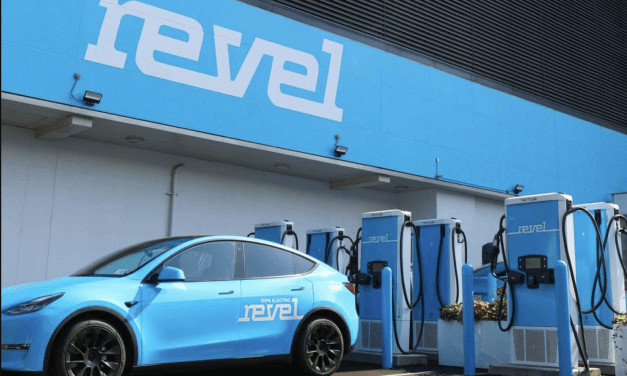
NYC loans $60m to Revel to triple the city’s EV charging network

NYC loans $60m to Revel to triple the city’s EV charging network

New York City (NYC) is providing a $60 million loan to electric vehicle (EV) fast-charging company Revel as part of a plan to more than triple its current public charging network.

Governor of New York Kathy Hochul announced the million-dollar transaction in a bid to accelerate EV charging infrastructure deployment across the city.

The loan provided by NY Green Bank (NYGB), the State’s clean energy investment fund and a division of the New York State Energy Research and Development Authority (NYSERDA), to Revel, the largest provider of public EV fast-charging in New York City.

Governor Hochul said:

“In support of the transition to a clean energy economy, it is critical that we continue to build electric vehicle infrastructure to ease the shift to EV ownership for more New Yorkers, especially those in urban areas,” Governor Hochul said. “This significant investment addresses the key need of providing electric vehicle users in New York City with much needed public charging options while reducing local emissions.”

The funding is expected to enable the construction of 267 new charging stalls across nine sites.

Revel expects to complete construction of the below new sites in the next 12 months, with the remainder to be completed by 2027:

  • 60 charging stalls in Maspeth, Queens, that will be the largest fast-charging station in the Northeast U.S.
  • 44 charging stalls near LaGuardia Airport, making it the largest fast-charging station near an airport in the country.
  • 24 charging stalls at John F. Kennedy International Airport (JFK); making it the largest charging station at the airport.
  • 30 charging stalls in Greenpoint, Brooklyn.
  • 20 charging stalls in the Port Morris section of the Bronx.

NY Green Bank President, Andrew Kessler, said:

“NY Green Bank is pleased to share this exciting transaction that is demonstrating the viability of financing EV charging infrastructure to support the adoption of electric vehicles. The Revel transaction is an important and replicable precedent we expect will help accelerate investment in this fast-growing sector and expand access to EV charging for more New York drivers.”

Revel broke ground in November at JFK Airport, with support from the Port Authority of New York and New Jersey. With funding from NYGB, Revel will now be able to complete construction of the aforementioned 24 charging stalls. That site will open in Q1 2025 and is expected to be one of the most utilized charging stations in the country.

Revel charging stations are open to the public on a 24/7 basis for any make and model EV. All chargers installed at future locations will have speeds of at least 320 kilowatts (kW), which can charge an EV in as little as 15 minutes.

More information about the Revel deal can be found in NYGB’s transaction profiles on its portfolio page.

Keep up-to-date with the latest mobility news by subscribing to MOVEMNT’s free newsletter

Warsaw expands electric bus fleet

Warsaw expands electric bus fleet

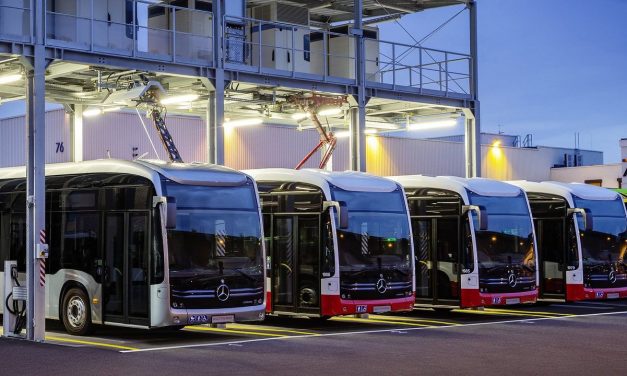
Warsaw, with one of the largest electric bus fleets in Europe, has announced it will be expanding its fleet.

The city’s operator, MZA (Miejskie Zakłady Autobusowe), has signed an agreement with Solaris Bus for the delivery of 50 additional electric buses.

Each bus ordered will be equipped with an electric motor supported by Solaris High Energy batteries and charging will take place at the depot using a standard plug-in connection.

The models destined for Warsaw will feature a modular drive system. In this design, the drive components are mounted on the roof of the vehicle and each newly ordered bus will accommodate 103 passengers.

Solaris has more than 5,500 zero-emission vehicles – comprising battery-electric buses, hydrogen buses, and trolleybuses – delivered to 25 countries to date.

The co-operation between Solaris and MZA Warsaw has been ongoing for 28 years, with the manufacturer delivering nearly 1,350 buses in total.

Once all orders are fulfilled, the operator’s electric fleet will consist of 224 Solaris electric buses.

Keep up-to-date with the latest mobility news by subscribing to MOVEMNT’s free newsletter

AI across the mobility value chain and in the future

AI across the mobility value chain and in the future

Artificial intelligence (AI) is becoming more and more prolific in the mobility sector, driving innovations that enhance safety, efficiency, and sustainability. From autonomous vehicles to intelligent software platforms, AI-powered solutions are reshaping the way people and goods move in the new world.

With new inventions every day integrating AI across the mobility value chain, it is impossible to separate AI from a mobility industry outlook.

Here are some examples of how AI is shaping mobility today:

Vehicle Safety and Performance

AI-driven technologies are being utilised by companies across the mobility ecosystem and their vehicles to make operations smarter and safer. Advanced driver-assistance systems (ADAS) leverages AI to enhance navigation, detect obstacles, and prevent collisions. Features like automated emergency braking, lane-keeping assistance, and adaptive cruise control are becoming standard, reducing human error and improving road safety.

Autonomous vehicle (AV) technology is also advancing rapidly. Self-driving cars rely on AI-powered sensors and machine learning algorithms to interpret surroundings, make real-time decisions, detect potential hazards, and navigate roads efficiently. Some systems even use AI to detect and predict numerous scenarios and learn from them to make autonomous platforms more knowledgable and safe.


Smart Transportation Systems

Beyond the actual vehicles themselves, AI is playing a critical role in developing smart transportation systems that improve the movement of urban mobility. Intelligent traffic management solutions can AI to analyse real-time traffic data, adjust signal timings, and optimise traffic flow, reducing congestion and emissions and increasing seamless transportation.

Public transportation is also benefiting from AI with predictive analytics helping transit agencies optimise schedules and routes, ensuring reliable and efficient service for passengers. AI-powered ride-sharing platforms also create convenience and reduce the environmental impact by optimising vehicle allocation and reducing the volume of empty trips.


Logistical and Economical Uses

The integration of AI in automotive manufacturing and fleet management has been reported to lead to significant cost savings. Predictive maintenance, for example, can identify potential vehicle malfunctions before they occur, reducing repair costs and minimising downtime. Industry experts estimate that AI-driven maintenance solutions could save the automotive sector hundreds of billions of dollars annually by improving efficiency and reducing unexpected failures, according to keymakr.

AI is also aiding logistics and supply chains by streamlining inventory management, automating quality control, and increasing production line efficiency. Automated warehouses, predictive demand forecasting, and intelligent routing for delivery fleets are just a few examples of how AI can transform operations.


AI in Future Mobility

It is hard to know exactly how AI will continue to advance the mobility ecosystem in every vertical. However it would be safe to assume that AI will continue to be deployed across mobility, particularly in self-driving vehicles, smart city infrastructure, and energy efficiency in transportation. As well as this, its uses are likely to further contribute to safety, sustainability, and economic efficiency.

By leveraging AI, the mobility industry can keep moving towards a future where transportation is not only more intelligent but also more accessible, sustainable, and cost-effective for all.

Keep up-to-date with the latest mobility news by subscribing to MOVEMNT’s free newsletter

Autonomous vehicles logged 4 million test miles on California roads in 2024

Autonomous vehicles logged 4 million test miles on California roads in 2024

Autonomous vehicles under testing permits have collectively covered over 4 million miles on California’s public roads in 2024, according to a new data report from the California Department of Motor Vehicles (CDMV).

This year’s total, officially standing at 4,498,066 miles, covers two kinds of permits: 3,945,171 miles with a safety driver and 552,895 miles in fully-autonomous mode.

This figure has dropped by 50% from the over 9 million miles reported in 2023.

Permit holder companies that have been approved by the CDMV to test autonomous vehicles on Californian roads, without a safety driver, include:

  • Apollo Autonomous Driving
  • AutoX Technologies
  • Nuro
  • Waymo
  • WeRide
  • Zoox

Under state regulations, companies are only required to report public road testing. Activities on private roads or out-of-state, as well as any testing below Society of Automotive Engineers Level 3 or in simulation, are not covered in these reports.

Currently, 31 companies hold permits for testing with a safety driver, six are approved for driverless testing and three are authorised to make autonomous technology commercially available outside of a testing program.

Permit holders for testing with a safety driver include:

  • Aimotive
  • Apollo Autonomous Driving
  • Aurora
  • AutoX
  • BEEP
  • Black Sesame
  • Cruise
  • Gatik AI
  • Helm.ai
  • Imagry
  • May Mobility
  • Merc Benz
  • Mobileye
  • Motional
  • Nissan
  • Nullmax
  • Nuro
  • NVIDIA
  • PlusAI
  • Pony.ai
  • Qualcomm
  • Saif
  • Telenav
  • Tesla
  • Valeo North America
  • Vueron
  • Waymo
  • WeRide
  • Woven Planet
  • XMotors.ai
  • Zoox

The annual disengagement reports, outline the testing circumstances, locations and the specific conditions under which human drivers had to take controls of vehicles in fully-autonomous states occurred.

Find more information on permit holders for self-driving vehicles in California here.

Keep up-to-date with the latest mobility news by subscribing to MOVEMNT’s free newsletter

Google forecasts India’s mobility market to double by 2030

Google forecasts India’s mobility market to double by 2030

A recent joint report from Google and Boston Consulting Group (BCG) has forecasted that India’s mobility market will double by 2030, surpassing $600 billion.

With growing momentum in the South-Asian in electric vehicles (EVs), self-driving vehicles, AI potential, and more, the report collates trends on the country’s expanding mobility market.

The report, titled ‘Think Mobility’, analyses India’s evolving auto landscape, leveraging BCG analysis, primary research and industry sources to shed light on India’s auto ecosystem and the future of mobility in India.

‘Think Mobility” detailed a number of findings such as 1 in 3 consumers are considering an EV as their next purchase and self-drive rentals are poised to grow.

The report states:

“India is 3rd largest auto market in the world and poised to grow. Changing geopolitical scenario making India attractive as a market for imports and exports.”

This claim was backed by findings of a 2.7x increase in affluent and elite households by 2035 and 2x growth in infrastructure expenditure as a share of GDP.

Women were found to be significantly more active decision-makers in new mobility in India.

Find the full report by Goggle and BCG here.

Keep up-to-date with the latest mobility news by subscribing to MOVEMNT’s free newsletter

Indosat to kit out Xanh SM’s electric vehicle fleet with monitoring tech

Indosat to kit out Xanh SM’s electric vehicle fleet with monitoring tech

Originally written and published by Total Telecom

Indonesian mobile operator Indosat Ooredoo Hutchison has announced a new partnership with Vietnamese electric taxi company Xanh SM.

The partnership will see Indosat Business support Xanh SM’s operations in Indonesia by providing a range of IT, IoT, and analytics technology, aimed at boosting operational efficiency.

The deal will include SIM cards for Xanh SM taxi units and specially tailored mobile packages for taxi drivers, all of which will be managed by Indosat’s Card Management Platform, including Cisco IoT Control Center.

In addition, various IoT solutions will be integrated with the vehicles to provide driving data, including “speed, acceleration, and behavior, identifying anomalies or potential vehicle issues to ensure safety and efficiency”, according to the partners.

Finally, Indosat will provide analytics technology to help make sense of all this new data, including greater customer profiling, behavioural analysis, and personalised ad campaigns.

The project will feature an initial six-month pilot phase, followed by a wider rollout of the refined technology.

Xanh SM has grown rapidly since its inception in 2023, with the company’s cyan blue electric taxi fleet totalled over 30,000 vehicles in Vietnam, representing over 40% of the total taxis operating in the country, as of May last year.

The company expanded into Laos in late 2023, followed by Indonesia in December 2024.

“We are proud to partner with Xanh SM to accelerate digital transformation while promoting the adoption of sustainable technologies,” said Muhammad Buldansyah, Director and Chief Business Officer of Indosat Ooredoo Hutchison. “This collaboration combines Indosat’s expertise in ICT, IoT, and analytics with Xanh SM’s eco-friendly technologies. The launch of this electric taxi fleet is a significant step in strengthening our commitment to sustainability and green technology to benefit the people of Indonesia.”

Indosat has had a growing interest in the mobility market in recent years, which it sees as growing sector for network monetisation opportunities. Last year, the operator teamed up with Mastercard to combine the payment card giant’s in-vehicle payments solution with Indosat’s AI-powered fleet management system, NEXTFleet.

Keep up-to-date with the latest mobility news by subscribing to MOVEMNT’s free newsletter

Volvo-owned Nova Bus secures electric fleet order in Canada

Volvo-owned Nova Bus secures electric fleet order in Canada

Volvo subsidiary Nova Bus has announced it will be delivering 80 fully-electric urban buses to York, Canada.

Deliveries are scheduled to begin in 2026, with the buses being manufactured at Nova Bus’s Saint-Eustache (Québec) plant.

President of Nova Bus, Mr. Paul Le Houillier, said:

“We are thrilled to have been awarded contract because it not only demonstrates our expertise in electric bus manufacturing but also reinforces our position as a leader in sustainable public transit solutions. Being at the forefront of the electrification of public transport is a commitment we take very seriously, and this new contract serves as strong evidence of that.”

The Volvo-owned electric bus company recently announced it would be stopping production in the States due to more business success in Canada.

The regional municipality of York will continue to purchase and deploy electric buses to help support their goal of net-zero emissions by 2050.

With an aim to have a fully electric bus fleet by 2050, the whole fleet is expected to reduce emissions by approximately 15,982 tons annually.

The LFSe+ (Low Floor Series Electric Plus) urban bus delivers a 100% electric transit experience, featuring fully-electrified accessories and meeting the most rigorous battery electric vehicle standards.

These electric buses are also equipped with two charging options and support overhead charging via a pantograph as well as a plug-in system, with 564 kWh of onboard energy storage.

Keep up-to-date with the latest mobility news by subscribing to MOVEMNT’s free newsletter

France and Germany partner on cross-border 5G corridor

France and Germany partner on cross-border 5G corridor

Originally written and published by Total Telecom

Vantage Towers, TOTEM, Orange, O2 Telefónica, and Saarland University of Applied Sciences have joined forces to deploy a 5G highway corridor connecting Metz in France to Saarbrücken in Germany. 

The “5G Autobahn to Autoroute” (5G A2A) project spans 60km, with construction beginning in early 2025, aiming to complete in late 2027. 

The corridor will include a 55km section in France and a 5km stretch in Germany. In France, TOTEM and Orange will install nine new masts and upgrade eight existing ones to provide 5G connectivity using 3.5GHz spectrum. On the German side, Vantage Towers and O2 Telefónica will deploy up to five masts equipped with distributed antenna systems (DAS) on the 3.6 GHz frequency. 

Combined, these two deployments will provide reliable 5G coverage along the entire international roadway, supporting advanced mobility services such as lane-changing assistance, collision prevention, and real-time traffic updates. It will also provide a testing ground for autonomous vehicle trials and improve connectivity for travellers crossing the border. 

Financial support for the project comes from the EU’s “Connecting Europe Facility Digital” programme and France’s Grand Est administrative region. 

“With the establishment of the Franco-German mobile communications corridor, we are advancing digital transformation in Europe. We are creating infrastructure that enables uninterrupted cross-border connectivity and, in the future, the use of advanced mobility applications such as autonomous driving functions – setting new standards for digital connectivity,” said Christian Hillabrant, CEO of Vantage Towers in a press release. 

Keep up-to-date with the latest mobility news by subscribing to MOVEMNT’s free newsletter

Toyota declares Phase 1 completion of its Mount Fuji smart city

Toyota declares Phase 1 completion of its Mount Fuji smart city

At CES 2025, Toyota Motor Corporation announced the completion of Phase 1 construction of Toyota Woven City (“Woven City”), its self-made smart city at the base of Mount Fuji.

The Japanese automaker giant has labelled the city as a “test course for mobility” and plan to launch Phase 1 for late 2025.

At CES 2025 Akio Toyoda, Chairman of the Board of Directors (Representative Director), Toyota Motor Corporation detailed his vision for the city: 

“From personal mobility devices, like a wheelchair race car…to drones that safely escort you home at night, to interactive pet robots that provide support and companionship for the elderly, to flying cars…”


At the official launch of Woven City, approximately 100 residents―primarily Toyota and WbyT staff and their families―are expected to participate in co-creation activities as the first residents. Plans to welcome the general public are in place for 2026.

The Woven City concept was unveiled at CES 2020 and was declared as being developed in collaboration with Woven by Toyota (“WbyT”).

Woven City is ideated to be where “Inventors” can develop, test, and validate innovative products and services. These inventors include Toyota and Toyota Group companies, such as WbyT, as well as external companies, startups, and individual entrepreneurs.

Keep up-to-date with the latest mobility news by subscribing to MOVEMNT’s free newsletter

NYC begins congestion charging scheme to ease traffic

NYC begins congestion charging scheme to ease traffic

New York City (NYC) has become the first city in the States (US) to begin a congestion charge scheme for vehicles.

The scheme began on Sunday and now requires car drivers to pay a charge of up to $9 (£7) a day for driving in the designated congestion relief zone.

Vehicles will incur the charge if detected driving from the bottom of Central Park to the southern tip of Manhattan, covering landmark sites such as the Empire State Building, Times Square and Wall Street.

Janno Lieber, CEO of the Metropolitan Transit Authority (MTA), announced the new scheme to reporters and said:

“We’ve been working on this for five years but you stand in midtown for five minutes and you know we’ve got to deal with the traffic problem. Now, we’re showing the world that in New York, we do something about our challenges.” 

Four hundred lanes of traffic are now covered by around 1,400 cameras, 110 detection points and 800 signs, all dedicated to enforcing the congestion charge.

The congestion charge plan was initially paused by New York Governor Kathy Hochul, but the scheme revived at a lower charging rate.

Incoming President-elect Donald Trump is among the opposition resisting the scheme.

The scheme aims to ease New York’s notorious traffic problems and raise billions for the public transport network.

New York City Comptroller Brad Lander said NYC “fought tirelessly” to bring the pricing into force and “get the system started before Trump becomes President”.  

Keep up-to-date with the latest mobility news by subscribing to MOVEMNT’s free newsletter

TfL announces full 4G coverage on London’s Elizabeth Line

TfL announces full 4G coverage on London’s Elizabeth Line

Article originally written and published by Georgia Sweeting at Total Telecom

Transport for London (TFL) and neutral host provider Boldyn Networks have completed the rollout of high-speed mobile coverage across the entire Elizabeth Line. This marks another step in TfL’s ongoing efforts to improve connectivity across London’s transport system. 

All UK mobile network operators — Three UK, EE, Vodafone, and Virgin Media O2 — are participating in the project, allowing all UK mobile customers access to connectivity on the Tube 

Back in May, TfL and Boldyn announced that 4G coverage had been deployed at all stations on the Elizabeth Line; today’s announcement means that the coverage is now delivered inside the tunnels too.  

The work extends coverage to tunnels serving central London stations such as Whitechapel, Stratford, Canary Wharf, Custom House, and Woolwich.  

“This is yet another step towards ensuring Londoners and visitors can stay connected on our transport network. It means customers can access the latest travel information and keep in touch with colleagues, friends, and family throughout their journey on the Elizabeth line,” said Mayor of London Sadiq Khan in a press release. 

For commuters, this means the ability to stay online throughout their journey. The expanded network also benefits TfL staff, improving communications and bolstering safety by supporting the Emergency Services Network (ESN). Once fully operational, the ESN will provide frontline responders with access to real-time data and critical information during emergencies. 

The Elizabeth Line milestone is part of a broader effort from TFL and Boldyn Networks to bring mobile coverage to the entire London Underground, Docklands Light Railway (DLR), and London Overground Windrush line. 

Progression includes: 

– Northern Line: Coverage expansion towards Morden and between King’s Cross St Pancras and Moorgate, expected by early next year. 

– Bakerloo Line: Tunnel sections between Piccadilly Circus and Embankment will go live in the coming weeks, with additional stations to follow. 

– Piccadilly and Victoria Lines: Further connectivity is planned for these lines in the coming months. 

Keep up to date with the latest mobility news by subscribing to MOVEMNT’s free newsletter

Ionity to deliver Ireland’s biggest EV charging station yet

Ionity to deliver Ireland’s biggest EV charging station yet

German-based charge point operator (CPO) Ionity has partnered with Charlestown Shopping Centre in Dublin to develop Ireland’s largest electric vehicle (EV) charging station yet.

Ionity – a joint venture formed by BMW Group, Ford Motor Company, Hyundai Motor Group, Mercedes-Benz AG and Volkswagen Group – will deliver 12 EV chargers to the site that are reportedly powered by 100% renewable energy.

The high-power chargers claim to deliver a 10-80% charge for EVs in less than 20 minutes.

Ionity’s Country Manager for UK&I, Andreas Atkins, said:

“With 115,000 drivers on the M50 every day, providing an EV charging station is hugely important if we’re going make EVs the norm across Europe.”

The development aligns with Ireland’s Climate Action Plan that aims for 40% of the private car fleet to be electrified by 2030 across the nation.

The Charlestown Shopping Centre Manager, Dan O’Connor, said:

“With the installation of these 12 Ionity Fast Chargers, we are proud to offer the largest EV charging hub in Ireland. This initiative reflects our ongoing commitment to promoting sustainability, reducing our carbon footprint, and enhancing the shopping experience for our customers.”

With BlackRock as a financial investor, the CPO claims to operate an EV charging site every 60-80 miles across Europe’s highway network.

Sign up to MOVEMNT’s free newsletter for the hottest mobility news and exclusive MOVE event updates

Saudi Arabia opens driverless metro in Riyadh

Saudi Arabia opens driverless metro in Riyadh

The City of Riyadh in Saudi Arabia has announced the launch of their driverless, fully-automated metro network.

The Saudi capital launched the network as part of the Riyadh Public Transport (RPT) initiative, launched by the Royal Commission for Riyadh City (RCRC) to provide integrated public transport solutions.

The Riyadh public transport network includes 6 rapid fully-automated metro lines running through 85 metro stations.

The Metro was officially inaugurated by His Majesty King Salman bin Abdulaziz Al Saud, the King of Saudi Arabia.

Led by RCRC, the project also received aid from RATP Dev in the launch of the autonomous metro network.

CEO of RATP Dev, Hiba Farès, stated:

“Today, I am honored to celebrate not just the completion of an extraordinary project, but a stepchange for public transport in Riyadh and Saudi Arabia. This integrated network will transform mobility, allowing residents and visitors to transition from cardependent travel to a more sustainable and connected transport system. As a global leader in urban transport and high-capacity networks, we are proud to contribute to Saudi Arabia’s Vision 2030, delivering a modern, innovative mobility solution that supports growth and accelerates sustainable urban development.”


Sign up to MOVEMNT’s free newsletter for the hottest mobility news and exclusive MOVE event updates

May Mobility trials driverless cars in Ann Arbor

May Mobility trials driverless cars in Ann Arbor

Image: May Mobility

Autonomous driving tech company May Mobility is set to conduct its second wave of driverless operations in Ann Arbor, Michigan.

The company stated this is their next step towards expanding autonomous driver-out vehicle services commercially across the U.S. and Japan.

CEO and co-founder of May Mobility, Edwin Olson, said:

“Starting driver-out operations in our second city in under a year shows the scalability of our technology while expanding our capabilities to challenging weather, higher speeds and busy traffic.”

The trial involves complexity of traffic, weather patterns and pedestrian density, and operates in and around approximately 2 square miles of Ann Arbor surface streets.

May Mobility’s vehicles are equipped with Multi-Policy Decision Making (MPDM) technology that leverages in-situ AI to interpret data in real-time, complex and even unpredictable driving conditions to help create a safer, more comfortable ride.

In doing so, MPDM solves the industry’s biggest challenge, adapting to unexpected, dynamic conditions or “edge cases”.

Without a safety operator behind the wheel, May Mobility has implemented a Tele-Assist platform for monitoring of vehicle behaviour and to provide vehicle assistance as needed.


May Mobility is currently working with Peachtree Corners, GA to bring driverless operations to the smart city in 2025 and also recently announced its partnership with Lyft, including plans to transition future deployments to driver-out over time.

Sign up to MOVEMNT’s free newsletter for the hottest mobility news and exclusive MOVE event updates

Tokyo Metro to take over operations of London’s Elizabeth Line

Tokyo Metro to take over operations of London’s Elizabeth Line

Transport for London (TfL) has announced GTS Rail Operations (GTS) as the new operator for the Elizabeth line.

The tube line – which carries more than 700,000 people a day – will be operated by GTS in efforts to improve operations by leveraging the Japanese subway’s renowned reliability and punctuality.

GTS is a joint venture (JV) between Go-Ahead Group, Tokyo Metro and Sumitomo Corporation. The JV will take over from the line’s current operators, Chinese-owned MTR Corporation, in May 2025.

Group CEO of the Go-Ahead Group, Miguel Parras, commented on the takeover:

“We look forward to bringing our collective expertise across UK and international rail operations to London. Our objectives are aligned with TfL – to connect communities across London through safe, reliable, and sustainable public transport services, delivered to the highest level of customer satisfaction.”

TfL expects to enter into the contract with GTS in December.

Other shortlisted bidders to head the tube line’s operations included Arriva UK Trains, First Keolis Elizabeth line (a joint venture between First Group PLC and Keolis SA) and MTR Corporation (UK) Limited.

TfL has assured there will be no immediate changes to the Elizabeth Line’s services, times or staff. Current employees of the incumbent operator will be transfered to GTS.


Sign up to MOVEMNT’s free newsletter for the hottest mobility news and exclusive MOVE event updates

California trials Lucid EVs as police pursuit cars

California trials Lucid EVs as police pursuit cars

California Highway Patrol (CHP) has been trying-out Lucid‘s Air electric vehicles (EVs) as a potential model for their police pursuit vehicles.

The company noted that the vehicle was a modified version of the EV, and photos show that it was customised for police use and painted to look similar to the CHP’s other patrol cars.

For the tests, Lucid fitted the vehicle with police modifications such as a police light bar, dash light, brush guards and other police-specific features.

The outcome of the trials remain unclear as to whether CHP will be making a placement order from Lucid and adopting the EV into their pursuit fleet.

Lucid posted images of the modified vehicle on X:

However many X users were critical in response, with concerns raised over the potential delivery order for Lucid by the California Highway Patrol (CHP). This is due to the cost of the Air models, coming in at $100,000 a pop.

Other countries have already begun using Lucid EVs for their government authorities, such as Dubai’s Police General Command who stationed the Air sedan into their fleet.

Sign up to MOVEMNT’s newsletter for the hottest mobility news and exclusive MOVE event updates

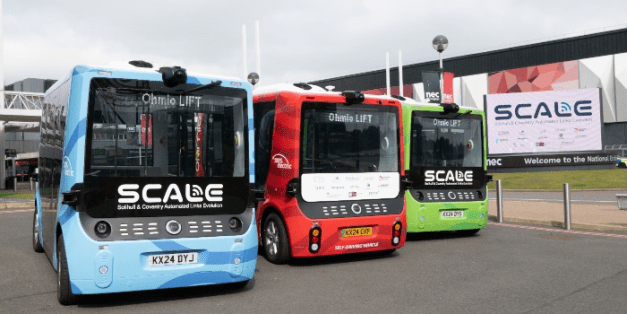
Milton Keynes to pilot self-driving buses

Milton Keynes to pilot self-driving buses

Self-driving shuttle buses are set to hit roads in Milton Keynes next month.

The StreetCAV is a ‘plug-and-play’ driverless shuttle will soon begin public transport trials and if successful, residents could begin utilising the service as early as next year.

Smart City Consultancy (SMCCL) is the company leading the project, which it hopes will become a blueprint for UK-wide deployment.

The other partners involved in the StreetCAV project are Milton Keynes City Council, Ohmio, CableFree, BT and Electronics Computers and Systems.

Ian Pulford, CEO at SMCCL, said:

“The StreetCAV project has been going for some time now so we are absolutely thrilled that it is finally at a stage where we can reveal it to the world.

“Thanks to the partners we’ve been fortunate to involve in the project, we truly believe we have developed a solution which can change the future of urban mobility while making our towns and cities smarter, greener, and more inclusive.

“We have also worked rigorously to ensure public safety. Working closely with Milton Keynes City Council, BT and ECS, we will establish a city centre control room, connected by a specifically designed communications network, provided by CableFree, which will in-turn allow the Ohmio vehicles to be supervised and managed remotely.”

Image: Zenzic

Sign up to MOVEMNT’s newsletter for the hottest mobility news and exclusive MOVE event updates