Article written and supplied by Tata Consultancy Services (TCS), Platinum Sponsors of MOVE America 2024 at the Austin Convention Center, 24-25 September, Austin, TX. Get more exclusive insights from them at the event and make sure you meet them there. Authors: Naresh Mehta, CTO, Manufacturing, TCS and Rohaan Mishra, Global Head of Marketing, Manufacturing, TCS.
The automotive industry, once synonymous with unbridled power and freedom, now faces a pivotal moment in its evolution. The environmental impact of traditional vehicles has spurred a global call for change, pushing the industry to reimagine its role in a sustainable future. While the challenges are undeniable, they also present an unprecedented opportunity for innovation and transformation. Electrification, advanced battery technology, sustainable supply chains, and autonomous vehicles are not just technological advancements; they are the building blocks of a new era of automotive excellence. Emerging technologies like Generative AI and Quantum Computing add another layer of intrigue, promising to accelerate this transition and unlock unimaginable possibilities. The road ahead is filled with both promise and questions. Can we harness these technologies to create a truly sustainable automotive ecosystem? How will we balance innovation with responsibility? The answers to these questions will shape the future of mobility, and the stakes couldn’t be higher.
The automotive industry, once synonymous with unbridled power and freedom, now faces a pivotal moment in its evolution. The environmental impact of traditional vehicles has spurred a global call for change, pushing the industry to reimagine its role in a sustainable future. While the challenges are undeniable, they also present an unprecedented opportunity for innovation and transformation. Electrification, advanced battery technology, sustainable supply chains, and autonomous vehicles are not just technological advancements; they are the building blocks of a new era of automotive excellence. Emerging technologies like Generative AI and Quantum Computing add another layer of intrigue, promising to accelerate this transition and unlock unimaginable possibilities. The road ahead is filled with both promise and questions. Can we harness these technologies to create a truly sustainable automotive ecosystem? How will we balance innovation with responsibility? The answers to these questions will shape the future of mobility, and the stakes couldn’t be higher.
Electrification and Battery Technology: Powering a Sustainable Future
The Rise of Electric Vehicles (EVs): A Silent Revolution
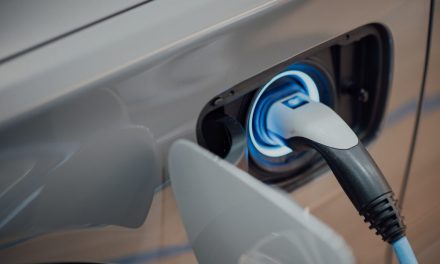
The internal combustion engine, a marvel of engineering that once propelled us into the modern age, now faces a formidable challenger: the electric motor. Electric vehicles (EVs) are rapidly gaining mainstream acceptance, with global sales doubling in 2021 to reach 6.6 million units. Experts predict that EVs will dominate new car sales by 2030, and Bloomberg NEF’s Electric Vehicle Outlook 2023 projects that they will represent 77% of global passenger vehicle sales by 2040. The allure of EVs lies in their promise of cleaner air and reduced greenhouse gas emissions. The International Council on Clean Transportation estimates that EVs can reduce greenhouse gas emissions by up to 50% compared to conventional vehicles, depending on the electricity source. The widespread adoption of EVs can lead to substantial improvements in air quality, potentially preventing up to 110,000 premature deaths in the United States alone by 2050.Advancements in Battery Technology: The Quest for the Holy Grail
The battery remains a critical area of focus in the EV revolution. It’s the heart of the vehicle, but also its Achilles’ heel – heavy, expensive, and with a limited range. The quest for the perfect battery is the automotive industry’s holy grail. Solid-state batteries, lithium-sulfur, and advanced lithium-ion technologies offer tantalizing possibilities, but challenges persist in sourcing raw materials and developing efficient recycling processes. To overcome these hurdles, the industry is turning to data & analytics, harnessing real-world battery performance data to inform design and optimization. Generative AI is also playing a role, accelerating the discovery of new materials and battery architectures. Additionally, quantum computing holds the potential to revolutionize battery research by enabling the simulation and analysis of complex chemical reactions at the atomic level, potentially leading to breakthroughs in battery chemistry and performance.Sustainable Supply Chains: From Linear to Circular
The Complexities of Automotive Supply Chains
Automotive supply chains are intricate networks that span the globe, with the average car containing over 30,000 parts sourced from all corners of the world. This complexity makes them vulnerable to disruptions, as evidenced by recent events like the 2022 Suez Canal blockage and the conflict in Ukraine, which impacted vehicle production worldwide. Beyond disruptions, these supply chains have significant environmental and social impacts, contributing to around 17% of global greenhouse gas emissions. The extraction and processing of raw materials can lead to resource depletion and environmental degradation, while concerns persist regarding labor practices in certain parts of the supply chain. The carbon footprint of lithium-ion battery production alone can range from 61 to 106 kg CO2-equivalent per kWh of battery capacity.The Shift Towards Circularity
Recognizing the need for change, companies are adopting sustainable supply chain practices. Some are embracing circular economy models, aiming to minimize waste and maximize resource utilization throughout the product lifecycle. Renault’s closed-loop recycling system for its electric vehicle batteries and Volvo’s partnerships with battery recycling companies exemplify this trend. Others focus on ethical sourcing, ensuring that their suppliers adhere to strict standards. Initiatives like the Drive Sustainability partnership further promote responsible sourcing and sustainable practices throughout the automotive supply chain.Technology as an Enabler
Technology is a key enabler in creating more transparent, traceable, and efficient supply chains. Blockchain technology enhances traceability, with Ford exploring its use to track cobalt sourcing for EV batteries and Volkswagen using it to track the carbon footprint of its supply chain. The Internet of Things (IoT) provides real-time visibility into supply chain operations, as demonstrated by BMW’s use of IoT sensors to track vehicles in transit. AI-powered analytics aids in informed decision-making and operational optimization, with Daimler Trucks North America using AI to predict maintenance needs and Renault using it to optimize spare parts inventory. Furthermore, Generative AI can simulate various scenarios and predict potential disruptions, enabling proactive risk mitigation and ensuring supply chain resilience. Quantum computing, with its immense computational power, holds the potential to revolutionize supply chain logistics and optimization, enabling real-time decision-making and resource allocation for a more sustainable future.The Autonomous Future: Redefining Mobility
The advent of autonomous vehicles (AVs) promises to reshape the transportation landscape, offering potential benefits that extend beyond safety and convenience. The transition to an autonomous future, however, necessitates careful management to address concerns about sprawl, equitable access, and job displacement.The Promise of AVs
The environmental implications of widespread AV adoption are substantial. Optimized driving patterns in AVs can reduce fuel consumption and emissions by up to 40%. Reduced congestion can lead to improved air quality, while shared autonomous fleets can decrease overall vehicle ownership and production needs, further contributing to a greener future. The potential impact on urban planning and infrastructure is immense. With AVs, we may see a decrease in the need for parking spaces, leading to the repurposing of urban land for green spaces or affordable housing. Public transportation could be revolutionized with on-demand autonomous shuttles, improving accessibility and reducing reliance on personal vehicles. The transformation of the transportation industry is also inevitable, with new business models and services emerging around autonomous mobility.Data as the Driving Force
Data and analytics are crucial in realizing the full potential of AVs. By collecting and analyzing vast amounts of data from AVs on the road, including driving patterns, traffic conditions, and energy consumption, we can gain invaluable insights that inform the development of more efficient and eco-friendly autonomous driving algorithms. This data-driven approach empowers us to optimize routes, minimize energy waste, and reduce emissions. Additionally, Generative AI can enhance the safety and efficiency of AVs by simulating real-world scenarios and generating synthetic training data, enabling the testing and refinement of autonomous driving algorithms in a safe and controlled environment. The ability to generate adversarial scenarios and simulate anomalies can further enhance the robustness and reliability of AV systems. The advent of quantum computing also holds immense potential for the AV industry. Its unparalleled computational power could enable real-time processing of complex traffic scenarios, leading to safer and more efficient navigation.Navigating the Societal Impact
However, this transition also raises important questions. The potential for job displacement in the transportation sector is a significant concern. Ensuring equitable access to AV technology is another challenge. The cost of autonomous vehicles and the infrastructure required to support them may create barriers for low-income communities, exacerbating existing transportation inequities. Furthermore, the ethical and legal considerations surrounding AVs are complex and multifaceted. Questions of liability in accidents, the role of human oversight, and the potential for misuse of AV technology all need to be carefully addressed through thoughtful policy and regulation. Governments and regulatory bodies will play a crucial role in shaping the development and deployment of AVs, ensuring that they are safe, equitable, and contribute to a sustainable future.The Way Forward
The automotive industry stands on the brink of a new era, driven by the imperative for sustainability. Electrification, advanced battery technology, sustainable supply chains, and autonomous vehicles offer a glimpse into a future where mobility is not just convenient and efficient, but also clean, equitable, and responsible. Emerging technologies like Generative AI and Quantum Computing are poised to accelerate this transformation. But technology alone is not enough. We need bold leadership, collaborative innovation, and a shared commitment to building a sustainable future. The power of data and analytics weaves these advancements together, fueling innovation and guiding decision-making.
The road ahead is filled with both challenges and opportunities. The transition to a sustainable automotive ecosystem will require addressing complex issues such as ethical sourcing, responsible recycling, job displacement, and equitable access to new technologies. But the potential rewards are immense: cleaner air, reduced greenhouse gas emissions, safer roads, and a more equitable and accessible transportation system.
Let us embrace this journey with courage and determination, steering the automotive industry towards a greener horizon. The choices we make today will shape the world of tomorrow. The time for action is now. Let us work together to create a future where mobility is not just a privilege but a right, and where innovation serves the greater good of both people and the planet.
The references cited in the article are as follows:
- International Energy Agency. (2022). Global EV Outlook 2022.
- Union of Concerned Scientists. (2020). Cleaner Cars from Cradle to Grave.
- Norwegian Road Federation (OFV). (2022). Electric car sales statistics.
- Amnesty International. (2016). This is what we die for: Human rights abuses in the Democratic Republic of the Congo power the global trade in cobalt.
- University of Michigan Transportation Research Institute. (2016). Fuel Economy Impacts of Connected and Automated Vehicles.
- McKinsey & Company. (2022). The semiconductor shortage continues to impact the automotive industry
- CDP. (2020). The automotive supply chain’s decarbonization challenge
- Renault Group. (2022). Re-Factory: a second life for vehicles and their components
- Responsible Minerals Initiative. (2023). RMI Overview
- Ford Motor Company. (2019). Ford Using Blockchain Technology to Trace Cobalt Supplies for EV Batteries
- BMW Group. (2023). Connected Supply Chain
- Daimler Trucks North America. (2021). Daimler Trucks North America leverages artificial intelligence to predict part failures
- Volkswagen Group. (2017). Volkswagen tests quantum computers for traffic optimization.
- Volvo Cars. (2021). Volvo Cars partners with Northvolt and Umicore for sustainable battery development and production
- Drive Sustainability. (2023). Drive Sustainability Partnership
- Volkswagen Group. (2022). Volkswagen expands partnership with Minespider for responsible sourcing of battery raw materials
- Maersk. (2023). Remote Container Management
- Renault Group. (2021). Renault uses Artificial Intelligence to optimize its spare parts inventory
- Daimler AG. (2018). Daimler and IBM explore quantum computing to advance next-generation lithium-sulfur batteries and materials for automotive applications.
- QuantumScape. (2023). About Us
- BloombergNEF. (2023). Electric Vehicle Outlook 2023
- International Council on Clean Transportation. (2021). Global Comparison of the Life-Cycle Greenhouse Gas Emissions of Combustion Engine and Electric Passenger Cars
- American Lung Association. (2020). Zeroing in on Healthy Air: Electric Vehicles and the Future of Transportation
- Automotive Industries Association of Canada. (2023). The Automotive Industry in Canada
- Hawkins, T.R., Singh, B., Majeau-Bettez, G. et al. (2017). Comparative environmental life cycle assessment of conventional and electric vehicles. J Ind Ecol , 21 , 53–64.
- Boston Consulting Group. (2017). Revolution Versus Evolution: How Autonomous Vehicles Could Change the Global Automotive Industry
- Greenblatt, J. B., & Saxena, S. (2015). Autonomous taxis could greatly reduce greenhouse-gas emissions of US light-duty vehicles. Nature Climate Change , 5 (9), 860-863.
- World Economic Forum. (2020). The Future of Jobs Report 2020.
- Waymo. (2023). Simulation: The Key to Unlocking the Potential of Autonomous Vehicles.