by Eve Stevens | Dec 17, 2025 | Autos, Business |
News
In 2022, the European Union voted to impose a decisive vehicle emissions mandate banning the sale of all new petrol and diesel vehicles by 2035, including hybrids. The legislation reflected the EU’s united effort toward mass electrification and a clean energy transition.
Now, less than a decade out from its 2035 combustion engine ban, Europe is getting cold feet about its EV mandate, with Brussels voting yesterday to revise the goal.
Under the new revisions, 90% of new cars sold from 2035 must be zero-emission, as opposed to the original 100%. The remaining 10% of new cars sold after this date can be made up of petrol and diesel vehicles, as well as hybrids.
The move follows heavy lobbying from countries including Germany and Italy. Proponents argue that the revised figure will allow for greater flexibility for automakers and better reflect global market trends.
Many automakers, including Stellantis and Volkswagen, have been vocal about the need for greater flexibility, arguing that the current timeframe for the transition is unrealistic and out of touch with current market demand for electric vehicles. German automaker Volkswagen praised the European Commission’s new draft proposal, calling it “economically sound overall”.
Despite consistent growth in Europe, EV sales remain well behind the projected targets set out when the law was enshrined in 2023. According to the European Automobile Manufacturers’ Association (ACEA), market demand for electric vehicles is simply too low to meet the current 2035 targets and would result in “multi-billion euro” fines for manufacturers.
Opponents of the 90% figure have criticised Europe for undermining its progress towards electrification and critical clean energy goals. For many, the move represents not just an environmental setback but a commercially damaging decision that could disincentivise critical investment in EV infrastructure and production.
Chris Heron, Secretary-General of the trade association E-Mobility Europe, spoke out on the issue, saying:
“Hesitation or mixed signals risk undermining the investment certainty battery makers, manufacturers and grids need to scale.”
Automaker Volvo has criticised other OEMs for their slow approach to electrification, arguing that it has “built a complete EV portfolio in less than 10 years”. The company says it is fully prepared to go all-electric in line with the original 2035 targets, relying on hybrid vehicles only as a transitional measure.
While the current Labour government has reaffirmed its commitment to the UK’s 2035 vehicle emissions targets, it remains to be seen whether mounting pressure from automotive manufacturers will prompt a similar reassessment, or whether the UK will hold firm in the face of Europe’s ‘mixed signals’.
by Eve Stevens | Dec 15, 2025 | Autos |
News
The European Union has announced new legislation that could reshape how vehicles are designed, produced, dismantled and recycled across the EU, following a provisional agreement between the European Parliament and the Council on the Commission’s proposed Regulation on End-of-Life Vehicles.
The End-of-Life Vehicles (ELVs) Regulation comes ahead of the possible relaxation of Europe’s EV mandate, up for debate in Brussels this week, demonstrating Europe’s enduring commitment to a sustainable automotive sector despite EV trepidation.
The automotive industry is one of Europe’s largest consumers of raw materials, including steel, aluminium, copper and plastics. Yet every year an estimated 3–4 million vehicles effectively “disappear” from official records, with their final treatment unreported. The new ELV regulation aims to close this gap, ensuring valuable materials are recovered rather than lost or left to contribute to environmental pollution.
At the heart of the regulation is an attempt to build out a more circular economy whereby materials are re-used rather than wasted. Vehicles will need to be designed for easier dismantling, with manufacturers required to provide clear instructions for removing and replacing parts during use and at end of life. Improved treatment standards will help recover more and higher-quality materials, including a requirement that at least 30% of plastics from ELVs are recycled.
From 2036, at least 25% of plastics used in vehicles must come from recycled materials, with 20% of that share sourced directly from ELVs. Crucially, the rules will apply equally to vehicles manufactured in the EU and those imported, ensuring a level playing field.
The regulation is expected to deliver major material gains. The Commission estimates it could enable the recycling and reuse of hundreds of tonnes of rare earth elements, alongside 5–6 million tonnes of steel, 1–2 million tonnes of aluminium and up to 0.3 million tonnes of copper. This will reduce dependence on imports and strengthen Europe’s resilience to supply-chain disruptions.
Executive Vice-President for Prosperity and Industrial Strategy Stéphane Séjourné said in a press release:
“Boosting recycling and circularity is a key component of our plan to support the industrial competitiveness of the plastics industry. The adopted measures will help to create a concrete business case for the recycling supply chain across Europe.”
The regulation also promotes reuse, remanufacturing and refurbishment, increasing the availability of second-hand spare parts and offering more affordable repair options for consumers. Extended Producer Responsibility schemes will be harmonised across Member States, ensuring proper financing of ELV treatment and higher-quality recycling.
Enforcement provisions have been strengthened, including clearer criteria to distinguish used vehicles from ELVs and a requirement that only roadworthy vehicles can be exported outside the EU.
Jessika Roswall, Commissioner for Environment, Water Resilience and a Competitive Circular Economy spoke in a press release:
“In a time when access to raw materials is under increasing global strain, making better use of the valuable resources embedded in our old cars is good for our environment, competitiveness and resilience.”
Once formally adopted, the regulation will enter into force 20 days after publication, marking a major milestone in Europe’s transition to a circular automotive economy.
by Eve Stevens | Dec 9, 2025 | Autos, Energy & Charging |
News
Ford may have walked back its decision to go all-electric in Europe by 2030, but its commitment to electrification persists. Today, Ford announced a landmark alliance with French automaker Renault to co-develop a series of small electric vehicles for the European market.
The strategic collaboration should see jointly developed EVs rolling out as early as 2028, with plans to expand the partnership to include small commercial vehicles.
Small electric EVs have long had a stronghold in the European market, favoured for their affordability, efficiency, and practicality when navigating the smaller and irregular streets of many European capitals.
Ford and Renault hope this focus will give them a competitive edge against Chinese automakers, who have historically focused on larger, mid-size vehicles.
Ford Chief Executive Jim Farley spoke on the significance of the partnership as part of a wider battle to save Europe’s precarious automotive market. In an announcement today in Paris, he said:
“We’re in the fight for our lives and our industry, and [there is] no better example than here in Europe. Together, we can create a powerhouse of light commercial vehicles in Europe. We believe this is a big differentiation compared to the Chinese.”
Ford’s partnership decision was meticulously considered, with Farley admitting the company took a full year to weigh its options before reaching a consensus. Ford reportedly chose Renault thanks to the French automaker’s impressively efficient product cycles, having produced two electric models—the Twingo and the Dacia—in less than two years.
François Provost, Chief Executive at Renault, said:
“[Our] strategy at Renault is to be as competitive, and then to even be better, than our Chinese competitors in Europe.”
The latest electric line-up will be designed by Ford and will use Renault’s Ampere platform, launched as part of Renault’s “Renaultution” strategy and used for the Renault 5. Ford has been clear that it will not sacrifice its brand integrity in the design of its vehicles, emphasising the importance of preserving “distinctive driving dynamics” and “authentic Ford-brand DNA.”
The iconic Ford Fiesta, discontinued since 2023, is expected to make a comeback under the new partnership, debuting as an all-electric model with an estimated retail price of around £23,000.
Ford has asserted that this partnership with Renault will in no way affect its existing alliance with German automaker Volkswagen to co-develop electric vans in Europe.
by Eve Stevens | Dec 8, 2025 | Autos |
News
Subscription services are, for many of us, an accepted part of modern life; from streaming platforms such as Netflix or Spotify to meal subscriptions, gym memberships, and pay-as-you-go dating apps, the paid subscription model has transformed the way we consume, replacing traditional ownership with a flexible, ongoing service relationship.
Now the world of automotive is catching up, with more and more OEMs now offering subscription services and over-the-air updates at an extra monthly cost. As cars become increasingly software-defined, the shift from hardware-centric manufacturing to software-driven mobility is gathering pace. While digital services still account for only a modest portion of global automotive revenue, carmakers emphasize that in many cases, software carries far higher margins than metal.
Cars now communicate continuously with their surroundings, collect real-time data, and transmit it to the cloud, fuelling a constant cycle of updates. Over-the-air (OTA) upgrades allow automakers to add features, refine performance, and patch vulnerabilities without the car ever seeing the inside of a garage. This new architecture transforms the automobile from a static product into an upgradeable device, more akin to a smartphone or tablet.
Rather than relying solely on upfront sales, automakers can now sell features long after the car leaves the showroom, creating a business model that allows OEMs to generate revenue beyond the initial purchase. Heated seats, parking assistants, advanced driver aids, navigation enhancements, and even entertainment become additional services.
This new model is not without controversy. BMW made headlines earlier this year following its early subscription experiment, where customers in South Korea were charged extra for heated seats. Opponents criticized the scheme for gatekeeping features already built into the car’s hardware.
In the wake of this outrage, BMW has doubled-down on some of its early experiments, offering today a broader range of ConnectedDrive subscriptions, many tied to systems that require frequent data updates, such as parking assistance or traffic-camera alerts.
BMW head of product communications Alexandra Landers argues that there is logic behind pay-as-you-go digital features:
“For the additional ADAS systems, we also have costs for running. We have load usage, and that’s a cost. So, if you use it, you have to pay for it.”
BMW insists it will not charge for horsepower at this stage. Landers said:
“We are not a tuner… that didn’t make sense for us. We discussed that very intensively, but so far for base cars… you buy a car with maximum power.”
Beyond subscriptions, the move toward more connected vehicles has unlocked further revenue streams for automakers, most notably, data. Software-defined vehicles generate enormous volumes of information that can support usage-based insurance, traffic optimization, or hyper-local advertising once anonymized. This asset is a goldmine for manufacturers seeking to capitalize on today’s data-driven, hyper-connected reality.
For better or worse, the automotive industry’s road ahead is unmistakably digital. And while hyperconnectivity opens lucrative opportunities for automakers, they must not lose sight of the consumer in the labyrinth of hyper-connected services.
by Eve Stevens | Dec 3, 2025 | Autos |
News
Today, cars are less a vessel to get you from A to B and more an extension of our homes, living rooms, and phone screens. As vehicles become increasingly software-defined, equipped with features such as over-the-air updates, adaptive cruise control, smartphone integration, and more, they become highly adaptable, able to fix their own bugs and update themselves without the need for third-party intervention. The global trend is set: the future lies in SDVs.
In fact, software-defined vehicles are expected to account for 90% of all auto production by 2029. This increasing connectivity opens up exciting potential for automakers, creating new opportunities for infotainment, hyper-personalisation, and seamless connectivity between devices and our cars.
But with these opportunities comes a host of new risks, particularly with regard to cybersecurity. As vehicles become more connected, they also become moving targets for hackers and malicious actors.
According to research conducted by McKinsey, newly released cars can contain up to 100 million lines of code, and by 2030 software is expected to account for up to 30% of a vehicle’s total value.
This hyper-connectivity leaves vehicles vulnerable to cybersecurity breaches, leaving automakers scrambling to adapt as they enter a new era of connectivity.
Advancements in AI have been a double-edged sword for automakers. Incorporating AI into cyber teams boosts efficiency and improves workflows, allowing human agents to become mediators of a team of AI agents. Simultaneously, however, hackers and malicious actors are utilising AI to their own advantage.
Automakers have long been seen as an industry unwilling to adapt to increasingly sophisticated cybersecurity threats.
Hacker Eaton Zveare spoke at a hackers’ conference in Vegas earlier this year, exposing the automotive industry’s failure to remain vigilant against cyber threats:
“I target automakers just for fun,” he said. “They’re big, old companies; there’s a lot of infrastructure out there … They have thousands of subdomains, and each of those is just an exploit waiting to happen.”
In light of these accusations, automakers will have to adapt to remain vigilant to cybersecurity risks and elevate themselves from the butt of the joke when it comes to cyber defence.
Hitherto, automotive cybersecurity has largely been a reactive process but herein lies the problem. Automakers and their technology partners should take a more integrated approach to defence mechanisms, incorporating cybersecurity measures from the design and development stages of innovation. For SDVs to stand up to increasingly sophisticated cyber threats, automakers must take a predictive rather than reactive approach to cyber defence.
by Eve Stevens | Dec 1, 2025 | Autos, Business |
News
In the U.S., licensed female drivers outnumber licensed male drivers by about three million, and yet when it comes to safety features, the majority of vehicle testing is still carried out using outdated data and models designed to protect the average man.
According to government data, female drivers in the United States are 73% more likely to be severely injured in a car crash than their male counterparts, and are 17% more likely to die.
It seems that everything from seatbelt design to airbag placement has historically been determined through testing using dummies modelled on male physiques.
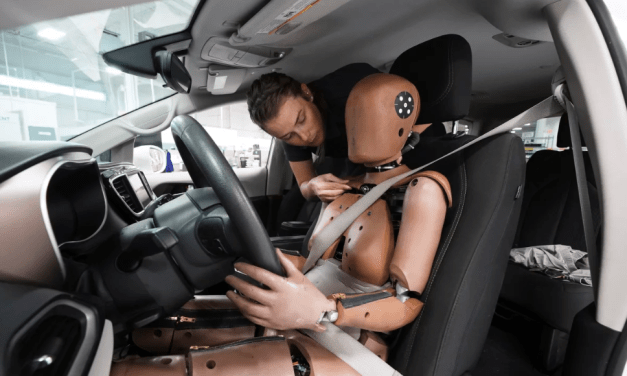
Taking into consideration the higher associated risks for female drivers, the federal Transportation Department has approved the use of a new female crash dummy, known as the THOR-05F.
The new model features more than 150 sensors and has been designed to more accurately reflect the average female body, with particular attention paid to the shape of the pelvis, breasts and legs.
Jonathan Morrison, administrator of the National Highway Traffic Safety Administration, spoke on the decision to endorse what the government has called a “more lifelike and durable” model. He said:
“Better understanding the unique ways in which women are impacted differently in crashes than men is essential to reducing traffic fatalities.”
Hitherto, the majority of safety testing in the U.S. has been carried out using the Hybrid III — a crash dummy based on the proportions of the average male in 1970: 5 feet 9 inches and 170 pounds.
In 2011, the National Highway Traffic Safety Administration updated its 5-star testing system, using a safety dummy based on female proportions; however, the majority of tests only required the female dummy to be used in the rear and passenger seats.
Despite endorsement from the U.S. government, whether the THOR-05F is adopted in National Highway Traffic Safety Administration car safety tests or Federal Motor Vehicle Safety Standards remains to be seen.
Legislation to be debated in Congress seeks to make its use compulsory, however a number of factors will dictate whether this becomes a reality. Firstly, some argue that the gap between male and female fatalities is already closing due to enhanced safety features in newer vehicles.
A representative from the not-for-profit group Insurance Institute for Highway Safety, Joe Young, opposed the decision, suggesting design improvements such as better crumple zones were largely closing the gender gap in newer cars. He said:
“While we’re continuously evaluating new tools that become available, we have no plans to adjust the dummies used in our consumer ratings crash tests at the moment.”
Whilst government endorsement is ostensibly a sign of increasingly inclusive automotive legislation, new advances in AI and virtual testing may offer more comprehensive and cheaper solutions to automotive safety concerns.
Virtual testing uses computer-generated humanoid models that allow accidents to be simulated digitally. These models can be augmented to reflect different sizes, muscle structures and bone densities, and can be run against an almost infinite number of real-life scenarios.
As advancements in AI are changing the world of automotive manufacturing, these new technologies could also have far-reaching impacts on automotive safety testing.
by Eve Stevens | Nov 26, 2025 | Autos, Fleets |
News
Uber is ramping up its investment in autonomous vehicle technology, launching its driverless robotaxi service in Abu Dhabi, the first of its kind in the Middle East.
The announcement, made on Wednesday, is part of a joint venture with Chinese company and global leader in autonomous driving technologies, WeRide. The partnership was originally forged in September of 2024.
Uber already offers robotaxi services in several US cities, including Austin, Phoenix, and Atlanta, through a partnership with Waymo, launched under Google’s Alphabet brand. The pair have also announced plans to enter Europe next year, beginning trials in London in 2026.
Uber promises that riders will be able to book fully autonomous vehicles via the Uber app when requesting an UberX or Uber Comfort. Unlike the free autonomous trials that began operation back in December, these cars will not come equipped with an onboard safety operator.
The news follows Uber and WeRide’s October announcement, which unveiled plans to begin a robotaxi service with safety operators on board in Riyadh, Saudi Arabia.
Speaking in an interview with CNBC, CEO and co-founder of WeRide Tony Han discussed the company’s dual-pronged approach to autonomous innovation, saying:
“WeRide is the only autonomous driving company in the world taking both Tesla’s approach and Waymo’s approach. For Waymo’s approach, we use Level 4 robotaxis with HD maps and a traditional machine-learning framework — that part we have already put into operation. For Tesla’s approach, we have just rolled out WePilot 3.0, which is comparable to Tesla’s FSD (Full Self-Driving), and our ADAS system has already been installed in several of Chery’s mass-production passenger cars.”
WeRide and Uber have also announced ambitious plans to scale up their robotaxi operations, with an expected 15 additional cities to be added within the next five years.
According to WeRide’s own filings, their autonomous-vehicle products have received driving permits in eight countries: China, UAE, Singapore, Switzerland, France, Saudi Arabia, Belgium, and the US.
by Eve Stevens | Nov 25, 2025 | Autos, Fleets |
News
Europe’s transport and mobility landscape is edging closer to full automation, as Estonian ride-hailing giant Bolt announces a strategic partnership with Chinese autonomous driving specialist Pony.ai.
The collaboration marks a significant step toward introducing driverless vehicles to European roads and reshaping how urban mobility will function on the continent in the coming decade.
At the heart of the agreement is Pony.ai’s Level 4 autonomous driving system, a technology designed to handle all driving tasks independently within specific environments. Once integrated into Bolt’s platform, this system will power a new generation of autonomous ride services that aim to operate without human drivers under specific conditions.
Markus Villig, Bolt’s founder and CEO, spoke on the benefits of autonomous technology:
“Autonomous vehicles will transform how people and goods move around, and Bolt is proud to partner with Pony.ai as the company scales its autonomous driving technology,”
Rather than rushing straight into large-scale deployment, the two companies plan a phased approach with initial trails focusing on real-world testing, rigorous safety assessments, and refining the passenger experience. This methodical rollout reflects the complexities of launching self-driving services in a region known for strict regulatory oversight and demanding safety standards.
Although no exact timeline has been confirmed, the first autonomous vehicles are expected to appear in selected cities across both EU member states and other European nations. The objective is to expand gradually while ensuring compliance with local regulations and maintaining high safety benchmarks.
Chinese autonomous technology firms are increasingly turning their attention to Europe as access to the US market becomes more challenging. Pony.ai already operates extensive driverless robotaxi services in major Chinese cities, supported by substantial fleets of autonomous cars and trucks, and now sees Europe as a key growth territory.
Additional autonomous driving companies have also set their sights on Europe as the next battle-ground for autonomous acceleration; Waymo announced they will be beginning autonomous fleet trials in London in 2026, whilst Uber and Chinese autonomous vehicle start-up Momenta unveiled they would start testing robotaxis in Germany next year.
Bolt and Pony.ai’s strategic partnership underscores the growing momentum behind autonomous transport in Europe. With ongoing political and regulatory uncertainty in the U.S., Europe may now position itself as a key player in defining the direction of autonomous mobility on the global stage.
by Eve Stevens | Nov 21, 2025 | Autos, Energy & Charging, Fleets |
News
China is accelerating its transition from diesel-powered trucks to electric alternatives at breakneck speed. Once almost entirely dependent on diesel for heavy freight, the country has seen a sharp rise in electric truck adoption, signalling profound changes for fuel consumption and emissions worldwide.
In 2020, diesel trucks dominated new sales across China. Fast forward to 2025, and electric vehicles now represent more than one-fifth of new heavy truck purchases. Analysts predict that this figure could climb beyond half of all new sales within the next year, meaning China’s energy sector will need to dramatically restructure in order to meet new electricity demands.
Heavy-duty trucks play a crucial role in economic activity but are also major contributors to carbon emissions. Historically, the sheer weight of batteries limited the practicality of electric models, making diesel and liquefied natural gas (LNG) appear more viable. However, advances in battery performance and declining costs have tilted the balance, making electric vehicles an attractive and commercially viable choice for fleet operators. Despite higher upfront prices, electric trucks now offer significant lifetime savings due to reduced fuel and maintenance expenses.
Alongside these economic efficiencies, the Chinese government is rewarding electrification efforts through a series of ambitious government incentives including programs that reward owners for trading in older vehicles.
Infrastructure development has further fuelled the shift, with key freight corridors now featuring rapid charging stations, and major cities investing in high-capacity charging hubs capable of powering heavy trucks in minutes. Battery manufacturers are also introducing innovative solutions such as battery-swapping systems, reducing downtime and improving operational efficiency.
As electric trucks gain popularity, China’s demand for diesel is already declining sharply. LNG, once viewed as a cleaner bridge fuel, is also beginning to lose momentum. Industry experts suggest this trend could ripple across international energy markets, reshaping trade flows and reducing fossil fuel dependency in freight transport.
This rapid acceleration towards electrification starkly contrasts with the situation in the U.S which has seen a slowed growth in EV adoption following the end of the EV tax credit. The gap highlights a growing divide in the global drive toward clean mobility.
Keep up-to-date with the latest mobility news by subscribing to MOVEMNT’s free newsletter
by Eve Stevens | Nov 20, 2025 | Autos, Fleets |
News
Pony.ai, a global leader in autonomous driving technology, today announced its line-up of fourth-generation (Gen-4) autonomous trucks, positioning itself at the forefront of China’s autonomous logistics transformation.
Set to hit Chinese roads in 2026, these long-range autonomous trucks will join Pony.ai’s existing fleet of robotaxis which already operate in several Chinese cities including Shenzhen and Guangzhou.
The announcement marks a new phase of maturity for autonomous freight in China, the world’s largest long-haul trucking market, offering what Pony.ai claims will be a safer and more sustainable alternative to human-driven freight transportation.
The autonomous trucks will utilize 100% automotive-grade components, reducing the bill-of-materials (BOM) cost per vehicle by as much as 70% compared to the previous generation, reducing waste and cutting manufacturing costs.
Pony.ai ambitiously claims the vehicles, developed with manufacturing partners including SANY Truck, will reduce per-vehicle carbon emissions by about 60 tons annually.
Much like Pony.ai’s Gen-7 robotaxis, the first two truck models will be built on battery-electric vehicle platforms and will be subject to the same rigorous testing and safety standards as their smaller counterparts.
Testing will include electromagnetic compatibility, reliability, high-temperature, and cold assessments, as well as evaluations against extreme weather and challenging road conditions.
Pony.ai stated in a press release:
“The Gen-4 autonomous trucks will elevate the safety and reliability of autonomous freight transport to a new level.”
Should these vehicles pass the extensive testing regime laid out by the company, the economic implications for freight providers could be substantial; early trials suggest that autonomous formations could cut freight costs per kilometre by 29% and boost profit margins by 195%, underscoring the strong economic case for autonomous trucking at scale.
Despite Pony.ai’s ambitious foray into heavy-freight autonomy, it remains to be seen how the public will respond to self-driving technology on this level. While impressive safety statistics and rapidly improving technology may be shifting public opinion on autonomous cars, the question remains whether the world is ready for mass autonomous deployment on a truly macro scale.
Keep up-to-date with the latest mobility news by subscribing to MOVEMNT’s free newsletter
by Eve Stevens | Nov 19, 2025 | Autos, Fleets |
News
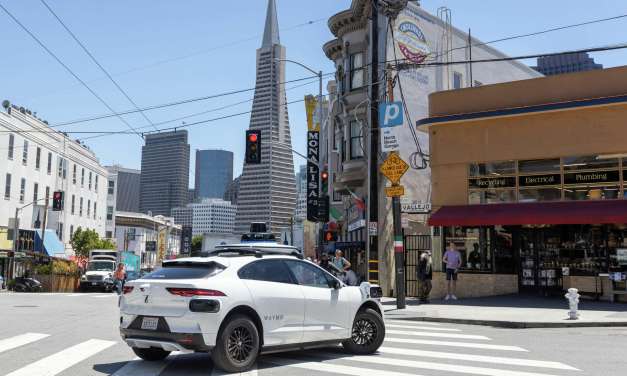
Google began testing its autonomous ride-hailing service, Waymo, in San Francisco back in 2009. Since then, the Bay Area has become a hotbed for autonomous innovation, with Waymo now expanding its service to Californian freeways, as announced earlier this month.
Now, autonomous-vehicle enthusiasts in the City by the Bay will have the chance to hail a second autonomous transport service: Zoox. The project, backed by Amazon, began testing in 2017 and is characterised by its toaster-like vehicles with no steering wheels.
Under the Zoox Explorer programme, riders will be expected to add their name to a waitlist via the Zoox app, where they will await selection. In the initial stages, all rides will be free before the project is expanded to include a paid service.
In a statement to the press, Zoox CEO Aicha Evans said:
“Zoox has been testing our autonomous technology in San Francisco since 2017; it’s our home. A city of innovation and progress, with an amazing mobility ecosystem that we feel Zoox can really complement. We have seen incredible interest in Zoox in this market and are excited about this first step to bring our purpose-built robotaxi experience to more people.”
In the initial stages, Zoox will run in select neighbourhoods, including SoMa, the Mission, and the Design District before the service is expanded to other parts of the city.
Zoox began in 2014 and was acquired by Amazon in 2020 in a $1.3 billion deal. The company is currently offering a similar free service on the Las Vegas Strip as it awaits regulatory approval for a paid service.
Keep up-to-date with the latest mobility news by subscribing to MOVEMNT’s free newsletter
by Eve Stevens | Nov 18, 2025 | Autos |
News
A year ago, German legacy automaker Volkswagen announced a strategic partnership with American EV innovator Rivian under the joint venture RV Tech.
The collaboration aims to produce a new line-up of software-defined vehicles (SDVs), combining the automotive expertise of the German titan with the adaptability and tech-forward thinking of the electric-focused ex-startup.
While most automotive partnerships can take some time to get off the ground, the strategic alliance has defied convention, racing toward the beginning of manufacturing and prototyping at high velocity.
In the European and American automotive industries, the turnaround time for a new vehicle is typically around seven years— a reflection of the long product cycles and complicated regulatory hurdles that categorize the industry.
Many strategic partnerships have been announced with bravado, only to fizzle out or lose momentum after the initial stages of discussion.
The same cannot be said for Volkswagen and Rivian’s partnership, which in just a year has assembled a 1,500-strong engineering team working across two continents with engineering teams operating in the United States, Canada, Sweden, Serbia and Germany.
Winter testing for the next generation of SDVs will begin next quarter as the pair race toward their ambitious target of 30 million units.
The companies have reimagined the traditional SDV — a vehicle that improves via continuous software updates — by integrating Rivian’s advanced zonal architecture. This design reduces complexity by consolidating the vehicle’s electrical system, cutting the number of electronic control units from 17 to just seven.
The resulting SDVs promise enhanced infotainment systems, improved driver-assistance features, and seamless over-the-air updates that allow vehicles to adapt to new technologies over time and remain relevant long after purchase.
CEO of Volkswagen, Oliver Blume, spoke on the successful progress of the programme. He said:
“The joint venture is rapidly developing the architecture for our future software-defined vehicles. Every step toward achieving our ambitious goals is being executed with determination and clear focus.”
Founder and Chief Executive of Rivian, RJ Scaringe, was equally enthusiastic when speaking about the partnership’s progress:
“RV Tech has gone from strength to strength over the last 12 months and is raising the bar in automotive technology. We’re incredibly excited about the launch of R2 in the first half of next year, which will showcase the advancements the joint venture has made.”
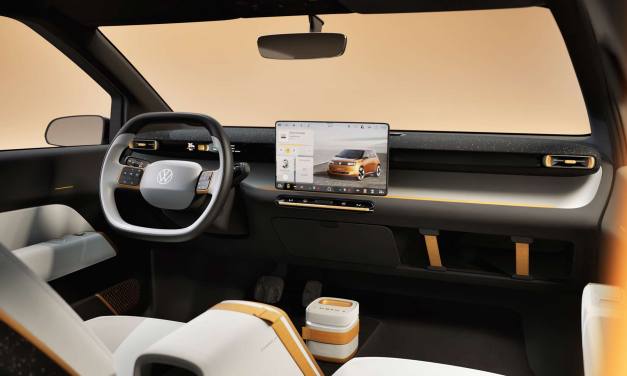
Volkswagen’s ID.EVERY, an entry-level electric vehicle with a comparatively low price tag, is set to be the first Group vehicle incorporating the RV Tech architecture.
With testing scheduled for the first quarter of 2026, Rivian and Volkswagen are making significant headway in their shared mission for affordable and adaptable SDV technology.
As the partnership reaches this annual milestone, it seems this transatlantic allegiance is very much on track for SDV success.
Keep up-to-date with the latest mobility news by subscribing to MOVEMNT’s free newsletter
by Eve Stevens | Nov 17, 2025 | Autos, Energy & Charging |
News
With the EU’s EV mandate up for debate and the politicisation of electric vehicles casting doubt on the American EV market, the global outlook for EV uptake seems, at first glance, murky.
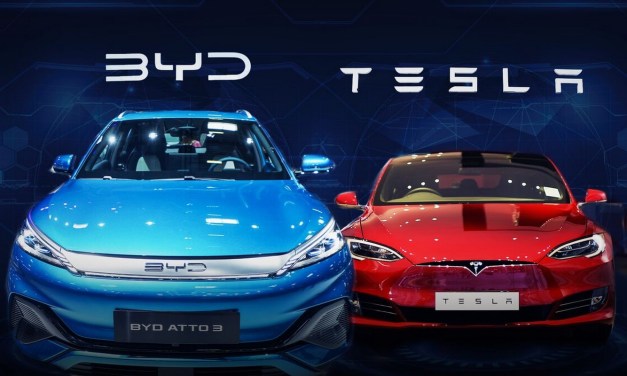
However, if we look more broadly at the global landscape, the race to electrify is only just beginning. In Latin America, EV adoption is steadily growing thanks to a huge influx of Chinese models from automakers such as Geely and BYD.
These Chinese models retail at around 60% of the price of a Tesla or an EV from legacy manufacturers such as Toyota and Kia.
EV adoption in Latin America, including Mexico and Central America, doubled in 2024 to around 4% and has continued to steadily climb. The International Energy Agency, in its Global EV Outlook 2025, attributed this success to government incentives and the relative affordability of Chinese brands.
BYD leads electric car sales in Brazil, Colombia, Ecuador, and Uruguay, and has recently carved out a considerable foothold in Argentina — the only Latin American country where imports from other regions still outweigh those from Chinese automakers.
Chinese success in the region can be attributed to gradually improving EV infrastructure and the adaptability of Chinese manufacturers, who have worked alongside local dealerships to offer competitive vehicles tailored to regional tastes; in Brazil, for example, BYD has launched the SONG PRO COP30, designed to run on biofuels derived from locally grown sugar cane.
Brazil continues to be the front-runner in EV uptake in the Latin American market, with Mexico following in second position. Peru is making significant headway following last year’s opening of the Port of Chancay, north of Lima, which has cut trans-Pacific shipping times for Chinese vehicles in half. In Chile, the story is much the same; in the first quarter of 2025, the EV market saw 126% growth.
Martin Bresciani, president of Chile’s automotive business chamber CAVEM, spoke on the success of Chinese manufacturers, saying:
“The Chinese have already demonstrated that they match global standards in quality.”
Uruguay represents another country that has firmly embraced Chinese models with Chinese market shares more than doubling in the country since 2023- now at 22%.
Although EVs make up a relatively small slice of the entire automotive market in Latin and Central America, the steady growth of sales remains a reason for optimism in the context of global electrification efforts.
Keep up-to-date with the latest mobility news by subscribing to MOVEMNT’s free newsletter
by Eve Stevens | Nov 14, 2025 | Autos, Energy & Charging |
News
London’s congestion charge is set for one of its biggest shifts in years, with both the cost of entering the zone and the treatment of electric vehicles set to dramatically shift in 2026. The development represents mayor Sadiq Khan’s latest step to incentivize public transportation over personal vehicles.
From January 2, the daily fee will rise from £15 to £18, the first increase since 2020. Transport for London (TfL) says future rises will track Tube fares or inflation to keep public transport from becoming the more expensive choice.
The most contentious change is aimed at electric vehicles. After years of enjoying a full exemption, EVs will soon pay 75% of the standard charge, rising to 87.5% in 2030.
Drivers will need to enrol in TfL’s auto-pay system to access the discount, a lengthy process that may deter some users. Electric vans and battery-powered delivery vehicles will receive a 50% discount if registered for daily payment, while EVs used by car-sharing clubs remain fully exempt in an effort to encourage shared mobility.
Reactions have been split. The AA’s Edmund King described the move as a step backwards, arguing that incentives are still needed to convert hesitant drivers. On the other side, sustainable transport groups welcome the rise, saying London must continue reducing traffic while investing in public transit, walking, and cycling.
Since 2019, the number of EVs in the capital has increased sixfold to more than 116,000 or one-fifth of all registered vehicles, prompting supporters to argue that early-stage subsidies are no longer as crucial.
The congestion charge, introduced at £5 in 2003, has climbed steadily as London attempts to curb gridlock and emissions. TfL warns that freezing the fee would lead to roughly 2,200 additional vehicles entering the zone each weekday next year.
Residents within the Ulez boundary will still receive a 90% discount, and low-income or disabled residents will continue to be exempt. But the broader direction is clear:
London is shifting from promoting EV adoption at any cost to reducing car dependency altogether and championing public transport in its place. For automakers, the shift underscores an evolving urban landscape where electrification is only one part of a wider mobility strategy.
Keep up-to-date with the latest mobility news by subscribing to MOVEMNT’s free newsletter
by Eve Stevens | Nov 13, 2025 | Autos |
News
The autonomous ride-hailing service Waymo is set to expand its operations onto U.S. highways in the coming days, offering the world’s first paid, driverless highway service.
Waymo has selected three U.S cities to roll out its driverless robotaxi service- San Francisco, Phoenix and Los Angeles. High-speed free-way routes will initially be available to a small pool of riders in each city before being expanded to the wider public.
Waymo Co-CEO Dmitri Dolgov commented on the new development, saying:
“Freeway driving is one of those things that’s very easy to learn but very hard to master when we’re talking about full autonomy without a human driver as a backup and at scale.”
Highway driving presents a host of new challenges for Waymo, including heightened concerns about safety surrounding high-speed travel. Under these new parameters, Waymo’s robotaxis will be able to travel at speeds of up to 65 mph, increasing the potential severity of accidents.
When asked about customer safety at TechCrunch’s Disrupt Summit last month, Co-CEO, Tekedra Mawakana acknowledged the inevitability of challenging safety scenarios following widespread deployment. When pressed to comment on whether the public would accept fatalities involving autonomous vehicles, she said:
“I think society will”, adding, it’s not a question of “how many [incidents] are allowable,” but rather what the ramifications are for safety overall.
Waymo Group Manager Jacopo Sannazzaro pointed to the tangible safety benefits of autonomous highway transportation, saying:
“We have been building a strong body of evidence that the Waymo Driver is making the road safer.”
According to Sannazzaro, the company’s robotaxis are immune to human risk factors such as fatigue or emotional decision-making- issues that often lead to accidents on highways. He continued:
“The Waymo Driver leads to 91 percent fewer crashes with serious injuries compared with human drivers.”
The company has announced that they are working closely with highway patrol services to work through every eventuality on the roads, ensuring that cars can safely pull over in the event of a malfunction or accident.
Waymo plans to expand its portfolio of freeway services in other cities in the coming years, should the project prove successful.
Competitors like Tesla, Amazon’s Zoox, and American startup Nuro may be in the initial stages of their pilots; however, Waymo is leading the charge in autonomous highway transportation.
Keep up-to-date with the latest mobility news by subscribing to MOVEMNT’s free newsletter
by Eve Stevens | Nov 12, 2025 | Autos, Business |
News
In an effort to tackle the company’s reliance on Chinese markets, American automotive giant General Motors is urging its suppliers to remove Chinese parts from their supply chains.
Executives at the company have warned suppliers to rethink where they are sourcing raw materials and components used in the automotive manufacturing process, demanding that ties with China be dissolved as early as 2027.
The decision follows a recent escalation in U.S.–China trade disputes, which triggered a domino effect of tit-for-tat tariffs on Chinese and American goods.
The recent Nexperia crisis has also heightened the sense of urgency, exposing the vulnerability of global supply chains due to an overreliance on Chinese markets for vital components.
GM has emerged as one of the most proactive companies in cutting its ties with China and refocusing automotive production on the domestic sphere—a decision in line with the Trump administration’s push to stimulate national output and domestic manufacturing.
Among such projects is a recent partnership with a U.S.-based rare-earths company investing in a lithium mine in Nevada in 2024, which will specialise in the production of EV batteries.
CEO Mary Barra spoke at GM’s quarterly review in October, unveiling the company’s commitment to improving the robustness of its supply chains:
“We have been working now for a few years to have supply chain resiliency.”
Shilpan Amin, GM’s Global Purchasing Chief, echoed this sentiment:
“Resiliency is important—making sure you have more control over your supply chain, and you know exactly what is coming from where.”
The U.S. and China reached a resolution in late October, agreeing to loosen some restrictions and roll back tariffs on certain goods. Despite this apparent easing of tensions, many automakers are still rethinking their global supply chains, having witnessed the fragility of the market first-hand.
Keep up-to-date with the latest mobility news by subscribing to MOVEMNT’s free newsletter
by Eve Stevens | Nov 11, 2025 | Autos, Energy & Charging |
Opinion
Two years ago, the European Union decided to impose a mandate, banning the sale of all new petrol and diesel cars by the year 2035.
Now, just a decade out from this historic target, the mandate is up for review with the process likely to begin in the coming year.
For EV evangelists and climate activists alike, this potential rollback represents a regressive legislative decision that could slow down the widespread adoption of EVs and jeopardise a successful green transition.
Why is the EV mandate under review?
Since the legislation was passed in the European Parliament, much has changed, both in the EV space and in global politics at large. The seemingly unstoppable EV boom, stoked by rapidly evolving technology and rampant investment, has subsided exposing a slightly more lukewarm reception for electric models.
Relatively low profit margins in EV manufacturing have prompted many traditional OEMs and legacy automakers to refocus on petrol and hybrid models.
Combined with persistently high upfront costs and a lack of robust charging infrastructure, this shift has dampened enthusiasm for EVs, particularly when compared with the wistful optimism of 2023 forecasts.
Geopolitical factors such as the reversal of the EV tax credit under Trump and the disruptive impacts of tariffs have further clouded the outlook, undermining global demand and fragmenting any attempt at a unified international EV strategy.
With the global EV market facing uncertainty, many OEMS have called for a relaxation of the EU’s EV strategy to reflect current market realities.
Antionio Filosa, CEO of Stellantis, urged Europe to rollback on its EV stance, contending that strict regulations were placing a noose on an already squeezed industry.
“If there is a change which is big and urgent in regulation, obviously we will multiply our investment in Europe. What the example of the US shows is that when there is reasonable change in regulation that gives back . . . freedom of choice . . . automakers see there is growth.”
Similarly, Ola Källenius, head of European car industry body Acea and the CEO of Mercedes-Benz, warned that the European Commission would be making “a catastrophic mistake” by standing firm on its current emissions policy, cautioning that overregulation could shrink the automotive market further.
Europe’s second roll-back
The European Parliament has already revised its vehicle emissions policy once before, offering an olive branch to the already struggling European automotive market back in May 2025.
Under the revised legislation European carmakers were granted the option to spread out their compliance with the rules over three years so as to avoid hefty fines. The motion passed with 458 votes in favour, 101 against and 14 abstentions.
Avoiding the EV slowdown
Despite mounting pressure from automakers, many battery manufacturers rely on the EU’s vehicle emission mandate as a means to guarantee long-term investment. Should the EU remove this incentivizing regulation many of the battery makers who strategically moved production to the EU as a direct response to emissions regulation could find themselves stranded in a more hostile EV climate.
And it’s not just battery makers who stand to lose. With Europe already lagging behind China in the global EV race, further backtracking could prove economically disastrous.
China, now the world’s largest automotive market, has emerged as a formidable rival to both the U.S. and Europe in the EV space.
Access to rare earth materials and significantly lower manufacturing costs allow Chinese automakers to undercut legacy OEMs, developing new electric models in as little as 18 months – compared to an average of seven years for American and European manufacturers.
Any relaxation of EU emissions regulation risks deepening this competitive divide, widening the chasm between European and Chinese automakers. Declaring defeat in this space would have repercussions far beyond automotive sales.
The technologies driving EV innovation are also foundational to the broader tech and connectivity industries; failing to compete risks granting China a dominant position across multiple sectors.
The recent Nexperia chip shortage placed a magnifying glass on the disastrous consequences of an over-reliance on Chinese markets for vital components. Rolling back EV innovation and investment in Europe will only serve to increase reliance on the Chinese markets and further weaken global supply chains, leaving the continent more vulnerable to global trade disputes and the impact of international tariffs.
Reasons for EV optimism
Many analysts have accused OEMs of an overly pessimistic outlook on the global EV market. While the U.S. market has been dampened by a fossil-fuel-friendly administration, elsewhere the EV transition is gathering pace. Every second car bought in China last year was a new-energy vehicle and EV investment in Latin American markets is on the rise.
Meanwhile, last month in the UK, EV sales were at a record high, with EVs making up a quarter of the UK’s overall car market- fully electric cars accounted for 25.4% of all new registrations last month. It seems, despite market scepticism, global momentum for EVs is steadily growing.
Given this progress, maintaining strong incentives for the green transition is even more critical than ever. If the EU retreats from its ambitious EV mandate, it risks not only environmental setbacks but also long-term damage to investment in electric vehicles and battery technology, undermining Europe’s competitiveness against China.
Despite industry pessimism, the current slowdown is likely just a temporary dip in an otherwise inevitable shift toward electrification. Whilst geopolitical setbacks have rocked the curve growth, analysts, politicians and scientists alike largely agree on the need to electrify.
The EU must stand firm in its commitment and weather the short-term challenges if it hopes to remain a serious contender in the global automotive market. The road to electrification is not only inevitable, it is a matter of environmental and geopolitical urgency and, let’s face it, a race that Europe simply cannot afford to lose.
Keep up-to-date with the latest mobility news by subscribing to MOVEMNT’s free newsletter
by Eve Stevens | Nov 6, 2025 | Autos, Business |
News
American automotive and tech company, Lucid Motors, is accelerating its move into the autonomous vehicle market with its high-tech Gravity crossover, forming a powerful alliance with Nuro, Nvidia, and Uber to challenge leaders such as Tesla and Waymo.
With a starting price of around $96,550, the three-row Gravity may harbour a hefty price tag, but its 450-mile range, ultrafast charging, and redundant safety systems make it an ideal candidate for robotaxi and driverless applications. As part of a six-year deal, Lucid will supply 20,000 vehicles to Uber, while Nuro licenses its autonomous Nuro Driver software and hardware to power the fleet.
Speaking on the potential for creating a commercially viable fleet, Nuro COO Andrew Chapin said
“The economics of a robotaxi program go beyond the vehicle’s purchase price. Operating costs, hardware, and utilisation all matter — and the Gravity has a favourable profile.”
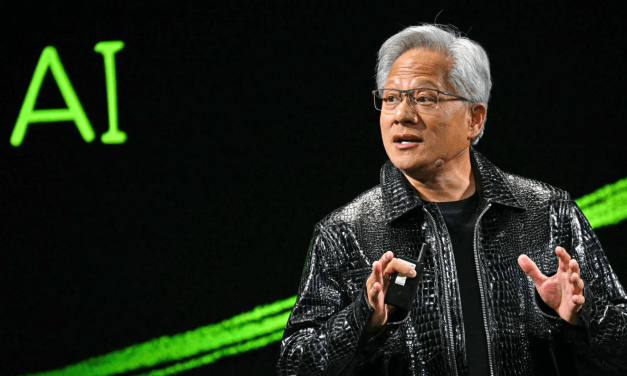
For Uber, Lucid’s production ramp aligns perfectly with its robotaxi rollout in the San Francisco Bay Area. Nvidia adds the AI capability, enabling Lucid’s vehicles to evolve into software-defined, AI-powered machines. “Cars are becoming supercomputers on wheels,” said Nvidia CEO Jensen Huang.
While Lucid remains a newcomer to autonomous technology, it is positioning itself as a serious contender in the race to autonomous deployment. Its Air sedan already features hands-free driver assistance, and a more affordable crossover is planned for 2026, priced around $50,000.
By combining luxury EV design with advanced AI and automation, Lucid Motors is redefining what’s possible in the future of intelligent mobility, taking a bold and collaborative step toward an era of seamless, driverless transport.
Keep up-to-date with the latest mobility news by subscribing to MOVEMNT’s free newsletter
by Eve Stevens | Nov 5, 2025 | Autos, Business |
News
German carmaker Volkswagen has announced plans to develop its first in-house chip for use in its next generation of smart driving vehicles for the Chinese market.
VW will develop the AI chip as part of a joint venture between its software unit, Cariad, and Horizon Robotics, its Chinese smart driving software partner.
The decision marks VW’s latest effort to keep up with Chinese competition and consolidate its foothold in the world’s largest automotive market. Since 2022, Volkswagen has invested more than $4 billion in an attempt to shore up its Chinese business. Analysts have recognised VW as one of the few foreign automakers to demonstrate a serious intent to win back Chinese consumers.
In light of this, the German group also paid $700 million for a 5% stake in Chinese electric vehicle manufacturer XPeng. The collaboration granted VW a non-voting observer position on XPeng’s board and the opportunity to jointly develop a series of electric vehicles.
VW’s new chip will be used to process data from cameras and sensors to enhance the advanced driving capabilities of its next generation of EVs. These models will feature a single-chip computing power of 500 to 700 tera operations per second (TOPS).
The chips are commonly used in connected devices such as mobile phones and are critical in the production of advanced driver assistance and autonomous driving systems.
Volkswagen Chief Executive Oliver Blume justified the startegic decision to begin development in China, saying,
“By designing and developing the system-on-chip (SoC) here in China, we are taking control of a key technology that will define the future of intelligent driving.”
The technology is expected to become available within the next three to five years and will cost over $200 million to develop.
Keep up-to-date with the latest mobility news by subscribing to MOVEMNT’s free newsletter
by Eve Stevens | Nov 4, 2025 | Autos, Business, Fleets |
News
Waymo, owned by Google’s parent company, Alphabet, is consolidating a foothold in the Midwest. This week, the company announced it will be moving to the Motor City, bringing its self-driving robotaxi service to Detroit.
Detroit will be the sixth U.S. city to receive Waymo’s driverless service, after San Francisco, Los Angeles, Phoenix, Atlanta, and Austin.
On November 3, Waymo announced its entry into other U.S. locations, including San Diego and Las Vegas. This news follows last month’s announcement that Waymo is expanding into Europe, with plans to launch its ride-hailing robotaxis in London as early as 2026.
While the cars will begin with manual safety drivers, they will progress into fully autonomous ride-hailing vehicles after an initial trial period.
The company has already begun testing its vehicles in the cold, icy conditions of Michigan, expanding its capabilities in unpredictable, snowy weather. Having carried out testing in Michigan’s Upper Peninsula, Waymo is confident its robotaxis will be a match for the harsh winters of Detroit.
Waymo’s latest expansion has received praise from many Michiganders, who have applauded the effort for providing accessible transportation to members of the community who may otherwise be excluded from driving. One such advocate is Andrea Schotthoefer, president of the Epilepsy Foundation of Michigan, who said in a news release:
“For many people living with epilepsy, transportation is a significant barrier,” Schotthoefer said. “Waymo’s efforts show what’s possible and inspire collective action toward a future where transportation barriers no longer stand in the way of opportunity and inclusion.”
Waymo’s autonomous ride-hailing service has also received support from other groups, such as Mothers Against Drunk Driving, who have lauded the service as an accessible deterrent against dangerous drunk driving. Regional Director Alex Otte said:
“While we know that the decision to drive impaired comes down to personal responsibility, MADD is supportive of safe alternatives like planning ahead, rideshare, and non-drinking designated drivers, and we are excited for Waymo’s introduction to the Detroit community.”
Despite initial praise, Waymo’s expansion does not come without controversy. Waymo has hit headlines recently over concerns regarding the safety of its vehicles; this autumn, an investigation was launched into around 2,000 Waymo taxis after one reportedly drove around a stationary school bus.
The investigation follows a similar inquiry earlier this year by the National Highway Traffic Safety Administration, which saw 1,200 Waymo robotaxis recalled over concerns about their ability to perceive hazards under low-visibility conditions.
Waymo has also been in the news this week after one of its driverless robotaxis collided with and killed a well-loved neighbourhood cat in the Mission District of San Francisco.
Keep up-to-date with the latest mobility news by subscribing to MOVEMNT’s free newsletter