by Grace Dawes | May 13, 2025 | Autos, Business, Popular |
The President of the United States (U.S.) Donald Trump has reached a trade deal with the UK after meeting with Prime Minister Kier Starmer that will see tariffs on British cars fall to 10%.
The two leaders met last week and announced a landmark deal which will lower Trump’s worldwide tariff rates for UK steel and British car makers.
As part of the deal, U.S. tariffs on automotives will be slashed from 27.5% to 10% applying to a quota of 100,000 UK cars, as well as steel and aluminium taxes falling to zero.
Starmer’s government claimed this will save “hundreds of millions a year for Jaguar Land Rover alone” and “thousands of jobs have been saved”.
Adrian Mardell, Chief Executive Officer, JLR said:
“The car industry is vital to the UK’s economic prosperity, sustaining 250,000 jobs. We warmly welcome this deal which secures greater certainty for our sector and the communities it supports.”
U.S. Commerce Secretary, Howard Lutnick, said the 10% basic tariff rate would still apply.
Whilst the UK has scored in lowering tariffs for parts of its economy, other nations are still advocating for cuts to their own tariff rates.
China’s combined 145% tariff rate has been temporarily lowered after the U.S. and Chinas agreed to a 90-day truce on each other’s import taxes.
After Trump announced his tariff plan, China retaliated with a 125% tax duty on imported U.S. goods.
Mexico and Canada’s 25% tariff on most goods imported in the U.S. still remains in place.
by Grace Dawes | May 13, 2025 | Autos, Business, Popular, Tech & Data |
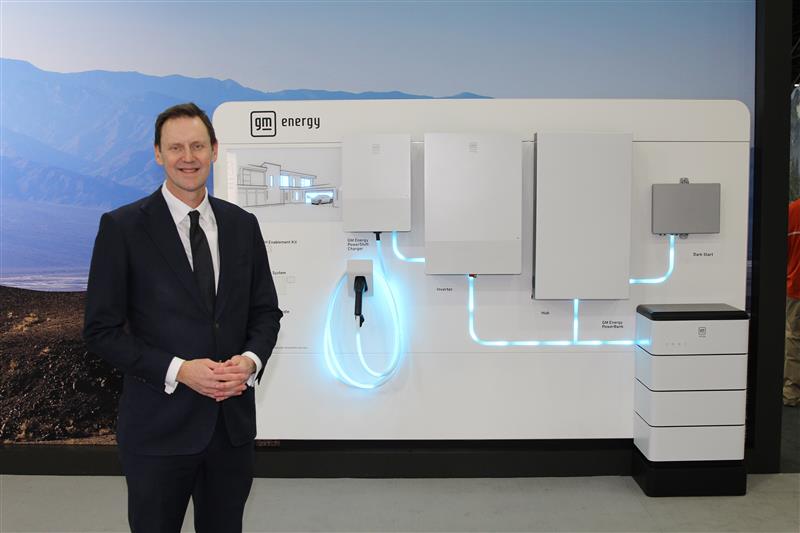
American automotive company General Motors (GM) has nabbed Aurora‘s co-founder Sterling Anderson for their chief product officer role.
Anderson resigned from the autonomous truck company only last week, recently after Aurora launched its commercial driverless trucking service in Texas.
Reporting to GM President Mark Reuss, Anderson is expected to oversee the product lifecycle for both gas and electric-powered vehicles, including hardware, software, services, and user experience.
GM Chair and CEO, Mary Barra, said:
“Sterling joins GM at a critical time as our industry continues to reinvent itself. He brings decades of leadership in automotive engineering, tech start-ups, and software innovation.”
Before co-founding Aurora in 2017, Anderson worked at Tesla, where he led both the Model X program and the team that delivered Tesla Autopilot.
Anderson’s portfolio in the automotive sector also includes a PhD in Robotics from the Massachusetts Institute of Technology (MIT) for his work on autonomous vehicles.
Anderson said:
“GM has a deep heritage, bold vision, and the technical foundation to create products that millions of people love. The world is at an inflection point. Advances in foundational technologies have opened opportunities to revolutionise not just how we create products, but what those products can be and do. I look forward to partnering with the talented team at GM to build on the transformation they’ve already begun.”
by Grace Dawes | May 12, 2025 | MOVE, Popular, Resources, Tech & Data |
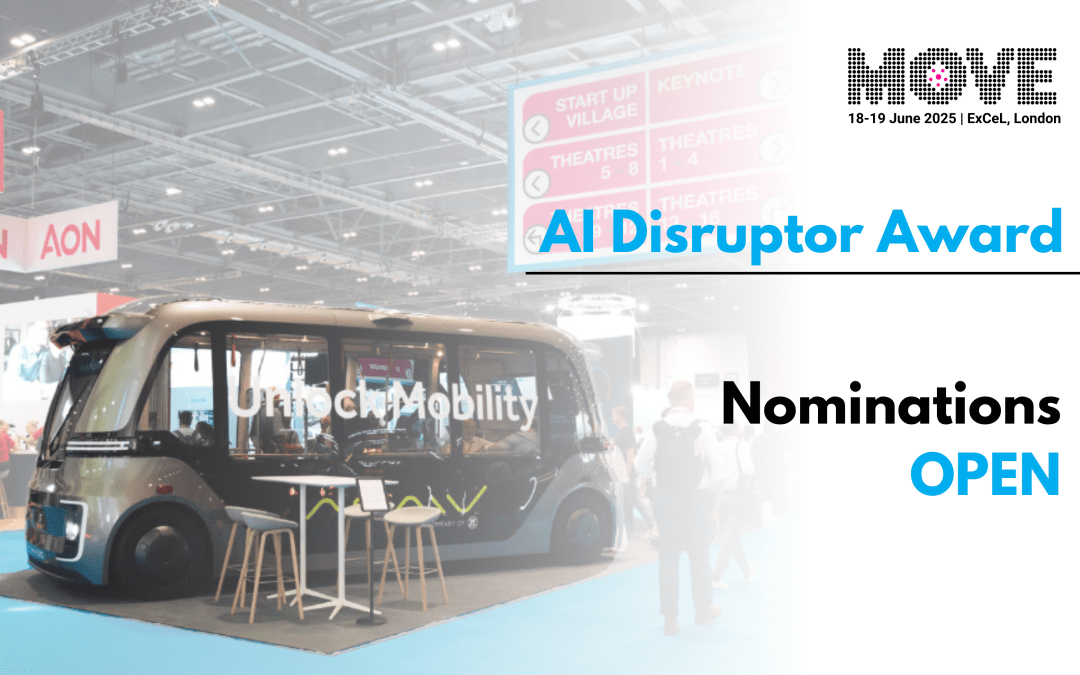
MOVE’s AI Disruptor Award 2025 – nominations now OPEN
This year, we are proud to introduce the MOVE AI Disruptor Award to recognise the individuals who are harnessing the power of AI to transform the way the world MOVEs.
AI is inextricable from the landscape of future mobility. From autonomous vehicles to intelligent traffic systems and predictive logistics, AI is reshaping how people and goods move across cities and continents. As mobility evolves, so too does the need to spotlight the visionaries leading this transformation – nominate them today!
Nominations close May 22, 2025. A shortlist will be announced, and the public will vote for the winner, who will be revealed at MOVE 2025 in London on June 18, 2025. Use the nomination form below.
by Grace Dawes | May 8, 2025 | Autos, Business, Fleets, Popular, Tech & Data |
Unites States (U.S.) delivery giant DoorDash is set to acquire UK delivery platform Deliveroo as part of a £2.9 billion deal.
The respective companies reached an agreement on the acquisition on Tuesday, which could see the combined companies reach a global presence in over 40 countries with approximately 50 million monthly active users.
Tony Xu, CEO and Co-founder of DoorDash, said:
“Coming together with teams that have similar visions and values accelerates our work to achieve that mission. Deliveroo is just such a team and one that I have long admired. Like DoorDash, Deliveroo is obsessively focused on their customers – consumers, merchants, and riders.”
The Amazon-backed UK delivery brand has partnered with approximately 176,000 local businesses and has added new categories such as grocery and retail, reaching approximately 7 million monthly active consumers.
Claudia Arney, Chair of Deliveroo, said:
“Following careful consideration, the Deliveroo Independent Committee has unanimously decided to recommend this offer, considering it to be in the interests of all our shareholders and wider stakeholders.”
Deliveroo operates in nine countries, all of which are new for DoorDash. Bringing together both companies’ existing footprints will enable the Enlarged Group to operate in countries with a combined population exceeding 1 billion people.
DoorDash is offering 180p per Deliveroo share to its stakeholders, despite the company’s initial 390p share price when Deliveroo went public on the London Stock Exchange in April 2021.
by Grace Dawes | May 8, 2025 | Autos, Fleets, Popular, Smart Cities |
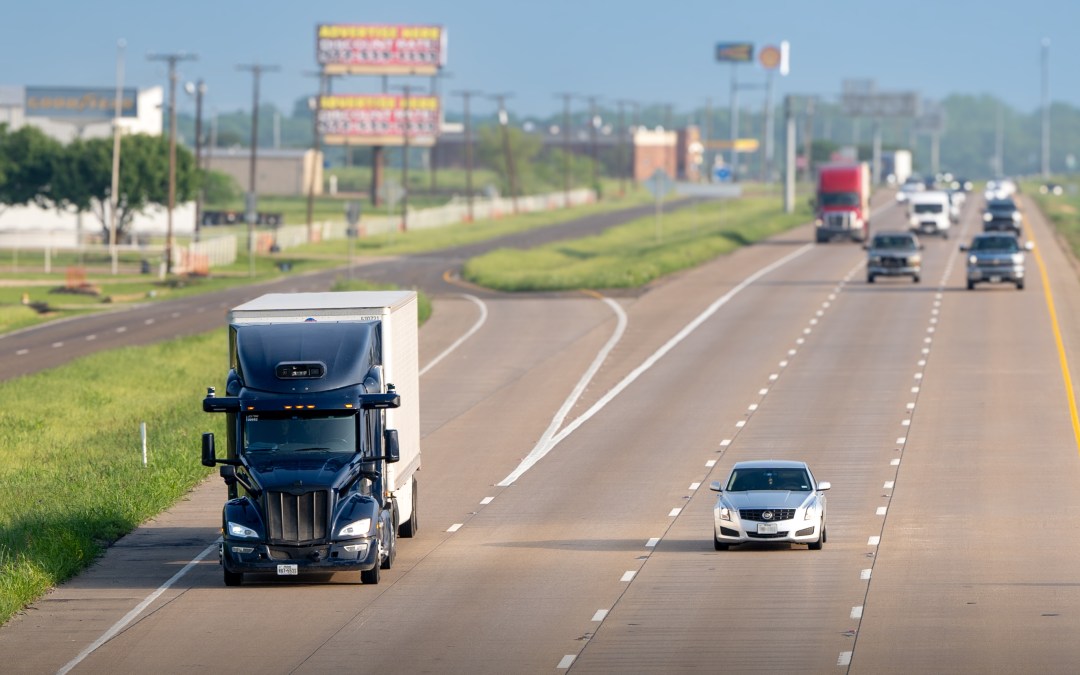
Pennsylvanian autonomous tech start-up Aurora has launched its commercial self-driving trucks in Texas by completing customer deliveries between Dallas and Houston.
The Uber, Morgan Stanley and BlackRock-backed start-up has now become the first company to operate a commercial self-driving service with heavy-duty trucks on public roads.
Chris Urmson, CEO and Co-Founder of Aurora, said:
“We founded Aurora to deliver the benefits of self-driving technology safely, quickly, and broadly. Now, we are the first company to successfully and safely operate a commercial driverless trucking service on public roads. Riding in the back seat for our inaugural trip was an honor of a lifetime – the Aurora Driver performed perfectly and it’s a moment I’ll never forget.”
The company stated plans to expand its service to El Paso, Texas and Phoenix, Arizona this year in a press release.
Trucking is a trillion dollar industry in the U.S. but it faces challenges, including an aging driver population with high turnover rates and increasing operating costs.
Lior Ron, Founder and CEO of Uber Freight, said:
“When Uber Freight and Aurora came together more than four years ago, we set out to transform the future of logistics…Moving autonomous commercial freight without anyone behind the wheel is a historic step forward in our mission to build a smarter and more efficient supply chain.”
Most U.S. states today allow for driverless vehicles, including Texas, New Mexico, and Arizona.
Aurora’s launch trucks are equipped with the Aurora Driver hardware kit and numerous redundant systems including braking, steering, power, sensing, controls, computing, cooling, and communication, enabling them to operate without a human driver.
The start-up has boasted working with industry leaders such as Continental, FedEx, Hirschbach, NVIDIA, PACCAR, Ryder, Schneider, Toyota, Uber, Uber Freight, Volvo Trucks, Volvo Autonomous Solutions, and Werner, who it may look to to scale its operations.
by Grace Dawes | May 7, 2025 | Autos, Business, Popular, Tech & Data |
Japanese automaker Mitsubishi Motors has entered into talks with Taiwanese electronics contract manufacturer Foxconn to discuss the development of electric vehicles (EVs).
The carmaker signed a memorandum of understanding with Foxconn’s EV division Foxtron to proceed with further discussions.
Foxtron is a joint venture between Foxconn and Yulon Motor Corporation which assembles and makes cars for Nissan.
The EV model to be supplied to Mitsubishi will be developed by Foxtron and manufactured in Taiwan, to be sold in Australia and New Zealand in the second half of 2026.
The model is part of the product plan announced last year for Australia, extending through 2030.
“Based on this MOU, Mitsubishi Motors and Foxtron will proceed with discussions towards a definitive agreement,” said the carmaker in a press release.
Mitsubishi Motors is advancing its environmental initiatives through the electrification of new models. This effort includes upgrades to the Outlander PHEV, a plug-in hybrid EV, and the addition of hybrid EV models to the Xpander and Xforce.
Mitsubishi is a member of the Alliance with Renault and Nissan and will be receiving OEM models from both companies in North America.
Furthermore, Mitsubishi Motors is considering expanding collaboration with its Alliance partners globally, including in the Oceania region, to strengthen the electrified vehicle lineup and accelerate efforts towards achieving carbon neutrality.
by Grace Dawes | May 6, 2025 | Autos, Business, Popular |
General Motors (GM) has named Duncan Aldred as the next President of the company’s North America region.
Aldred has been working at GM for 33 years, will transition and leave his current role as VP of GM’s commercial growth strategies and operations department.
Rory Harvey, GM’s executive VP and President of Global Market, said:
“Duncan comes to the role leading our North America business having driven a decade of growth in Buick and GMC, and most recently leading and modernising our commercial operations to better serve our customers. This change supports our strategy to offer our customers around the world unrivaled choice across our ICE and EV portfolio, from brands they love and trust.”
Aldred has held a range of leadership roles at GM in vehicle sales, services and marketing.
In 2010, he was named chairman and managing director of Vauxhall in the UK, before shifting to lead Opel global sales, marketing and aftersales in 2013.
In 2014, he was appointed VP of global GMC and Buick, where he led the growth of both brands.
by Grace Dawes | May 6, 2025 | MOVE, Popular, Resources |
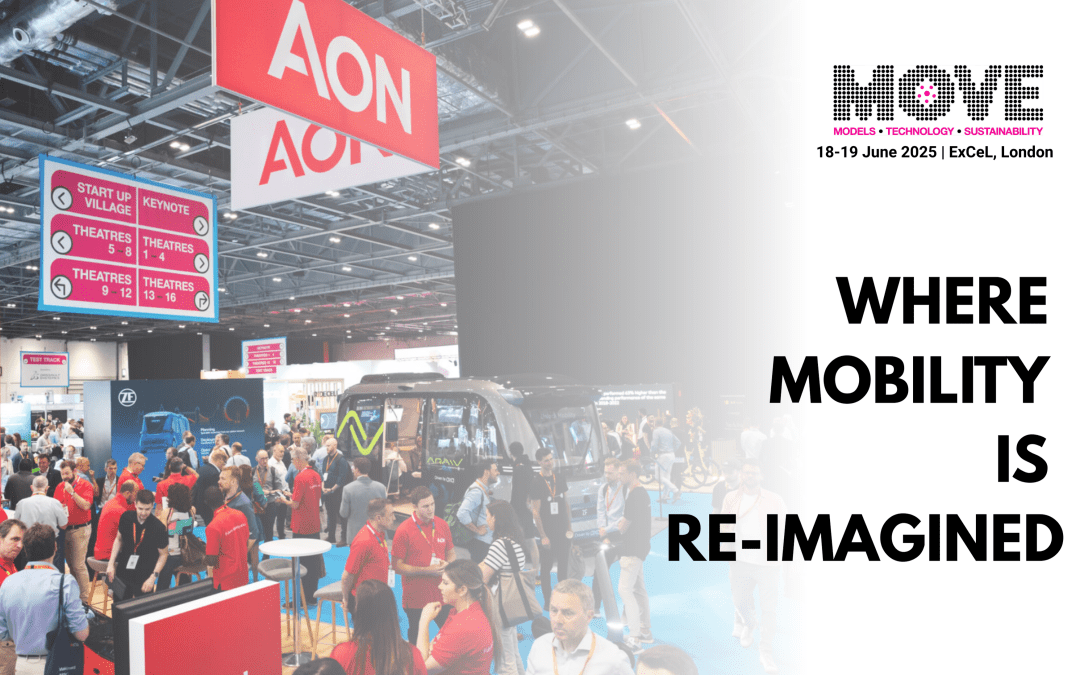
The world’s #1 converged mobility event returns to ExCeL, London on 18-19 June, uniting the global mobility ecosystem for 2 days.
MOVE provides an unparalleled opportunity for every vertical within the ecosystem to come together, learn, innovate, do business, and push boundaries.
The event brings together the world’s leading mobility players from over 80 countries, forming the ultimate meeting place for automakers, battery manufacturers, transport operators, investors, fleet managers, autonomous companies and more.
Why attend 6-7 events a year when you can attend one?
With 4,000+ attendees, 500+ speakers, 150+ sponsors and exhibitors, 200+ start-ups and premium content across 20 stages, you can’t afford to miss out.
MOVE’s 20 Stages:
Day One
- Business Models
- MaaS
- Intelligent Infrastructure
- Fleets & Commercial Vehicles
- Regulation, Liability & ESG
- Tech Data Innovation
- Energy & Charging
- Autonomous Vehicles
- Commerce
Day Two
- Micromobility
- MaaS II
- Bus & Public Transport
- Fleets & Commercial Vehicles
- Electric Vehicles II
- Tech Data Innovation
- Energy & Charging
- Battery Tech
- Connectivity
MOVE Reviews:
“This is one of my favourite conferences across mobility. I feel like I get my finger on the pulse here.”
Aon
“The show is great, the number of people here and the number of exhibitors is wild. I’m really impressed by the amazing number of start-ups that have some really neat innovation.”
NVIDIA
“The MOVE event is a great event to bring awareness to the public. There are so many ecosystem players in this event to talk to and find opportunity to collaborate with.”
Pony.ai
“Here we get to meet so many different people from different industries.”
NIO
Speakers:
- Tony Han, Founder, Chair & CEO, WeRide
- Wen Han, Founder, Chair & CEO, Windrose
- Helen Pan, General Manager & Board of Directors, Baidu
- Magnus Östberg, Chief Software Officer, Mercedes-Benz AG
- Isbrand Ho, Former MD, BYD Europe and Senior Consultant, BYD
- Henry Bzeih, Chief Software Officer, Ampere
- Dr. James Peng, Co-Founder and CEO, Pony.ai
- Celina Mikolajczak, Chief Battery Technology Officer, Lyten
- Marcus Welz, CEO, Hyundai Connected Mobility GmbH
- Andy Palmer, Chair, Pod Point
- Dong Su Kim, CEO, LG Technology Ventures
- Arnaud Julien, Chief Innovation, Data and Digital Officer, Keolis
- Karl Deppen, Board Member, Daimler Truck
- Gavin Jackson, CEO, Oxa
- Pierre Pomper, Chief Commercial Officer, Einride Autonomous Technologies
- Fathi Tlatli, President Global Sector Auto-Mobility, DHL
- Andrew Cornelia, CEO, Mercedes-Benz High-Power Charging
- Jeroen van Tilburg, CEO, IONITY
- Thijs Meijling, Head of NIO Europe Business, NIO
- Stephan Jannis, SVP Supply – Rechargeable Battery Materials, Umicore
- Katharina Uribe, SVP, Automotive & New Mobility, Kuehne + Nagel
- Claudia Barthle, Head of Global Sales, Progressive Mobility, Bosch
- Damian Oton, CCO, Motability Operations
Sponsors:
Diamond
Michelin
Stellantis Ventures
Motability Operations Ltd.
Robert Bosch GmbH
Platinum
Autel Europe
Allianz Partners
Dassault Systèmes
Ekoenergetyka-Polska S.A.
EY
Hogan Lovells
VIP Speaker Dinner
Car Connectivity Consortium
Gold
Ekimetrics
elvah GmbH
HiveMQ
Kempower
LCP Delta
Nokia
Valtech Mobility GmbH
Volteras
Silver
Aufinity
Webfleet
E-Mobility-Rentals
endava
Imagry
Mobilisights
Tata Communications
Vodafone
Wrisk
Media resources:
Press/media have exclusive access to the press lounge which will be covered with a backdrop for interview filming.
Cable access will be supplied.
Press attends the event for free and can bring any number of colleagues.
MOVE GROOVE:
Everyone knows the best networking happens after hours so join us for a night to remember as we kick out the jams at the MOVE afterparty!
There is no funkier nor groovier party in mobility.
The MOVE GROOVE lets you kick back and network in a less formal setting.
Buy your ticket to MOVE now and get 15% off. Tickets here.
by Grace Dawes | May 1, 2025 | Autos, Business, Podcast, Popular, Tech & Data, Videos |
Venture capitalist Tim Draper joins us the ON THE MOVE Podcast to share bold insights on the future of mobility, innovation, and global investment.
From early bets on Tesla and SpaceX to cutting-edge ventures in EVTOLs, electric boats, and space stations, Draper reflects on the technologies reshaping how we move – and where investors should look next.
He also dives into the impact of politics on innovation, the rise of Bitcoin and why start-ups thrive in times of change.
A must-listen conversation for anyone curious about the intersection of tech, mobility, and the future economy.
Listen on SPOTIFY or YOUTUBE below:
by Grace Dawes | Apr 29, 2025 | Fleets, Popular, Smart Cities |
Auckland Transport (AT) has launched a new fleet of 44 electric buses, including 25 double-deckers that will run every 10 minutes AT’s WX1 Western Express frequent service.
Over the coming months the new electric buses are set to replace Auckland’s diesel buses that are currently in operation.
AT’s Infrastructure and Fleet Specification Manager, Edward Wright, said:
“One of our key targets is that by 2030, we want all buses coming into the city centre to be electric…We’re adding another 31 electric buses to our fleet by the end of June. By August next year, we will have a fleet of 450 electric buses, which is around a third of the 1350 buses that operates AT’s services. Longer term, we have plans in place for Auckland’s bus fleet to be fully electric by 2035.”
With the Government’s announcement last week that it will fund a new dedicated busway and stations between Westgate and into the central city, the future of public transport is suddenly looking much brighter for west Auckland communities.
The new buses are operated by Tranzit’s Tranzurban Division, and General Manager Catherine Jones says they are a win-win for west Aucklanders, and the environment.
“Electric buses will contribute to net neutral carbon emission on transport services, so having this eye-catching fleet on the road in west Auckland supports AT’s environmental goals,” said Jones.
by Grace Dawes | Apr 29, 2025 | Autos, Business, Popular |
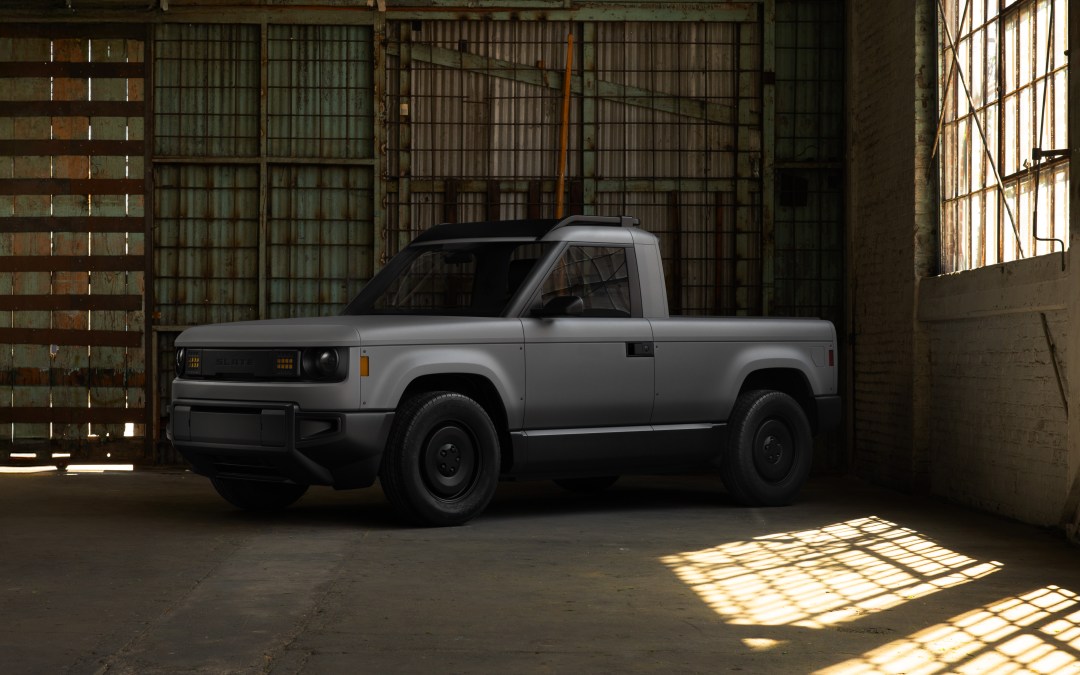
Michigan-founded company Slate Auto has released its highly anticipated American-made cheap electric truck in the wake of Trump’s turbulent tariffs.
The start-up has been quietly backed by Amazon owner Jeff Bezos leading up to its launch, and has assembled a workforce from the likes of Ford, General Motors, Stellantis, and Harley-Davidson.
The company unveiled their all-electric “Slate Truck” last week after teasing the model with customisable wraps.
Calling the vehicle “radically simple”, the truck features no paint, no stereo and no touch-screen and has an expected purchase price of sub-$20,000.
“The definition of what’s affordable is broken,” said Slate CEO Chris Barman.
“Slate exists to put the power back in the hands of customers who have been ignored by the auto industry. Slate is a radical truck platform so customizable that it can transform from a 2-seat pickup to a 5-seat SUV.”
The model has a range target of 150 miles that can be fast-charge to 80% at 120-kW in under 30 minutes.
Slate Auto has claimed the vehicle will be manufactured in America, which is largely simplified due to its lack of paint.
by Grace Dawes | Apr 24, 2025 | Autos, Business, Popular, Tech & Data |
Photo: Nissan
Japanese motor company Nissan has announced it will be committing 10 billion Yuan (approx. $1.4 billion) to its Chinese operations.
The announcement was made at the Shanghai Auto Show where the automaker claimed China is the ideal market in which the company can develop its electric vehicles (EVs).
They hope to launch 10 new models using the investment which will be released in the coming years.
Stephen Ma, Head of Nissan’s Chinese operations, during the announcement said:
“With China moving so fast, we want to stay and we want to compete. We can successfully thrive and compete here and so China has become a very good market for us to pilot many things.”
Additionally, two new vehicles were also announced during their presentation at the Shanghai Auto Show. These include a new N7 electric sedan and a plug-in hybrid Frontier Pro pick-up truck.
These releases will be the Japanese automaker’s first-ever plug-in Hybrid and Nissan’s first-ever electrified pickup truck.
Watch the full announcement at the Shanghai Auto Show here:
by Grace Dawes | Apr 24, 2025 | Energy & Charging, Fleets, Popular, Tech & Data |
Electric fleet charging solutions company Terawatt Infrastructure has opened its first medium- and heavy-duty electric vehicle (EV) charging hub in Rancho Dominguez, California.
Located 12 miles north of the ports of Long Beach and Los Angeles, the charging hub is available for charging electric truck fleets travelling in and out of the largest container ports in the United States.
First customers include Dreaded Trucking, Hight Logistics, PepsiCo, Quick Container Drayage, Southern Counties Express, Tradelink Transport, and WestCoast Trucking & Warehousing.
The site operates a total of 20 pull-through and bobtail DC fast charging stalls and boast a capacity of 7MW – enabling charging for up to 125 trucks per day.
Neha Palmer, CEO and Cofounder of Terawatt, said:
“With the launch of other sites in the Terawatt network – including our upcoming Rialto, CA site in June – fleets can create ‘electric lanes’ between the ports and the Inland Empire, enabling top-up charging that increases fleets’ use of EV assets and drives a better total cost of ownership.”
Terawatt has scaled fleet EV charging sites for a range of vehicles, including electric vans, box trucks, daycabs, and school buses, in addition to launching full-build light-duty fleet sites in Inglewood and San Francisco,
by Grace Dawes | Apr 23, 2025 | Autos, Business, Popular, Tech & Data |
Chinese electric vehicle (EV) maker NIO has launched its subsidiary brand firefly in China with user deliveries planned for the end of April.
With plans to enter Europe this spring, firefly is aiming to gradually enter overseas markets in 16 countries.
NIO describes firefly as a “lifestyle mobility brand” providing compact EVs for urban users, building on NIO’s decade-long expertise in the premium electric vehicle market.
The company’s first EV being launched in China was designed in NIO’s global design headquarter, in Munich, Germany, under the supervision of Kris Tomasson, Senior Vice President of Design at NIO.
firefly’s compact EV model is a 5-seater with a swappable battery capable of fast charging from 10 to 80% in 29 minutes.
The NIO subsidiary was founded in December last year with the intention to “build the finest compact cars for a global community”.
firefly’s European launch is also scheduled to take place between June and August.
by Grace Dawes | Apr 23, 2025 | Autos, Business, Popular |
Tesla CEO Elon Musk has announced he will begin withdrawing from his federal advisory role in the United States (U.S.) government amid company reports of a 71% dip in profits.
The American electric vehicle (EV) maker released its quarterly report on Tuesday stating the company’s net profits had dropped by 71%, the lowest reported since 2020.
Since the financial report’s release, it has been made clear that Elon Musk will be stepping back from his role in the Department of Government Efficiency (DOGE) and returning more frequently to work on his EV company.
“I think I’ll continue to spend a day or two per week on government matters for as long as the president would like me to do so and as long as it is useful,” Musk reportedly claimed in the company’s quarterly earnings call.
Only last month Tesla reported a 13% drop in vehicle deliveries during which Musk received backlash for his role in the U.S. office, which he is expected to step down from on May 30.
Despite Musk’s loyalty to the White House, Tesla vehicles remain to be exposed to Trump’s 25% tariffs as the U.S. company sources several auto parts from other countries, including China.
Limited information was given on Tesla’s recently-announced Cybercab in the report, claiming it is still on track to be built in 2026.
by Grace Dawes | Apr 22, 2025 | Autos, Business, Fleets, Popular, Smart Cities |
Last year Californian autonomous driving company Waymo partnered with Japanese taxi platform GO, and Nihon Kotsu, Tokyo’s largest taxi company.
The partnership was formed to introduce Waymo’s autonomous vehicles to Japan. Since then, Waymo conducted training sessions with Nihon Kotsu and GO teams, focusing on best practices for autonomous fleet operations management.
Soon Nihon Kotsu drivers will begin manually driving Waymo’s vehicles in Tokyo, across several wards of Japan’s capital city including Minato, Shinjuku, Shibuya, Chiyoda, Chūō, Shinagawa, and Kōtō.
Nicole Gavel, Senior Director, Head of Business Development and Strategic Partnerships, Waymo, said:
“After months of strong collaboration with Nihon Kotsu and GO, Waymo has reached a historic milestone— our first venture on international public roads.”
During these drives in the Japanese capital, the cars will collect data to create 3D maps of the city and gather experience from professional drivers to inform the development of Waymo’s technology for Japan.
Ichiro Kawanabe, Chairman of GO, Board Director of Nihon Kotsu and Chairman of the Japan Taxi Association, said:
“I took my first ride with Waymo in Phoenix a year and a half ago and was amazed that there was really no one in the driver’s seat. That was the moment I was convinced that autonomous driving technology could absolutely benefit Japan.”
by Grace Dawes | Apr 22, 2025 | Autos, Energy & Charging, Popular, Tech & Data |
Chinese electric vehicle (EV) battery manufacturer CATL has unveiled a new brand for its sodium-ion batteries, dubbed “Naxtra”, which claims to be the world’s first mass produced sodium-ion battery.
The launch is the second-generation release of CATL’s existing Shenxing battery cell with an improved peak 12C charging rate, setting a new global record for super-fast charging technology.
This charging capacity means the cell could offer 520km of range after just a five minute charge.
This announcement comes just a month after the battery manufacturer’s biggest national rival BYD released its own flash-charging platform.
BYD’s new charging system claims to add just 470km of range to EV batteries after a five minute charge, advancing CATL to first place for fast-charging tech.
CATL was the first leading automaker to launch a sodium-ion battery cell in 2021, soon after which the company launched the first-generation of its Shenxing battery in 2023.
The company stated in a press release that sodium is used for its “inherent safety and abundant reserves” as well as reducing dependence on lithium resources.
by Grace Dawes | Apr 17, 2025 | Autos, Business, Popular |
Amazon founder Jeff Bezos has been secretly backing an electric vehicle (EV) start-up based in Michigan, dubbed Slate Auto, according to TechCrunch.
The company has been operating quietly since 2022 and is being heavily hyped-up in the media for its impressive backings.
Not only does the company have support from Bezos but also covertly raised at least $111 million in a funding round, according to a public filing report.
Many of the company hires have come from Ford, General Motors, Stellantis, and Harley-Davidson, according to TC.
Much of the hype around the new company is also due to its solution to simplify the purchasing of an EV and make it more affordable – some have speculated that starting prices of its EV trucks will be sub-$25,000.
The company’s biography on LinkedIn reads a simple yet ambiguous line: “Exploring Opportunities in the Electric Vehicle Space.”
Images of its potential designs have been circulating on Reddit:
What is this car?
byu/discostranger09 inwhatisthiscar
Slate Auto is set to fully reveal itself on the 24th April.
by Grace Dawes | Apr 16, 2025 | Business, Fleets, Popular, Smart Cities |
American ride-hailing company Lyft announced it has purchased a European taxi app in a €175 million deal.
The acquired company, named FREENOW, was purchased from BMW Group and Mercedes-Benz Mobility.
This marks Lyft’s largest expansion outside North America, with the new app opening-up the European taxi market to the American company.
David Risher, CEO of Lyft, said:
“We’re on an ambitious path to build the best, most customer-obsessed mobility platform in the world, and entering Europe is an important step in our growth journey. We found the perfect partner in FREENOW and can learn a lot from the team.”
In Europe the taxi aggregation business is strong and growing, with FREENOW already operating in several major European cities, including Dublin, London, Athens, Berlin, Barcelona, Madrid, and Hamburg, with luxury vehicles making up a significant portion of its fleet.
FREENOW’s CEO, Thomas Zimmermann, said:
“Joining forces with Lyft is a powerful step forward for FREENOW and marks the beginning of an ambitious new phase—one where we strengthen our role as a leading force in European mobility. Lyft’s strong, customer-first track record aligns perfectly with our deep roots in the taxi industry, and together we will push boundaries and raise expectations for fleet owners, taxi drivers, and riders across the continent.”
by Grace Dawes | Apr 15, 2025 | Autos, Business, Popular |
United States (U.S.) President Donald Trump has insinuated that auto companies could receive exemptions from tariffs, causing carmaker shares to rise.
This statement comes after a series of changes on American import duties; Trump announced a 25% import tariff on non-U.S. built autos, then he announced a 10% baseline tariff for all trading partners and eventually called-off all reciprocal tariffs for 90 days.
In a meeting at the Oval Office on Monday, President Trump said:
“I’m looking at something to help some of the car companies where they’re switching to parts that were made in Canada, Mexico, and other places. And they need a little bit of time because they’re going to make them here, but they need a little bit of time.”
Trump’s promised “help” for carmakers was followed by a jump in shares for auto companies, including Toyota, Honda, Tata Motors, Hyundai, Stellantis, Volkswagen, Mercedes-Benz and BMW.
Whilst each company’s respective shares did not raise by more than 5%, the jump indicates the stock market’s anticipation of further changes to Trump’s tariff plan.
It’s not only the auto industry that has been affected by the yo-yo tariffs, entire supply chains are struggling to move production lines to avoid incurring costs.
Dr. Kieran O’Regan, Co-founder and Chief Growth Officer of About:Energy, said:
“The tariffs will trigger a major reshuffling of global battery supply chains. For years, Chinese cells were the default for many. That’s no longer viable. But shifting to new suppliers is not just about cost, it’s about time. Simulation is now critical to compress that 12-month cell qualification into weeks. Without it, companies risk falling behind.”