Article written by Chapin Flynn, Senior Vice President, Global Urban Mobility Lead, Mastercard
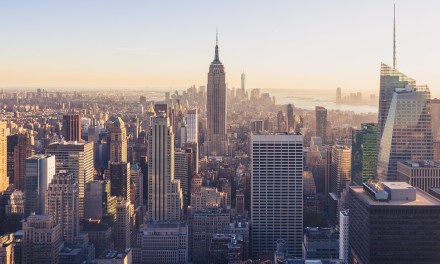
Urban areas around the world are the heartbeat of countries. As people, cultures, and ambitions collide, our metropolises offer the prospect for greater socioeconomic prosperity for citizens. Powering our modern cities – from Sydney to New York and everywhere in between – is a growing network of crucial urban mobility infrastructure that makes it easy for residents and visitors alike to get from A to B.
But within and beyond cities, the journey from A to B is not always equitable, nor seamless. For low-income, underserved communities with a high percentage of unbanked or underbanked residents, often residents face a long, expensive commute to get to their destination. Last month, the Mastercard Economics Institute published a study that analyzed the economic characteristics of ‘transit deserts’, or areas where people have little to no access to public transportation and the impact on their populations in over 27,000 ZIP codes across the United States.
The data showed that the lowest income areas who do not have access to public transportation tend to spend roughly twice of their card-covered consumption on automotive fuel. In other words, low-income populations have limited choice but to spend their money on the most expensive and environmentally detrimental form of transportation, personal automobiles. By contrast, populations in areas with more public transportation spend a much lower amount on fuel and generate lower emissions from automobiles.
This is a pervasive trend. Many people living in growing urban populations struggle daily to find the most cost-effective, simple, and sustainable ways to get around. A recent report from the Boston Consulting Group and the University of St Gallen identified transportation pain points in three cities around the world – Beijing, Berlin and Chicago. The research uncovered uneven mobility infrastructure and identified over 40 potential solutions to save hundreds of hours on commuting for residents, with the potential to double job access for low-income neighborhoods.
At Mastercard, we are embracing innovation to simplify the user experience and make the more sustainable transit choice the more seamless transit choice. As a technology company in the payments industry, we understand the revolutionary potential of frictionless public transportation and its ability to sustain and increase ridership. Our micromobility efforts are centered on the notion that ensuring ease of access for first and last mile transit will significantly increase ridership and yield a lower impact on the environment when compared to driving in a vehicle with an internal combustion engine.
As transit networks become more efficient and reliable, they also contribute to economic growth1. People who experience limited, unreliable, or inadequate access to transportation networks disproportionally face difficulty gaining and retaining access to job opportunities, vital services, or professional commitments. In this way, transportation networks – when efficient and reliable, – are a powerful tool that can broaden opportunity and promote economic growth.
Increasing financial inclusion and connecting people to economic growth opportunities is central to Mastercard’s mission of powering economies and empowering people. And we recognize that the path to true financial inclusion often begins with strengthening physical inclusion. That’s why we are committed to expanding our urban mobility solutions, so that all communities can benefit from greater socioeconomic prosperity and emissions reduction. By increasing access to urban mobility options, we can better meet our global sustainability goals and contribute to a more inclusive, resilient global economy.
Want to keep seeing which stories are sparking the mobility community? Sign up to our MOVEMNT newsletter for weekly updates every Thursday 8am
Making A to B easy for everyone: Urban mobility as a driver of inclusion