News
Uber is forging ahead with its vision for a driverless future through a new partnership with American EV maker Rivian Motors.
The agreement outlines plans for Uber to invest an initial $300mn, potentially rising to $1.25bn by 2031, contingent on Rivian hitting key autonomy milestones. Alongside the investment, Uber intends to purchase up to 50,000 autonomous vehicles, beginning with 10,000 robotaxi-ready versions of Rivian’s upcoming R2 SUV. The remaining 40,000 could follow from 2030.
The companies aim to launch “unsupervised service” in cities such as San Francisco and Miami by 2028, before expanding across 25 cities in North America and Europe by 2031. The move reflects Uber chief executive Dara Khosrowshahi’s broader strategy to position the company as a vital orchestrating thread in an autonomous mobility ecosystem, rather than a developer of the technology itself.
Having sold its in-house self-driving unit in 2020, Uber is now focused on partnerships. As Khosrowshahi put it, the company sees value in “being a valuable intermediary” for its vast user base while supporting the logistics of robotaxi fleets.
The Rivian deal is just one of several strategic partnerships accelerating Uber’s influence over autonomous technology. Already, the ride-hailing app has partnered with self-driving ventures Waymo, Lucid, Baidu and UK autonomous start-up Wayve.
For Rivian, the partnership could offer a much-needed boost. Combating high overheads and fluctuations in the American EV market, the company has struggled financially since its IPO, despite strong demand for its premium electric trucks and SUVs.
CEO RJ Scaringe said the collaboration “will help accelerate our path to level 4 [unsupervised] autonomy to create one of the safest and most convenient autonomous platforms”.
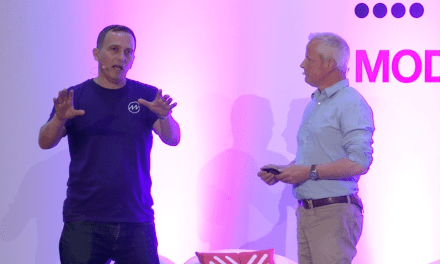
In an interview with MOVEmnt.net, RJ defined this period as a pivotal moment in the acceleration of autonomous technologies, saying:
“We are very bullish on autonomy and its role in transportation. If we look at what the next three to five years look like in terms of the rate and progress of autonomy and compare them to the last three to five years of progress, this will look like a step change.”
This latest partnership consolidates Uber’s vision to dominate the emerging ecosystem of driverless vehicles and outstrip competitors developing their own autonomous fleets.
Keep up-to-date with the latest mobility news by subscribing to MOVEMNT’s free newsletter