Category: Electric

Automakers scale back on “luxury” EV plans as global appetite wanes

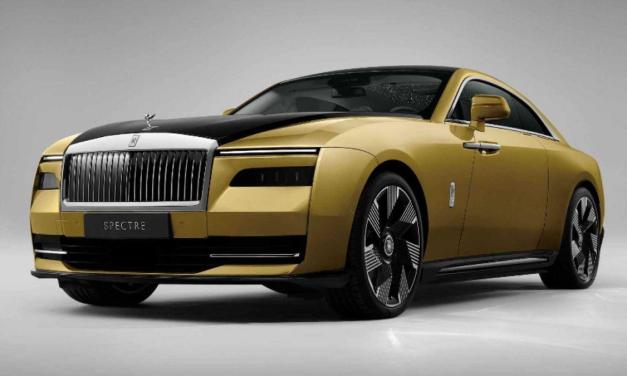
Just this week Honda and Sony have announced they are among dozens of companies scaling back plans to develop luxury EVs. The news follows recent walk backs from automotive manufacturers in the luxury segment including Bentley and Rolls-Royce. 

Honda and Sony’s strategic partnership should have delivered a flagship Afeela EV with a premium price tag of $90,000 but the Japanese groups have changed course, abandoning the model altogether. Honda announced an eye-watering $16bn in EV write downs over the last two years following fluctuations in the global market, forcing the company to rethink its global EV strategy. 

Read More
The design vs safety dilemma: Why carmakers are embracing buttons over touchscreens

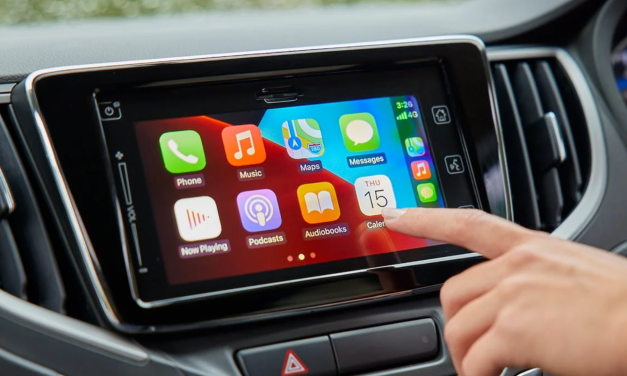
As automakers seek to maximise the sleek, futuristic look of new models, the market has seen a sharp increase in the number of vehicles minimising bulky handles and buttons in favour of digital screens and concealed, automated handles.

Whilst these design features may offer the forward-looking glamour that elevates the in-car experience, concerns over safety have seen automakers retreating back to intuitive design features, including tactile buttons and manual handles.

Read More

Elon Musk’s Tesla approved to enter UK energy market amid security concerns

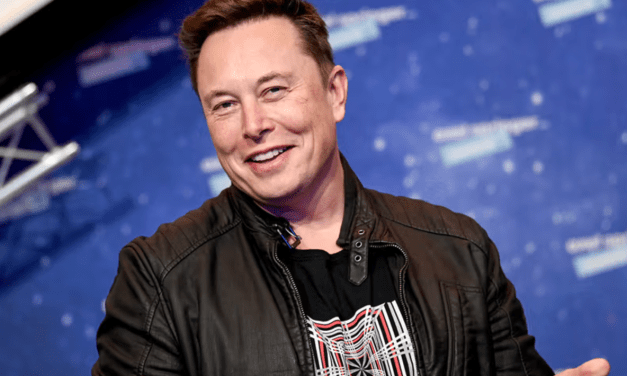
The world’s richest man, Elon Musk, could soon have sway over the UK’s private energy sector after its subsidiary, Tesla Energy Ventures, received approval to operate as an electricity supplier in the United Kingdom. The licence, granted by the UK energy regulator, clears the path for the company to enter a market that has faced turbulence in recent years and rising concern among households over an ongoing cost-of-living crisis.

Read More

China’s NIO turns a tidy profit on EV strategy after 2025 record sales

Chinese electric-vehicle maker NIO reported its first quarterly net profit in the final months of 2025, representing a significant milestone for the Shanghai-based company. The result places the automaker among a small but growing group of profitable EV manufacturers in China, the world’s largest EV market, alongside emerging rivals XPeng and Li Auto. 

The accolade was fuelled by surging vehicle demand and stronger margins, following a year that began with slower-than-expected sales growth. The company’s upwards trajectory was sparked by the launch of the company’s redesigned premium SUV, the NIO ES8, which quickly became a major contributor to sales. 

Read More

Geely surpasses BYD in EV sales for second consecutive month

As the Chinese government winds down its EV incentives, China’s fiercely competitive EV market is showing signs of slowing down. EV sales in China fell for the first time in almost two years last month, the first time since February 2024. 

In the midst of this downturn, Chinese EV maker Geely has emerged as a clear frontrunner, surpassing BYD’s sales for the second month in a row. This two month lead comes just months after BYD was announced as the global-leader in EV sales for 2025, beating historical rival Tesla. 

Read More

Stellantis explores Leapmotor’s EV technology to cut costs and boost European sales

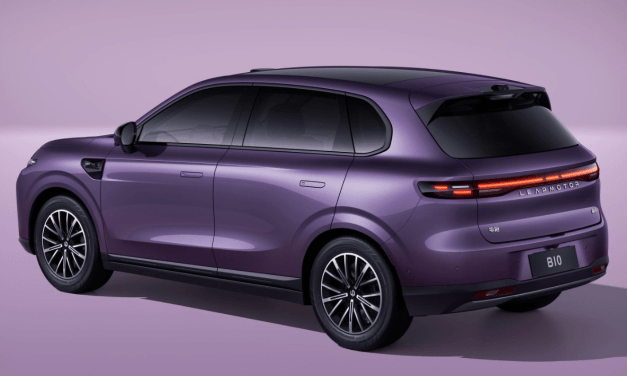
Multinational automotive manufacturer Stellantis announced it is exploring the use of electric-vehicle technology from its Chinese partner Leapmotor as it looks for ways to cut costs and stay competitive in Europe.

The legacy automaker, headquartered in the Netherlands, is considering expanding the scope of its joint venture to gain deeper access to Leapmotor’s battery systems and EV powertrain expertise, particularly for high-volume brands such as Fiat, Opel and Peugeot. 

Read More

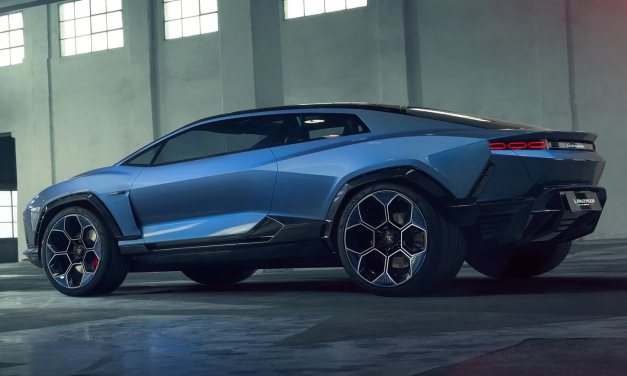
Lamborghini abandons plans for “Lanzador” EV supercar and bets on hybrids

In a radical reversal of its sustainability strategy, Lamborghini has announced that it is ditching plans to launch its first electric supercar. The Italian automaker is instead betting on hybrid vehicles following a slump in global EV sales that has seen companies like GM and Stellantis roll back their ambitious EV targets.

Lamborghini first announced plans to launch an electric supercar, the Lanzador, back in 2023, but since then the global EV landscape has shifted.

Read More

Brussels to require 70% EU content for subsidised EVs under “Made in Europe” mandate

In a bid to stave off Chinese competition, Brussels is introducing a “Made in Europe” mandate ensuring that at least 70% of new electric vehicle components are manufactured in the EU.

The Industrial Accelerator Act will be published by the European Commission in March; however, the following predictions are based on a draft report seen and reported on by the Financial Times this week.

Read More

China’s EV sales fall for the first time in 2 years

Government subsidies and cheap manufacturing costs have long given Chinese automakers a competitive edge when it comes to EV production, facilitating the rapid expansion of manufacturers like BYD and Geely into overseas markets.

This seemingly unstoppable growth now appears to be showing signs of waning, following an announcement from the China Passenger Car Association reporting a fall in electric vehicle sales for the first time since February 2024.

Read More

General Motors bets on unproven battery technology in a bid to drive down EV costs

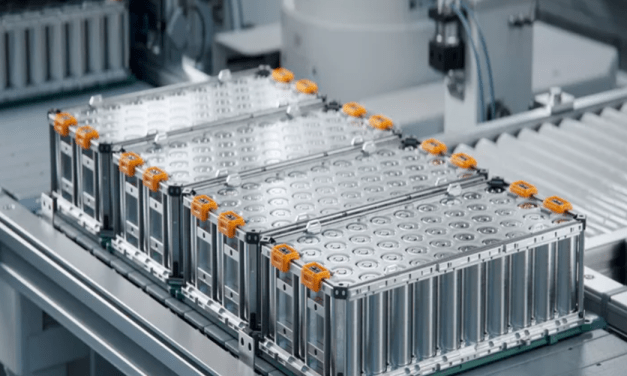
In a bid to leapfrog EV competition, automaker General Motors is betting on an unproven battery technology: LMR, or lithium manganese-rich prismatic cells in its latest EV strategy.  

Originally discovered in the 1990s, LMR is a cathode chemistry that requires reduced levels of rare-earth materials such as cobalt and nickel, instead utilising manganese, a much cheaper and more abundant material. Theoretically, the technology promises higher levels of energy density at a reduced cost. 

Read More

German EV makers race ahead of Chinese imports in domestic sales

Germany has long held the title of Europe’s largest and most significant automotive market, with a rich history of manufacturing and vehicle production. As the birthplace of well-loved legacy brands such as Audi and Volkswagen, the automotive sector continues to make up a significant share of Germany’s overall GDP—around 5%.

It is perhaps this legacy that explains why Germany’s domestic brands continue to outpace international competition in electric vehicle sales, led by brands like Volkswagen—currently the country’s leading EV seller—followed by BMW.

Read More

China becomes first country to ban retractable car handles over safety concerns

China is set to become the first country to ban retractable door handles on passenger vehicles. The trend, popularised by EV makers seeking sleek silhouettes and improved aerodynamics, has raised safety concerns amongst vehicle legislators.  

The new safety standards were announced by the Ministry of Industry and Information Technology (MIIT) and will take effect in 2027.

Read More

Tesla strips 2 models from its line-up in physical AI pivot

Where Tesla was once considered the leader in the electric vehicle revolution, the group, headed by billionaire Elon Musk, has announced that it is broadening its focus, pivoting towards physical AI and robotics.  

This decision comes following news that the group had conceded its crown as the biggest global seller of EVs to Chinese rival BYD. However, Musk’s bet on artificial intelligence and humanoid robots may not have paid off just yet, as the company reported its first annual decline in revenue.  

Read More

The charge point shortfall: Can the UK build charging infrastructure fast enough for 2030?

EV sales soared to a record high in Europe in 2025, with electric vehicle sales up by 30%. In the UK, the story is much the same, with EV sales surpassing petrol vehicle sales in the month of December and tracking steady growth into 2026.

However, as the market moves towards electrification, analysts have warned that the UK must double the number of electric vehicle charge points it installs annually if it is to meet its 2030 targets.

Read More

Germany to invest €3bn in electric vehicle incentives

Germany is preparing to relaunch large-scale incentives for electric vehicles, signalling a concerted governmental effort to revive demand after last year’s slowdown. 

The federal government plans to allocate around €3bn to a new support programme that will run from the beginning of this year until 2029, aiming to put roughly 800,000 additional low-emission vehicles on the road. 

Read More
Loading