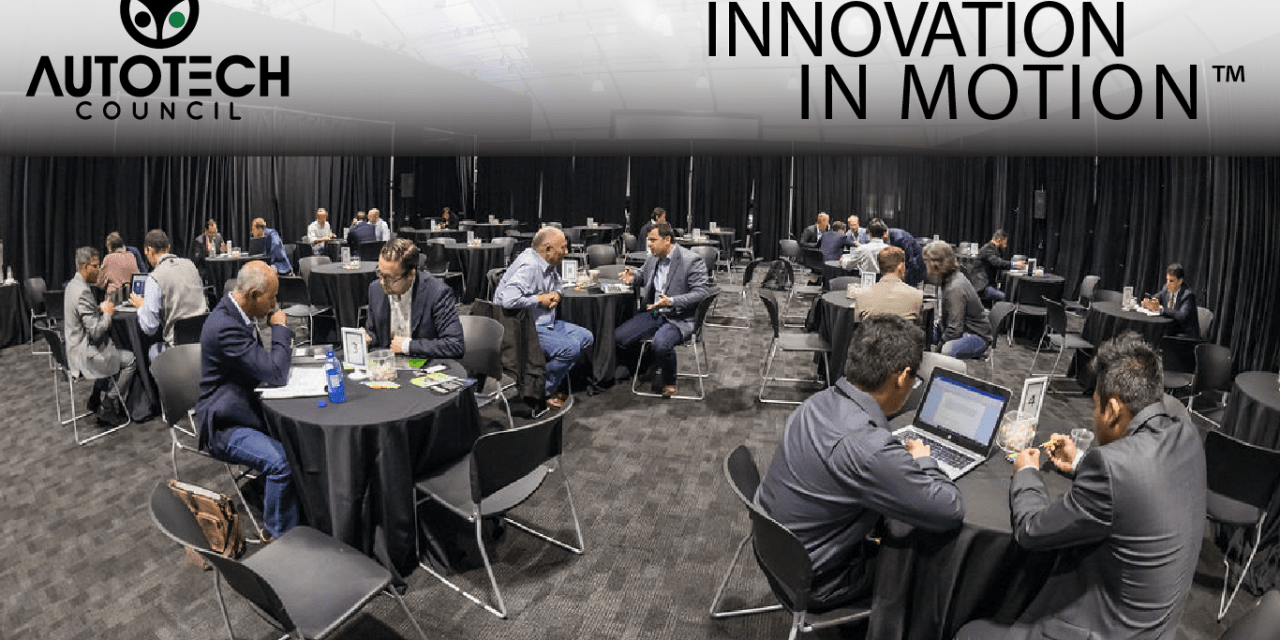
Autotech Council is a membership-based community of auto makers, T1 vendors, and mobility investors who are committed to partnership as part of their corporate innovation strategy.
Since 2012, when the Autotech Council was formed by forward-thinking auto manufacturers and their major vendor partners to help discover innovation, this community has bridged the gap between innovators, which are often hard to find, and the traditional supply chain, which historically changed slowly. Since then membership has grown to include many different parts of the mobility ecosystem – from air transportation, drones and robotics to AI, materials, and energy companies and investors.
Elizabeth Kerton is the Executive Director at Autotech Council and in this conversation, Elizabeth spoke to MOVE about how Autotech Council was founded and what its impact has been over the years.
Q: For those who don’t know, tell us about Autotech Council and what you do.
Autotech Council is a membership-based community of auto makers, T1 vendors, and mobility investors who are committed to partnership as part of their corporate innovation strategy. Members meet monthly to discover, evaluate, and support startups in the mobility ecosystem.
Q: Why was Autotech Council formed?
Autotech Council has been meeting monthly since 2012 to bridge the gap between innovators, which are often hard to find, and the traditional supply chain, which historically changes slowly. Since then, membership has grown to include many different parts of the mobility ecosystem – from carmakers, semiconductors, materials, interiors to name a few to insurance, energy, lighting, sensor, mapping, AI companies and more.
Q: What has been the councils impact?
We have introduced over 100 startups each year to corporate partners who are serious about partnering with them. Sometimes this takes shape as tests and trials, sometimes as venture funding or co-development projects, but in all cases, our members are making an investment – whether and investment in time or money depends on the relationship. Although many partnerships that start through an Autotech Council introduction are confidential, we can share that 80% of startups who present to our members get follow up within 3 months. I think this reflects well on our team’s tech scouting work, but also on the commitment that Autotech Council members have towards working with startups.
Q: What trends are you seeing appear within start-ups and new businesses?
Tech changes in this industry tend to be slow, but startups have the ability to dodge and pivot much more quickly than their T1 counterparts in the supply chain. Every year, we ask our members where their innovation priorities are for the coming year so we can continue to introduce startup that fit. Over 10 years, we have seen the decline of investment in infotainment and multi-modal mobility and a rise in AI, the passenger economy and the circular economy – just to name a few.
Q: What can we expect to see from Autotech Council in the next 12-18 months?
To be honest, we also don’t change much. We have been introducing about 10 startups monthly since 2012, even through the pandemic. Our members from Detroit and Europe take advantage of remote access to our meetings – but we had remote access pre-covid as well. Our membership grows when an OE or T1 makes a commitment to finding and working with startups. Once their C-level has decided that startups are a welcome partner in their innovation strategy, it follows that they join the Autotech Council to be part of community of mobility tech scouts from every corner of the industry – all pulling on the same rope.
That said, we just launched the Cleantech Council, which does the same kind of work for corporates committed to partnering with startups to meet their clean, green, and sustainability goals, and many Autotech Council members are among the founding members of Cleantech Council, which is a great reflection on changes coming to the mobility industry.