News
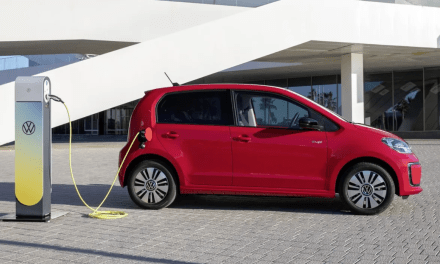
Germany is preparing to relaunch large-scale incentives for electric vehicles, signalling a concerted governmental effort to revive demand after last year’s slowdown.
The federal government plans to allocate around €3bn to a new support programme that will run from the beginning of this year until 2029, aiming to put roughly 800,000 additional low-emission vehicles on the road.
Unlike some subsidy schemes elsewhere in Europe, Germany’s approach will not discriminate based on where a car is made.
Environment minister Carsten Schneider has made clear that the programme will be open to all manufacturers, including Chinese brands. In his view, fears of a flood of Chinese cars into the German market are overblown. Instead, Berlin wants local and European companies to compete head-on in an open market.
The subsidies are designed with social targeting in mind offering lower and middle-income households the most support, with grants ranging from €1,500 to €6,000 depending on income levels and household size.
While battery-electric cars are the main focus, the scheme will also extend to certain plug-in hybrids that meet emissions limits, as well as range-extender models that combine an electric drivetrain with a small fuel-powered generator.
Car manufacturers have been lobbying hard for the return of incentives since the previous programme was abruptly cancelled at the end of 2023. That decision had immediate consequences: registrations of fully electric cars fell by more than a quarter in 2024. Although sales rebounded last year, with more than half a million battery vehicles registered, the market has yet to return to an even keel.
Germany’s inclusive stance sets it apart from other countries, notably the UK, where subsidy rules have effectively excluded Chinese brands. Even so, Chinese manufacturers remain minor players in Germany despite rapid growth. BYD, one of the biggest players, increased its sales eightfold in 2025, yet still accounted for well under 1% of the overall market.
The German auto lobby VDA praised the government for restoring support but warned that purchase subsidies alone will not guarantee long-term success. Without faster expansion of charging infrastructure and lower electricity costs, it argued, this electrification effort risks being a short-lived “flash in the pan” rather than a complete transformation.
Keep up-to-date with the latest mobility news by subscribing to MOVEMNT’s free newsletter