Feature
The luxury car market has long been associated with speed, extravagance, and above all, the ‘roar’ of combustion engines. Dominated by automakers with legacies in high-end manufacturing, it is an area of the industry that has historically been slow to embrace innovation, favouring tradition and brand integrity over pioneering technological advancement. Now, in 2025, with many automakers embracing the transition to electric, the high-end car market is almost universally struggling to keep pace. While Tesla capitalised on a niche of environmentally conscious luxury buyers, many high-end nameplates have struggled to strike the right chord with a consumer base that still prefers the roaring power of the internal combustion engine over the environmental bragging rights of an electric equivalent. Car enthusiast Graham Royle, owner of several supercars including a Lamborghini, a Mclaren and a Ferrari, captured the sentiment of many high-end car drivers saying,“There is no pleasure from a whining electric motor compared to a throbbing V12 or V8 [engines] with gorgeous exhaust notes. Unless Ferrari keeps petrol in their line-up, they will lose my business.”For many, it seems the link between supercars and petrol is a non-negotiable.
Responding to fluctuations in the global EV market
Back in 2023, the global EV market witnessed a period of rapid growth as investors scrambled to fund the next big mobility trend. But after weathering the initial EV hype cycle, enthusiasm for electrification has waned. The reversal of the EV tax credit in the U.S., combined with disruption to global battery supply chains caused by trade disputes, has plunged the EV market into uncertainty. While global appetite for electric vehicles remains relatively stable, the explosive growth once projected has not materialised. It’s clear that the road to electrification may not be as smooth as once hoped. Now, in 2025, the EV market is a different story. For many automakers, the push to electrify has eroded profit margins and forced a partial retreat to internal combustion and hybrid models. Porsche, for instance, has repeatedly delayed several electric releases. Whilst some high-end automakers steam ahead with an electric transition, others have been forced to roll back on the ambitious and idealistic goals laid out during the EV “golden age”.Porsche U-turns on ambitious EV strategy
Porsche has rolled back its ambitious EV policy following heavy losses from an overly zealous electrification strategy, which led to a profit margin forecast of only 2%, down from the previously guided 5% to 7% for 2025. Now, under new leadership, Porsche is scaling back its EV plans, scrapping the development of a battery-powered flagship SUV positioned above the Cayenne.
Michael Leiters has been appointed as the new CEO of Porsche
Ferrari treads cautiously into an electric future
For iconic Italian luxury automaker Ferrari, the path to full electrification has faced similar roadblocks. The company may have pledged three years ago that fully electric vehicles would make up 40% of its line up by 2030, however they have since rolled back on this commitment, promising a revised figure of 20%.
The new Ferrari Ellectrica will debut in 2026
“This is not an electric car developed by Ferrari. This is a Ferrari powered with an electric power train.”Ferrari’s comparatively strident strategy follows strong profit margins in recent years. Even after its shares plummeted a record 15% in New York last week, the company remains a front-runner in the luxury car sector, with order books filled through 2026- demonstrating that, despite market turbulence, demand continues to outstrip supply.
Lamborghini reconsiders its EV future
Another luxury carmaker putting its electric strategy into reverse is Italian automaker, Lamborghini, who announced their intention to use internal combustion engines in their vehicles for at least the next ten years. Chairman and CEO Stephan Winkelmann cited customer sentiment and market demand as reason for rethinking the company’s EV strategy and refocusing on hybrid powertrains. Winkelmann maintained that its loyal customer base still wanted “the sound and the emotion” of an internal combustion engine and were not ready for a fully-electric transition.
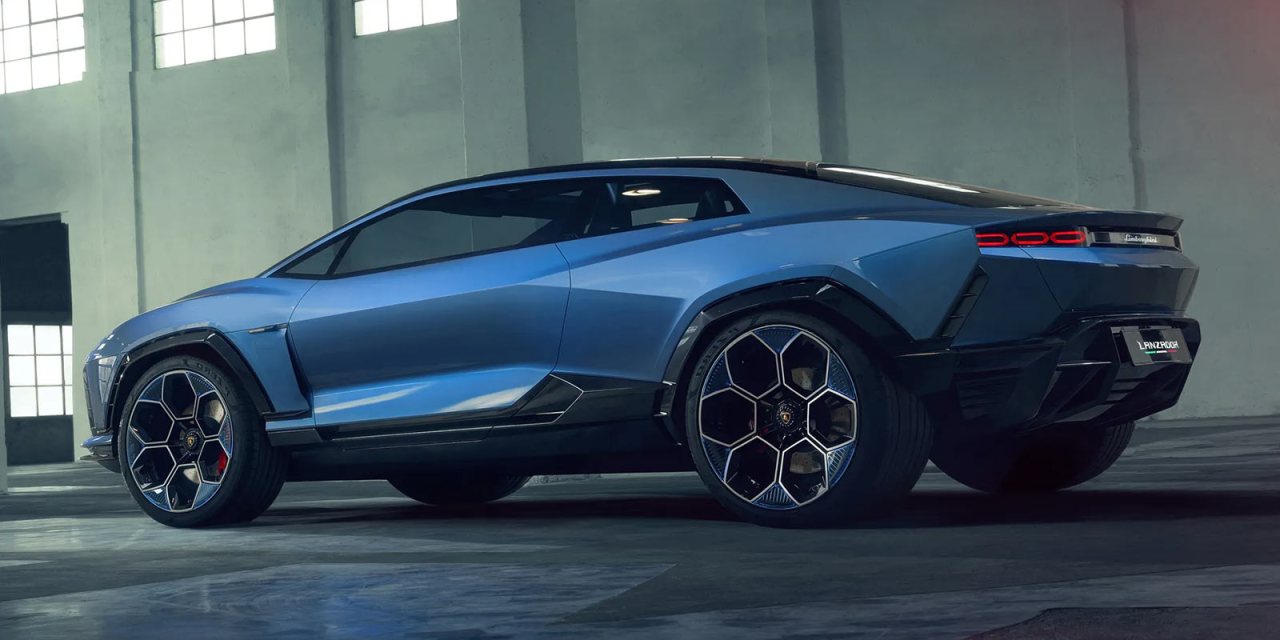
Lamborghini is yet to decide whether the Lanzador will be an electric vehicle or a hybrid
“With Lanzador, we need to decide whether it will be a PHEV or electric in the next few weeks.”Responding to environmental criticism, Lamborghini has argued that its limited production volumes make its environmental footprint comparatively small in the face of the multibillion-dollar automotive industry. “We are selling 10,000 cars in a world that is producing 80 million cars a year, so our impact in terms of CO2 emissions is not that important”.