News
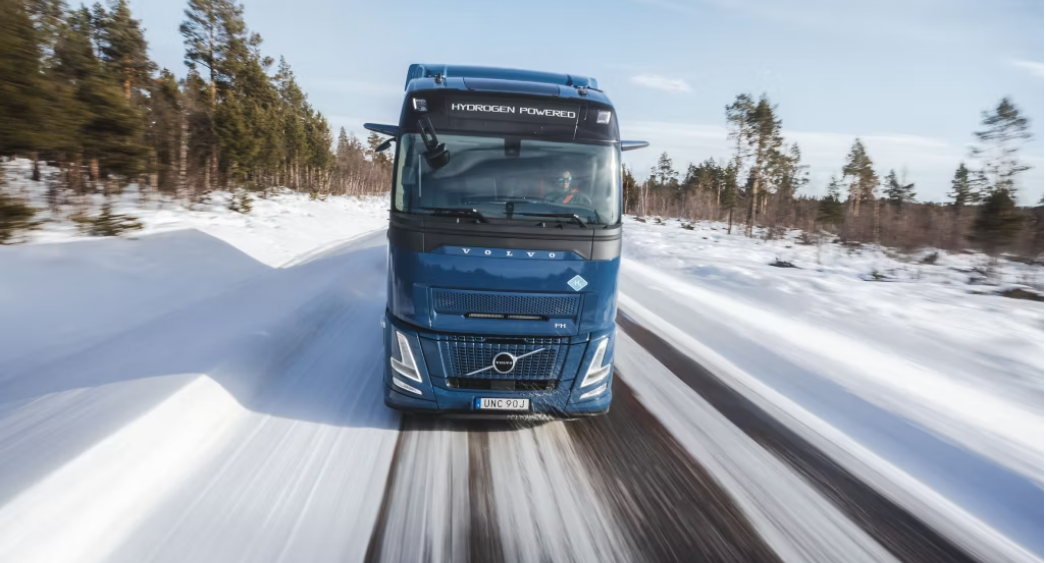
Volvo Trucks is making headway in its mission to decarbonize the heavy transport segment, beginning on-road testing of its hydrogen combustion engine trucks. Rather than relying on a single solution, the company aims to reduce emissions across its operations through a combination of electrification, green hydrogen technology and other renewable fuels.
These new trucks use hydrogen in a modified internal combustion engine, offering an alternative to hydrogen fuel cells or electric powertrains. Central to the concept is High Pressure Direct Injection (HPDI), a technology already proven in Volvo’s gas-powered vehicles.
By injecting a small amount of ignition fuel at high pressure before introducing hydrogen, the system enables compression ignition similar to that of a diesel engine. The result is higher efficiency, lower fuel consumption, and stronger overall performance than conventional hydrogen combustion approaches.
Whilst still in the initial pilot phase, Volvo is aiming to roll out a commercial offering by 2030.
One of the biggest challenges in decarbonized transportation is the familiarity conundrum. EV makers have long grappled with the task of instilling electric vehicles with the same feel and sound as internal combustion engines. Ferrari is enticing petrolheads to its premium EV, the Elettrica, by attempting to replicate the distinctive sound of a conventional petrol engine.
Volvo is betting on a similar approach, targeting diesel-like drivability, power, and range—factors that remain non-negotiable for many long-haul operators. This could make hydrogen combustion particularly attractive in regions where charging infrastructure is limited or where downtime for battery-electric recharging is impractical.
Under current EU standards, Volvo’s hydrogen trucks may also qualify as zero-emission vehicles, offering both environmental and regulatory advantages.
This multi-pronged approach to decarbonization is part of Volvo’s broader strategy to move towards zero-emissions mobility. Alongside its hydrogen project, Volvo continues to invest in battery-electric trucks, hydrogen fuel cell vehicles, and renewable fuels such as biogas and HVO.
Long-haul trucks typically make up between 2-3% of global carbon emissions making innovations in the long-haul trucking and heavy goods segment especially critical to the global green transition.
Keep up-to-date with the latest mobility news by subscribing to MOVEMNT’s free newsletter