News
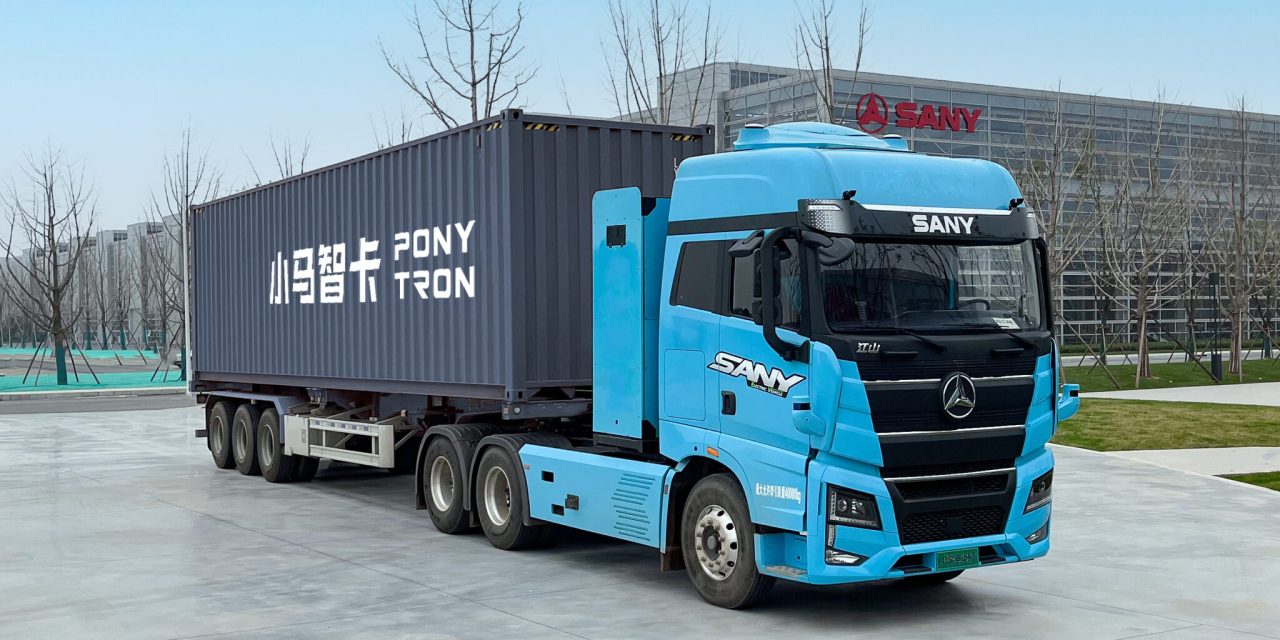
Pony.ai, a global leader in autonomous driving technology, today announced its line-up of fourth-generation (Gen-4) autonomous trucks, positioning itself at the forefront of China’s autonomous logistics transformation.
Set to hit Chinese roads in 2026, these long-range autonomous trucks will join Pony.ai’s existing fleet of robotaxis which already operate in several Chinese cities including Shenzhen and Guangzhou.
The announcement marks a new phase of maturity for autonomous freight in China, the world’s largest long-haul trucking market, offering what Pony.ai claims will be a safer and more sustainable alternative to human-driven freight transportation.
The autonomous trucks will utilize 100% automotive-grade components, reducing the bill-of-materials (BOM) cost per vehicle by as much as 70% compared to the previous generation, reducing waste and cutting manufacturing costs.
Pony.ai ambitiously claims the vehicles, developed with manufacturing partners including SANY Truck, will reduce per-vehicle carbon emissions by about 60 tons annually.
Much like Pony.ai’s Gen-7 robotaxis, the first two truck models will be built on battery-electric vehicle platforms and will be subject to the same rigorous testing and safety standards as their smaller counterparts.
Testing will include electromagnetic compatibility, reliability, high-temperature, and cold assessments, as well as evaluations against extreme weather and challenging road conditions.
Pony.ai stated in a press release:
“The Gen-4 autonomous trucks will elevate the safety and reliability of autonomous freight transport to a new level.”
Should these vehicles pass the extensive testing regime laid out by the company, the economic implications for freight providers could be substantial; early trials suggest that autonomous formations could cut freight costs per kilometre by 29% and boost profit margins by 195%, underscoring the strong economic case for autonomous trucking at scale.
Despite Pony.ai’s ambitious foray into heavy-freight autonomy, it remains to be seen how the public will respond to self-driving technology on this level. While impressive safety statistics and rapidly improving technology may be shifting public opinion on autonomous cars, the question remains whether the world is ready for mass autonomous deployment on a truly macro scale.
Keep up-to-date with the latest mobility news by subscribing to MOVEMNT’s free newsletter