News
In a bid to boost efficiency, BMW, Mercedes, Audi and Renault are among the car manufacturers expanding their use of artificial intelligence technologies.
By incorporating pioneering AI technology into the production process, the companies hope to modernize factory operations and improve quality control.
Audi
Audi has rolled out an ambitious AI strategy, incorporating both generative AI and quality monitoring technologies into the manufacturing process.
At the helm of over 100 AI projects are 50 staff members, hired specifically to focus on AI developments.
One of these projects,
Tender Toucan, has successfully used generative AI to speed up analysis of supplier bids, slashing processing times by around 30%.
Mercedes
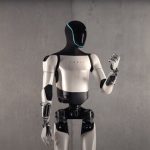
Mercedes is making strides in the development of its own AI technologies, developing humanoid robots that may be ready to assist assembly line production within the next five years.
In a pilot programme at its Berlin factory, human-like robots, named Apollo, are being tested to carry out simple, manufacturing tasks.
Gartner Vice President of Research, Pedro Pacheco, sees this shift towards physical AI, as the next “battlefront” in vehicle production.
Speaking in an interview, he said,
“There is a growing number of automakers deploying humanoid robots – it is not very substantial at the moment, but there is the ambition”.
With physical AI technologies still in their relative infancy, it remains to be seen how much their development may impact automotive manufacturing.
Pacheco addressed this uncertainty, noting,
“No one really knows if automation will be able to evolve to the point that you can eliminate all the humans in the assembly line.”
BMW and Renault
Among other manufacturers implementing AI in the production process are BMW and Renault.
At its Regensburg plant in Germany, BMW is piloting a project called GenAI4Q. Using AI systems and a smartphone app, BMW is able to analyse real-time production data to guide inspection needs and improve efficiency.
Similarly, Renault has incorporated AI into factory production, using the technology to determine the optimum period for discontinuing machines in the production line.