News
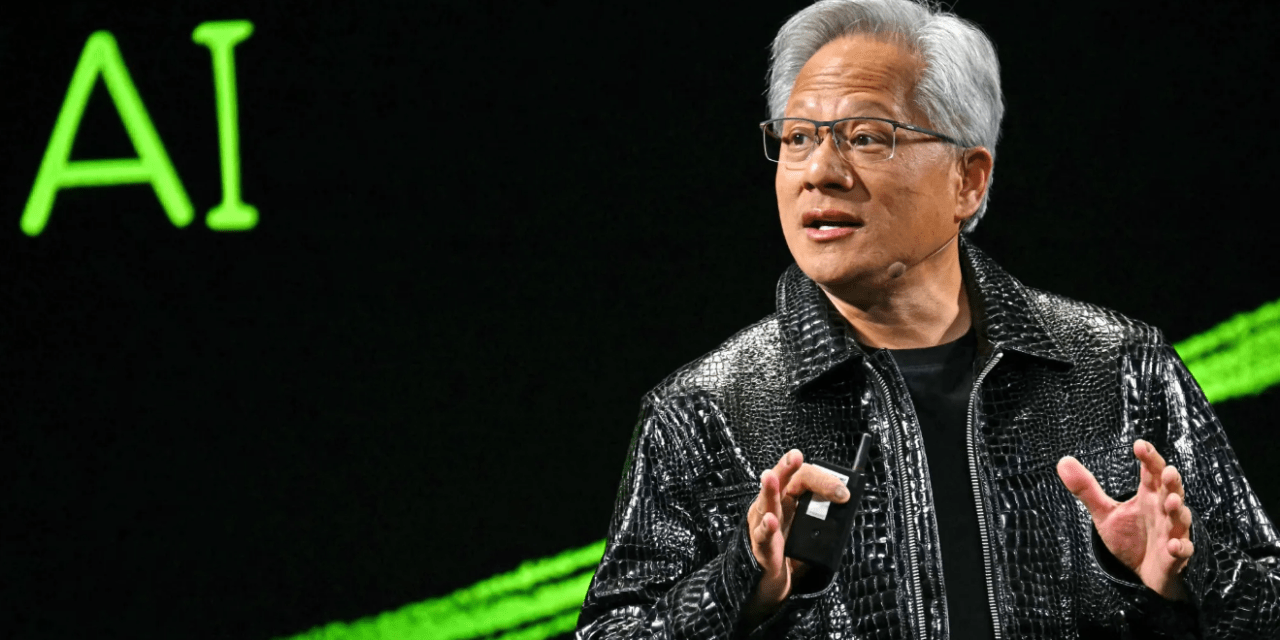
The world’s leading AI chipmaker, Nvidia, has announced a new tech platform, Alpamayo, which promises to equip self-driving cars with “reasoning” capabilities. Taking to the stage at Las Vegas’ CES, Nvidia’s CEO, Jensen Huang, laid out the next leg of the company’s AI roadmap, suggesting it is seeking opportunities to embed AI into physical hardware such as autonomous vehicles. The company, valued at over $4.5 trillion, rose to prominence through its strategic focus on developing AI software, including a major partnership with OpenAI, the developer of the ChatGPT chatbot. Now Nvidia is pivoting its focus to physical applications. Speaking on the CES stage in Las Vegas, in his signature black leather jacket, Huang said:“The ChatGPT moment for physical AI is almost here.”With this new technology in play, Nvidia claims its self-driving vehicles would act with human-like reasoning, equipped with the capacity to “think through rare scenarios, drive safely in complex environments, and explain their driving decisions.” The chipmaker has partnered with automaker Mercedes to equip its driverless cars with Alpamayo technology, with vehicles debuting in the US in the first half of 2026 and plans to subsequently expand into Europe and Asia. Paolo Pescatore, an analyst at PP Foresight, spoke on the recent announcement, praising Nvidia’s diversification as a way for the company to maintain its competitive edge. He said:
“NVIDIA’s pivot toward AI at scale and AI systems as differentiators will help keep it way ahead of rivals. Alpamayo represents a profound shift for NVIDIA, moving from being primarily a compute provider to a platform provider for physical AI ecosystems.”In the aftermath of Huang’s CES appearance, Nvidia shares rose by a small margin in after-hours trading. The company has also unveiled a more efficient AI superchip, the Rubin chip, set to roll out later this year. The new chip will slash the cost of running AI models to about one-tenth of Nvidia’s current leading chip technology. Speaking at a press event at CES, Huang said:
“Today, I can tell you that Vera Rubin is in full production.”Nvidia announced that two of its partners, Microsoft and CoreWeave, will be the first to pilot the superchip, offering services powered by Vera Rubin in the coming year. Keep up-to-date with the latest mobility news by subscribing to MOVEMNT’s free newsletter