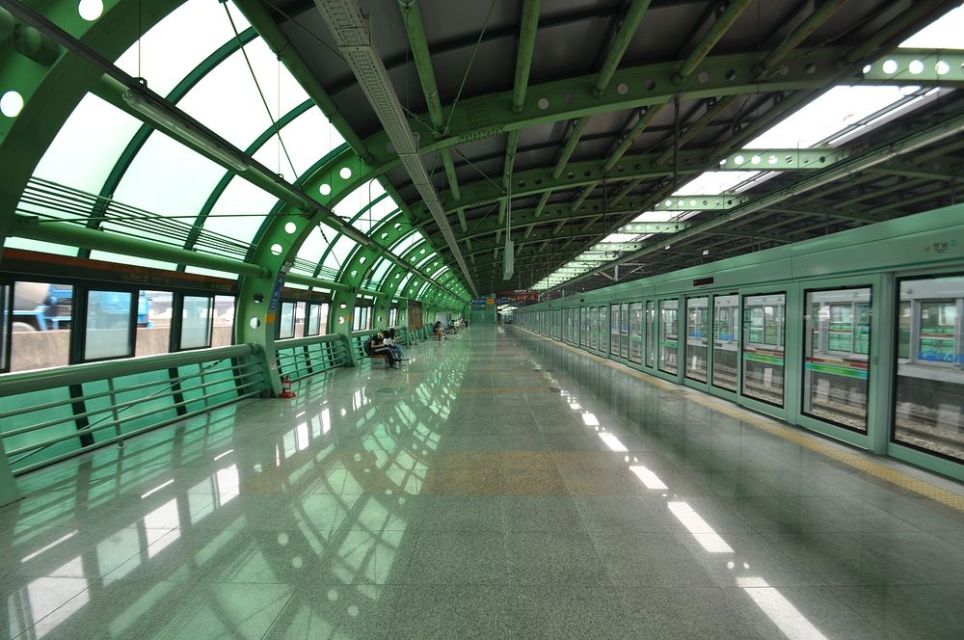
The Seoul Metropolitan Government (SMG) has announced that Seoul Metro has established countermeasures for combating subway air pollution.
Beginning this year, ₩100 billion (around £59,000 GBP) will be dedicated annually to improving air quality, focusing on solutions for combatting sources of pollution in tunnels, platforms and concourses.
Gravel roadbeds that generate dust and pollution are being replaced with concrete and lower platform areas are being furnished with ventilation systems for the first time in efforts to make substantial improvements in subway air quality.
In addition, pollution absorbing mats will be installed on the floor at turnstiles where countless passengers pass through each day.
Passengers will also be able to easily check air quality in subway stations through use of an indoor air quality management information network (inair.or.kr), where information on pollution concentrations on platforms and in lobbies is made publicly available.
South Korea recently initiated the “5th Fine Dust Seasonal Management System” in December, including measures aimed at controlling fine dust levels by reducing the amount of air pollution.
The measures include banning Grade 5 vehicles in the Seoul Metropolitan Area, as well as the six metropolitan areas including Daejeon, Sejong, Gwangju, Daegu, Ulsan, and Busan, from use between 6 AM to 9 PM.
The government has stated it could potentially reenact the mandatory “alternate no-driving day” program for public institutions where employees are unable to drive to work on a given day depending on the last digit of their car’s license plate.
These measures together aim to reduce emissions by 17 percent, as reported by Arirang News in the video above.
These measures focus on advancing and improving the entire air circulation process in tunnels, platforms and concourses by encompassing all air quality facilities in subway stations.
Read the full announcement by Seoul Metro Government here.