How is MOVE evolving in 2026? Insights from the MOVE General Manager

How is MOVE evolving in 2026? Insights from the MOVE General Manager

Meet the world leading event series in automotive tech…


The MOVE event series is constantly looking for ways to innovate and evolve, striving to platform the most forward-looking themes in mobility and automotive.  

The global mobility landscape has shifted; automotive technology now sits at the centre of the industry’s transformation. The world’s leading OEMs, fleets, CPOs, and tech providers are increasingly aligned around the core pillars driving change: electric, autonomous and software-defined vehicles. 

“Autonomous is back, electric vehicle technology is massively enhanced and whoever cracks the SDV will own the future. The entire industry has to skill, change and become fit for purpose”. 

Cormac Cronin Martin, MOVE General Manager 

To reflect this shift in the wider ecosystem, and to ensure MOVE continues to deliver maximum value to our community, the MOVE event series will take on a more defined and focused proposition as world leading auto tech events. 

This refined focus will allow us to deliver deeper, more relevant content, attract more senior automotive and tech leaders, and create a stronger commercial environment for partners, exhibitors and attendees.

Attendees can still expect the signature MOVE experience as we bring together agents from across the mobility ecosystem to collaborate, innovate, forge partnerships, and accelerate real-world change. 


Join us in Detroit and London as we bring together the leading voices in automotive tech.  

 MOVE 2026, ExCeL, 17-18 June 

MOVE America 2026, Huntington Place, 23-24 September  


 Watch the full video to hear from MOVE’s General Manager, Cormac Cronin Martin, as he explains what’s in store for the MOVE event series in 2026.  


Keep up-to-date with the latest mobility news by subscribing to MOVEMNT’s free newsletter


Europe accused of ‘mixed signals’ as it softens its 2035 EV mandate

Europe accused of ‘mixed signals’ as it softens its 2035 EV mandate

News

In 2022, the European Union voted to impose a decisive vehicle emissions mandate banning the sale of all new petrol and diesel vehicles by 2035, including hybrids. The legislation reflected the EU’s united effort toward mass electrification and a clean energy transition.

Now, less than a decade out from its 2035 combustion engine ban, Europe is getting cold feet about its EV mandate, with Brussels voting yesterday to revise the goal.

Under the new revisions, 90% of new cars sold from 2035 must be zero-emission, as opposed to the original 100%. The remaining 10% of new cars sold after this date can be made up of petrol and diesel vehicles, as well as hybrids.

The move follows heavy lobbying from countries including Germany and Italy. Proponents argue that the revised figure will allow for greater flexibility for automakers and better reflect global market trends.

Many automakers, including Stellantis and Volkswagen, have been vocal about the need for greater flexibility, arguing that the current timeframe for the transition is unrealistic and out of touch with current market demand for electric vehicles. German automaker Volkswagen praised the European Commission’s new draft proposal, calling it “economically sound overall”.

Despite consistent growth in Europe, EV sales remain well behind the projected targets set out when the law was enshrined in 2023. According to the European Automobile Manufacturers’ Association (ACEA), market demand for electric vehicles is simply too low to meet the current 2035 targets and would result in “multi-billion euro” fines for manufacturers.

Opponents of the 90% figure have criticised Europe for undermining its progress towards electrification and critical clean energy goals. For many, the move represents not just an environmental setback but a commercially damaging decision that could disincentivise critical investment in EV infrastructure and production.

Chris Heron, Secretary-General of the trade association E-Mobility Europe, spoke out on the issue, saying:

“Hesitation or mixed signals risk undermining the investment certainty battery makers, manufacturers and grids need to scale.”

Automaker Volvo has criticised other OEMs for their slow approach to electrification, arguing that it has “built a complete EV portfolio in less than 10 years”. The company says it is fully prepared to go all-electric in line with the original 2035 targets, relying on hybrid vehicles only as a transitional measure.

While the current Labour government has reaffirmed its commitment to the UK’s 2035 vehicle emissions targets, it remains to be seen whether mounting pressure from automotive manufacturers will prompt a similar reassessment, or whether the UK will hold firm in the face of Europe’s ‘mixed signals’.

Keep up-to-date with the latest mobility news by subscribing to MOVEMNT’s free newsletter


Flying cars, digital twins and interplanetary mobility: Insights from Tim Draper

Flying cars, digital twins and interplanetary mobility: Insights from Tim Draper

Speaking with us at MOVE America 2025, Venture Capitalist legend, Tim Draper, joins us on the sofa to offer his candid insights on Detroit’s past, present, and potential future. Our conversation covers topics from across the full breadth of mobility and innovation, discussing everything from flying cars and interplanetary mobility to digital twins and AI.   

Tim describes Detroit as a city with a “real personality,” long defined by the automotive industry. Despite the strong entrepreneurial energy beginning to emerge, Tim argues that the traditional “Big Three” automakers have missed key opportunities around electric vehicles and self-driving technology following Tesla’s rise. “I really hope Detroit can create the future rather than always playing catch-up,” he says, framing the city’s challenge as a choice between becoming a museum of past innovation or a hub of forward-looking creators. 

For Tim, the next leap in mobility isn’t incremental features, but rather transformational change; flying cars, space travel, and mobility beyond Earth. 

“You missed the electric car, and you missed the self-driving car, so now make them fly.”  

Tim explores the key benefits of implementing AI in the mobility sphere, highlighting how AI is already outperforming humans in areas like law and accounting. He explains how his own firm uses advanced AI systems to evaluate startups, analysing business plans, real-time interviews, voice patterns, and even visual cues to assess entrepreneurial potential. 

For founders, Tim preaches the importance of thinking big and far ahead, arguing that success comes, not from playing catch up, but leapfrogging into the future. “Create your own world,” he says, encouraging entrepreneurs to redefine markets rather than compete as a distant second. He leaves us with a final message: Love your early customers as they will be your biggest advocates further down the line.  

Watch the full interview with MOVEmnt Editor, Eve Stevens below.


Keep up-to-date with the latest mobility news by subscribing to MOVEMNT’s free newsletter


Europe accelerates towards a circular economy with new regulation on End-of-Life Vehicles

Europe accelerates towards a circular economy with new regulation on End-of-Life Vehicles

News

The European Union has announced new legislation that could reshape how vehicles are designed, produced, dismantled and recycled across the EU, following a provisional agreement between the European Parliament and the Council on the Commission’s proposed Regulation on End-of-Life Vehicles.

The End-of-Life Vehicles (ELVs) Regulation comes ahead of the possible relaxation of Europe’s EV mandate, up for debate in Brussels this week, demonstrating Europe’s enduring commitment to a sustainable automotive sector despite EV trepidation. 

The automotive industry is one of Europe’s largest consumers of raw materials, including steel, aluminium, copper and plastics. Yet every year an estimated 3–4 million vehicles effectively “disappear” from official records, with their final treatment unreported. The new ELV regulation aims to close this gap, ensuring valuable materials are recovered rather than lost or left to contribute to environmental pollution.

At the heart of the regulation is an attempt to build out a more circular economy whereby materials are re-used rather than wasted. Vehicles will need to be designed for easier dismantling, with manufacturers required to provide clear instructions for removing and replacing parts during use and at end of life. Improved treatment standards will help recover more and higher-quality materials, including a requirement that at least 30% of plastics from ELVs are recycled. 

From 2036, at least 25% of plastics used in vehicles must come from recycled materials, with 20% of that share sourced directly from ELVs. Crucially, the rules will apply equally to vehicles manufactured in the EU and those imported, ensuring a level playing field. 

The regulation is expected to deliver major material gains. The Commission estimates it could enable the recycling and reuse of hundreds of tonnes of rare earth elements, alongside 5–6 million tonnes of steel, 1–2 million tonnes of aluminium and up to 0.3 million tonnes of copper. This will reduce dependence on imports and strengthen Europe’s resilience to supply-chain disruptions. 

Executive Vice-President for Prosperity and Industrial Strategy Stéphane Séjourné said in a press release: 

“Boosting recycling and circularity is a key component of our plan to support the industrial competitiveness of the plastics industry. The adopted measures will help to create a concrete business case for the recycling supply chain across Europe.” 

The regulation also promotes reuse, remanufacturing and refurbishment, increasing the availability of second-hand spare parts and offering more affordable repair options for consumers. Extended Producer Responsibility schemes will be harmonised across Member States, ensuring proper financing of ELV treatment and higher-quality recycling. 

Enforcement provisions have been strengthened, including clearer criteria to distinguish used vehicles from ELVs and a requirement that only roadworthy vehicles can be exported outside the EU. 

Jessika Roswall, Commissioner for Environment, Water Resilience and a Competitive Circular Economy spoke in a press release:  

“In a time when access to raw materials is under increasing global strain, making better use of the valuable resources embedded in our old cars is good for our environment, competitiveness and resilience.” 

Once formally adopted, the regulation will enter into force 20 days after publication, marking a major milestone in Europe’s transition to a circular automotive economy. 


Keep up-to-date with the latest mobility news by subscribing to MOVEMNT’s free newsletter


Realizing the Lithium Valley Vision: Insights from the California Energy Commission

Realizing the Lithium Valley Vision: Insights from the California Energy Commission

Speaking with us at MOVE America 2025, we heard from the brilliant Noemí Gallardo, Commissioner at the California Energy Commission, who shared her insights on EVs, inclusive mobility, and the importance of fostering industry camaraderie.

We discuss the crucial interplay between federal and state politics, using California’s latest investment in the Lithium Valley Vision as a perfect test case for a collaborative approach to mobility innovation. The project aims to build out California’s critical minerals industry and battery supply chain by harnessing the region’s geothermal power.

Noemi reflects on her experience growing up in a low-income family in rural America, dealing with frequent power outages that left her family without energy—an experience that taught her the value of inclusive and accessible energy.

When asked what technology most excites her in the mobility sphere, the Commissioner highlighted some of the cutting-edge innovations transforming California’s mobility landscape, including the development of autonomous battery-electric rail by Parallel Systems and the arrival of Zoox to the Bay Area.

Watch the full interview with MOVEmnt Editor Eve Stevens below.

Keep up-to-date with the latest mobility news by subscribing to MOVEMNT’s free newsletter

“A win for us is a win for all”: The collaborative path to autonomy with Plus

“A win for us is a win for all”: The collaborative path to autonomy with Plus

In the world of autonomous trucking, the path to autonomy lies in collaboration rather than competition. This is the message from Amisha Vadalia, VP of Operations and Program Management at Plus, who sat down with us at MOVE America 2025 in Detroit to discuss autonomy on a macro scale.

Amisha discussed the specific challenges faced by the autonomous trucking industry—in a world where the average person may have had the chance to ride in or at least see a robotaxi in action, many people have never encountered an autonomous semi-truck. This makes garnering public trust a necessary but difficult challenge.

Almost 70% of our goods touch a truck at some point in their journey to us. Therefore, Amisha explores the potential of autonomous trucking to unlock real savings for consumers by improving efficiency and safety in freight transport.

We touch on the importance of safety in autonomous innovation, as well as Plus AI’s new partnership with Traton, with whom they will be launching customer operations in Texas.

We wrap things up by discussing the important symbiosis between EVs and autonomous vehicles (AVs), unpacking the central role of electric innovation in propelling an autonomous future.

Watch the full interview with MOVEmnt.net Editor Eve Stevens below.


Keep up-to-date with the latest mobility news by subscribing to MOVEMNT’s free newsletter


Ford and Renault announce strategic partnership to co-develop small EVs in Europe

Ford and Renault announce strategic partnership to co-develop small EVs in Europe

News

Ford may have walked back its decision to go all-electric in Europe by 2030, but its commitment to electrification persists. Today, Ford announced a landmark alliance with French automaker Renault to co-develop a series of small electric vehicles for the European market.

The strategic collaboration should see jointly developed EVs rolling out as early as 2028, with plans to expand the partnership to include small commercial vehicles.

Small electric EVs have long had a stronghold in the European market, favoured for their affordability, efficiency, and practicality when navigating the smaller and irregular streets of many European capitals.

Ford and Renault hope this focus will give them a competitive edge against Chinese automakers, who have historically focused on larger, mid-size vehicles.

Ford Chief Executive Jim Farley spoke on the significance of the partnership as part of a wider battle to save Europe’s precarious automotive market. In an announcement today in Paris, he said:

“We’re in the fight for our lives and our industry, and [there is] no better example than here in Europe. Together, we can create a powerhouse of light commercial vehicles in Europe. We believe this is a big differentiation compared to the Chinese.”

Ford’s partnership decision was meticulously considered, with Farley admitting the company took a full year to weigh its options before reaching a consensus. Ford reportedly chose Renault thanks to the French automaker’s impressively efficient product cycles, having produced two electric models—the Twingo and the Dacia—in less than two years.

François Provost, Chief Executive at Renault, said:

“[Our] strategy at Renault is to be as competitive, and then to even be better, than our Chinese competitors in Europe.”

The latest electric line-up will be designed by Ford and will use Renault’s Ampere platform, launched as part of Renault’s “Renaultution” strategy and used for the Renault 5. Ford has been clear that it will not sacrifice its brand integrity in the design of its vehicles, emphasising the importance of preserving “distinctive driving dynamics” and “authentic Ford-brand DNA.”

The iconic Ford Fiesta, discontinued since 2023, is expected to make a comeback under the new partnership, debuting as an all-electric model with an estimated retail price of around £23,000.

Ford has asserted that this partnership with Renault will in no way affect its existing alliance with German automaker Volkswagen to co-develop electric vans in Europe.

Keep up-to-date with the latest mobility news by subscribing to MOVEMNT’s free newsletter

From metal to monthly fees: How subscription services are redefining the SDV

From metal to monthly fees: How subscription services are redefining the SDV

News

Subscription services are, for many of us, an accepted part of modern life; from streaming platforms such as Netflix or Spotify to meal subscriptions, gym memberships, and pay-as-you-go dating apps, the paid subscription model has transformed the way we consume, replacing traditional ownership with a flexible, ongoing service relationship. 

Now the world of automotive is catching up, with more and more OEMs now offering subscription services and over-the-air updates at an extra monthly cost. As cars become increasingly software-defined, the shift from hardware-centric manufacturing to software-driven mobility is gathering pace. While digital services still account for only a modest portion of global automotive revenue, carmakers emphasize that in many cases, software carries far higher margins than metal. 

Cars now communicate continuously with their surroundings, collect real-time data, and transmit it to the cloud, fuelling a constant cycle of updates. Over-the-air (OTA) upgrades allow automakers to add features, refine performance, and patch vulnerabilities without the car ever seeing the inside of a garage. This new architecture transforms the automobile from a static product into an upgradeable device, more akin to a smartphone or tablet. 

Rather than relying solely on upfront sales, automakers can now sell features long after the car leaves the showroom, creating a business model that allows OEMs to generate revenue beyond the initial purchase. Heated seats, parking assistants, advanced driver aids, navigation enhancements, and even entertainment become additional services. 

This new model is not without controversy. BMW made headlines earlier this year following its early subscription experiment, where customers in South Korea were charged extra for heated seats. Opponents criticized the scheme for gatekeeping features already built into the car’s hardware. 

In the wake of this outrage, BMW has doubled-down on some of its early experiments, offering today a broader range of ConnectedDrive subscriptions, many tied to systems that require frequent data updates, such as parking assistance or traffic-camera alerts. 

BMW head of product communications Alexandra Landers argues that there is logic behind pay-as-you-go digital features: 

“For the additional ADAS systems, we also have costs for running. We have load usage, and that’s a cost. So, if you use it, you have to pay for it.” 

BMW insists it will not charge for horsepower at this stage. Landers said: 

“We are not a tuner… that didn’t make sense for us. We discussed that very intensively, but so far for base cars… you buy a car with maximum power.”  

Beyond subscriptions, the move toward more connected vehicles has unlocked further revenue streams for automakers, most notably, data. Software-defined vehicles generate enormous volumes of information that can support usage-based insurance, traffic optimization, or hyper-local advertising once anonymized. This asset is a goldmine for manufacturers seeking to capitalize on today’s data-driven, hyper-connected reality. 

For better or worse, the automotive industry’s road ahead is unmistakably digital. And while hyperconnectivity opens lucrative opportunities for automakers, they must not lose sight of the consumer in the labyrinth of hyper-connected services. 


Keep up-to-date with the latest mobility news by subscribing to MOVEMNT’s free newsletter 


Zipcar’s planned departure leaves Londoners in the lurch

Zipcar’s planned departure leaves Londoners in the lurch

News

If you live in London, the sight of a Zipcar is, to some, almost as familiar as a red post box or an overcast afternoon. All this is set to change come 2026, following last week’s announcement that the American-owned car-sharing company will be shutting down its London operations by the end of the year.

The app, which allowed users to rent a car for as little as £5 for periods ranging from one hour to seven days, has suspended all new bookings beyond December 31.

The group is owned by the US rental company Avis Budget and operates in multiple locations around the world. The club boasts more than 650,000 members and has a London fleet of 3,000 vehicles.

Many Londoners rely on Zipcar instead of owning a private vehicle, using the service to move goods and equipment around in the face of the city’s high congestion charges and expensive parking. Car-sharing services such as Zipcar have been praised for reducing private car ownership and easing congestion in the capital.

Now, as the company plans to wind down their UK operations, users will be faced with the difficult decision: either make the swap to a smaller and more expensive competitor or be strong-armed into car ownership.

Richard Dilks, Chief Executive of Collaborative Mobility UK (CoMoUK), a mobility charity, spoke out on the matter, saying:

“It [Zipcar’s announcement] has quite profound implications because there are hundreds of thousands of users, and there for sure will be a percentage of those who will be tipped into car ownership now.”

Many have criticised Rachel Reeves’ introduction of a pay-by-mile EV tax and the lifting of exemptions for electric vehicles under the London congestion charge, calling the measures a death knell for an already struggling company.

Under the new budget, electric vehicles will face much higher fees than before, creating further challenges for the US company, in which a third of its fleet are made up of electric models.

Zipcar’s business model, in which the company is liable for the maintenance of its own fleet and the cost of petrol is included in the rental, has struggled to weather fluctuations in the UK market.

Whilst Zipcar has assured customers that services outside the UK will remain unaffected, questions linger over what ultimately pushed the company out of London.

In the end, it’s hard to say whether government levies or an untenable business model drove Zipcar out. But its departure raises a bigger question: in a city trying to reduce private car use, who will step in to fill the space Zipcar leaves behind?

Keep up-to-date with the latest mobility news by subscribing to MOVEMNT’s free newsletter

OEMs praise Trump’s reversal of federal fuel economy rules

OEMs praise Trump’s reversal of federal fuel economy rules

News

OEMs such as Ford and Stellantis have stood in support of Trump’s controversial decision to roll back federal fuel economy rules for passenger vehicles. The decision, made last Wednesday, reverses many of the mandates introduced under the Biden administration that advocated for cleaner, more fuel-efficient vehicles.  

Following the rollback of these mandates, known as Corporate Average Fuel Economy rules or CAFE, Americans will no longer be subject to hefty fines for violating these rules, essentially rendering them obsolete.  

Once formalised and enshrined in law, the changes will apply to all model-year passenger cars and light trucks from 2022 to 2031. 

Alongside this reversal, Trump’s government has also done away with carbon-offsetting legislation that allowed automakers to buy credits from competitors to avoid paying fines, a system that saw Tesla generate billions of dollars.  

The reversal marks the Trump administration’s latest effort to erode all legislation aimed at tackling climate change and lowering carbon emissions. Last month, the administration announced it would be awarding new oil and gas drilling permits to projects off the coast of California, in another devastating blow to a unified global climate strategy.  

Trump defended the decision in the Oval Office, saying:  

“We’re protecting our auto workers, and we’re making it easier for every family to afford high-quality cars. In other words, we’re bringing automobiles back and the manufacturing of automobiles back into this country.” 

Many OEMs have spoken out in favour of the decision, most notably Jim Farley, Chief Executive of Ford, who praised Trump on what he sees as a diplomatic win. He said:

“This is a victory of common sense and affordability. We believe that people should be able to make a choice.” 

The Chief Executive of Stellantis and a plant manager from General Motors were also in attendance when Trump made the announcement.  

Some environmental lobbyists have pushed back against claims that the new legislation will drive down automotive costs, arguing that an influx of fuel-reliant vehicles could drive up gasoline prices over time. 

Kathy Harris, Director for Clean Vehicles at the Natural Resources Defense Council said,

“Drivers will be paying hundreds of dollars more at the pump every year if these rules are put in place.” 

 Until now, measures like CAFE have incentivised EV uptake and supported the United States’ gradual green mobility transition. According to the journal Energy Policy, fuel-saving technologies have saved two trillion gallons of gasoline over the last 50 years.  

With EV adoption already slowing due to the loss of federal incentives and the deepening political divide over electric mobility, this policy shift pushes the U.S. further off course in the global push toward cleaner transportation. Although some OEMs celebrate the move as a triumph of consumer freedom, the long-term global costs, environmental, economic, and social, will be far harder to ignore. 


Keep up-to-date with the latest mobility news by subscribing to MOVEMNT’s free newsletter


Building supply chain resiliency in battery manufacturing with CEO and Co-founder of Sila Nanotechnologies

Building supply chain resiliency in battery manufacturing with CEO and Co-founder of Sila Nanotechnologies

Following his Keynote appearance, we catch up with Gene Berdichevsky, CEO and Co-founder of Sila Nanotechnologies, at MOVE America 2025. We delve into all things supply chain, unpacking the similar challenges facing U.S. and European battery manufacturers amid growing supply chain vulnerabilities.

Gene sets the scene for battery manufacturing in the U.S., explaining how an overreliance on Chinese imports of critical minerals weakens supply chains. At Sila Nanotechnologies teams are working to build supply chain resilience by replacing graphite with silicon-anode technology in lithium-ion batteries and producing these batteries domestically.

As an early employee at Tesla, Gene shares his belief in an ethos of “radical self-reliance,” advocating for self-sufficiency when bringing innovation to market.

Gene closes with some final kernels of wisdom on surviving in the industry, emphasising that patience and persistence are necessary to withstand inevitable downturns. His closing message: build resilience, plan ahead, and expect the unexpected.

Watch the full interview with our MOVEmnt Editor, Eve Stevens, below.


Keep up-to-date with the latest mobility news by subscribing to MOVEMNT’s free newsletter


Building resilient SDVs: The importance of integrated cyber defence

Building resilient SDVs: The importance of integrated cyber defence

News

Today, cars are less a vessel to get you from A to B and more an extension of our homes, living rooms, and phone screens. As vehicles become increasingly software-defined, equipped with features such as over-the-air updates, adaptive cruise control, smartphone integration, and more, they become highly adaptable, able to fix their own bugs and update themselves without the need for third-party intervention. The global trend is set: the future lies in SDVs.

In fact, software-defined vehicles are expected to account for 90% of all auto production by 2029. This increasing connectivity opens up exciting potential for automakers, creating new opportunities for infotainment, hyper-personalisation, and seamless connectivity between devices and our cars.

But with these opportunities comes a host of new risks, particularly with regard to cybersecurity. As vehicles become more connected, they also become moving targets for hackers and malicious actors.

According to research conducted by McKinsey, newly released cars can contain up to 100 million lines of code, and by 2030 software is expected to account for up to 30% of a vehicle’s total value.

This hyper-connectivity leaves vehicles vulnerable to cybersecurity breaches, leaving automakers scrambling to adapt as they enter a new era of connectivity.

Advancements in AI have been a double-edged sword for automakers. Incorporating AI into cyber teams boosts efficiency and improves workflows, allowing human agents to become mediators of a team of AI agents. Simultaneously, however, hackers and malicious actors are utilising AI to their own advantage.

Automakers have long been seen as an industry unwilling to adapt to increasingly sophisticated cybersecurity threats.

Hacker Eaton Zveare spoke at a hackers’ conference in Vegas earlier this year, exposing the automotive industry’s failure to remain vigilant against cyber threats:

“I target automakers just for fun,” he said. “They’re big, old companies; there’s a lot of infrastructure out there … They have thousands of subdomains, and each of those is just an exploit waiting to happen.”

In light of these accusations, automakers will have to adapt to remain vigilant to cybersecurity risks and elevate themselves from the butt of the joke when it comes to cyber defence.

Hitherto, automotive cybersecurity has largely been a reactive process but herein lies the problem. Automakers and their technology partners should take a more integrated approach to defence mechanisms, incorporating cybersecurity measures from the design and development stages of innovation. For SDVs to stand up to increasingly sophisticated cyber threats, automakers must take a predictive rather than reactive approach to cyber defence.

Keep up-to-date with the latest mobility news by subscribing to MOVEMNT’s free newsletter

Lessons for founders: clarity, conviction and the mobility future with Michael Ronen

Lessons for founders: clarity, conviction and the mobility future with Michael Ronen

At MOVE America 2025, MOVEmnt.net sat down with Michael Ronen, Managing Director at Fortress Investment Group, to explore how AI is reshaping mobility and what the next chapter looks like for the autonomous vehicle ecosystem.

Ronen reflected on transportation’s role as one of the earliest adopters of AI, pointing to pioneers such as Cruise, Waymo and Nuro. The journey, he noted, has been “bumpy and filled with ups and downs,” but the long-term direction remains clear. We discussed how autonomous vehicle companies are now leveraging advances from leading AI labs, including OpenAI, to accelerate development and bring autonomy closer to large-scale deployment.

Beyond headline-grabbing investments in AV companies, Ronen highlighted a wave of emerging opportunities in adjacent sectors. He pointed to the work of Fortress Investment Group, whose asset-heavy strategies span real estate and infrastructure and other areas deeply intertwined with the future of mobility. Their global reach, he said, underscores how transportation innovation demands both technological ambition and physical, real-world foundations.

Our conversation also turned personal, touching on Ronen’s decision to start a company later in his career. Sitting on the founder side of the table, he admitted, was “incredibly humbling” and permanently changed the way he views CEOs and early-stage teams.

That experience shapes the advice he now offers to entrepreneurs: surround yourself with great talent, seek guidance specific to the business you’re trying to build, develop conviction, and remain crystal clear about the problem you are solving.

With more than 40,000 lives lost annually in car accidents, Ronen stressed that the promise of autonomy carries both profound economic value and deep human value. Reducing that number, he said, is one of the most compelling reasons to keep pushing forward.

Watch the full interview below to hear Michael Ronen’s take on AI, investment strategy, safety and the future of mobility.


Keep up-to-date with the latest mobility news by subscribing to MOVEMNT’s free newsletter


Completing the mass transportation jigsaw with Andy Byford and Greer Johnson Gillis

Completing the mass transportation jigsaw with Andy Byford and Greer Johnson Gillis

Rail stations and transit hubs are more than ways to move people from A to B, they are catalysts for community regeneration and economic growth. That message framed the closing Keynote on day two, moderated by Bob Bennett of the Cities Today Institute and featuring Andy Byford of Amtrak and Greer Johnson Gillis of the Jacksonville Transportation Authority.

In “Completing the mass transportation jigsaw,” Andy reflected on his role in delivering London’s Elizabeth Line, a project credited with creating tens of thousands of jobs and adding an estimated 50 billion to the UK economy. He pointed to major US opportunities as well, from the revitalisation of Michigan Central Station to his ambition to transform New York’s Penn Station into “the world’s best train station”.

Greer brought the conversation to the everyday building blocks of mobility such as buses, ferries, paratransit and neighbourhood services that remain essential yet often inaccessible. Innovation, she said, is central to bridging these gaps. JTA has already launched the nation’s first autonomous public transport service in revenue operation, connecting residents to jobs, healthcare and entertainment using vehicles built in Detroit.

Both panellists stressed the importance of trust, transparency and long-term thinking. Communities must be involved from the start, they argued, especially when deploying new technologies, and continuity across political cycles is vital to sustaining progress. While major projects capture attention, maintaining systems, securing funding and ensuring future scalability are just as critical.

Their shared advice: think boldly, partner widely, and plan for the generations ahead.

Watch the full Keynote panel discussion below.


Moderator: Bob Bennett, Chair, Cities Today Institute

Andy Byford, SVP & Special Advisor to the Board, Amtrak

Greer Johnson Gillis, Senior Vice President and Chief Infrastructure & Development Officer, Jacksonville Transportation Authority


Keep up-to-date with the latest mobility news by subscribing to MOVEMNT’s free newsletter


Hyper-personalisation and connected vehicles with Tata Consultancy Services

Hyper-personalisation and connected vehicles with Tata Consultancy Services

Anupam Singhal, President of Manufacturing Business at Tata Consultancy Services, joins us on the MOVE America 2025 sofa to share his vision for the future of mobility, one where intuitive, software defined vehicles use advanced technology to elevate the consumer experience.

As cars evolve into digital platforms, Anupam challenges us to rethink what a “vehicle” truly is. He imagines a future where transportation moves beyond getting us from A to B and instead becomes an extension of our homes and workplaces. We explore how the industry must adapt to this shift in expectations and what new opportunities this new definition offers in the context of infotainment and hyper-connectivity.

Our conversation highlights the critical role of collaboration across the entire mobility ecosystem. Anupam emphasises the need for stronger communication between OEMs, utilities, governments and other stakeholders, noting that no single player can drive innovation alone.

He also delves into the many ways AI is transforming mobility, from digital twins to agentic and physical AI, and explains how these technologies are reshaping vehicle design, operation and customer experience. Anupam offers insight into TCS’s Mobility AI Blueprint, a platform that places human needs at the centre of innovation.

As SDVs and new connectivity technologies emerge, we reflect on how they are redefining vehicles as personalised, intelligent spaces rather than simple modes of transport.

Watch the full interview with our Editor, Eve Stevens below.


Keep up-to-date with the latest mobility news by subscribing to MOVEMNT’s free newsletter

U.S. government endorses female crash dummy to close safety gap for female motorists

U.S. government endorses female crash dummy to close safety gap for female motorists

News

In the U.S., licensed female drivers outnumber licensed male drivers by about three million, and yet when it comes to safety features, the majority of vehicle testing is still carried out using outdated data and models designed to protect the average man.

According to government data, female drivers in the United States are 73% more likely to be severely injured in a car crash than their male counterparts, and are 17% more likely to die.

It seems that everything from seatbelt design to airbag placement has historically been determined through testing using dummies modelled on male physiques.

Taking into consideration the higher associated risks for female drivers, the federal Transportation Department has approved the use of a new female crash dummy, known as the THOR-05F.

The new model features more than 150 sensors and has been designed to more accurately reflect the average female body, with particular attention paid to the shape of the pelvis, breasts and legs.

Jonathan Morrison, administrator of the National Highway Traffic Safety Administration, spoke on the decision to endorse what the government has called a “more lifelike and durable” model. He said:

“Better understanding the unique ways in which women are impacted differently in crashes than men is essential to reducing traffic fatalities.”

Hitherto, the majority of safety testing in the U.S. has been carried out using the Hybrid III — a crash dummy based on the proportions of the average male in 1970: 5 feet 9 inches and 170 pounds.

In 2011, the National Highway Traffic Safety Administration updated its 5-star testing system, using a safety dummy based on female proportions; however, the majority of tests only required the female dummy to be used in the rear and passenger seats.

Despite endorsement from the U.S. government, whether the THOR-05F is adopted in National Highway Traffic Safety Administration car safety tests or Federal Motor Vehicle Safety Standards remains to be seen.

Legislation to be debated in Congress seeks to make its use compulsory, however a number of factors will dictate whether this becomes a reality. Firstly, some argue that the gap between male and female fatalities is already closing due to enhanced safety features in newer vehicles.

A representative from the not-for-profit group Insurance Institute for Highway Safety, Joe Young, opposed the decision, suggesting design improvements such as better crumple zones were largely closing the gender gap in newer cars. He said:

“While we’re continuously evaluating new tools that become available, we have no plans to adjust the dummies used in our consumer ratings crash tests at the moment.”

Whilst government endorsement is ostensibly a sign of increasingly inclusive automotive legislation, new advances in AI and virtual testing may offer more comprehensive and cheaper solutions to automotive safety concerns.

Virtual testing uses computer-generated humanoid models that allow accidents to be simulated digitally. These models can be augmented to reflect different sizes, muscle structures and bone densities, and can be run against an almost infinite number of real-life scenarios.

As advancements in AI are changing the world of automotive manufacturing, these new technologies could also have far-reaching impacts on automotive safety testing.

Keep up-to-date with the latest mobility news by subscribing to MOVEMNT’s free newsletter

Future ready e-mobility with Tata Consultancy Services

Future ready e-mobility with Tata Consultancy Services

Anupam Singhal, President of Manufacturing Business at Tata Consultancy Services, takes to the Keynote Stage to discuss the ever-evolving mobility landscape and the impact of increasing connectivity on the consumer experience.

In conversation with Sam Abuelsamid, Anupam explores the ramifications of hyper-personalised mobility, imagining a future where our vehicles are no longer simply vessels that move us from A to B, but extensions of our living rooms and offices. He sheds light on the ways new innovations are facilitating seamless connectivity between our homes, workplaces, and cars.

During the panel discussion, Anupam advocates for a future of mobility that is hyperconnected, affordable, safe, and secure. The pair explore the impact of software-defined vehicles and the opportunities they create for e-commerce to enter the in-car experience.

To conclude the discussion, Anupam and Sam examine the many ways that diamond sponsor TCS is incorporating sustainable practices into its global strategy.

Listen to the full keynote discussion to hear Anupam’s stance on electrification, AI, and hyper-personalised vehicles.


Keep up-to-date with the latest mobility news by subscribing to MOVEMNT’s free newsletter


WeRide and Uber launch first driverless robotaxi service in the Middle East

WeRide and Uber launch first driverless robotaxi service in the Middle East

News 

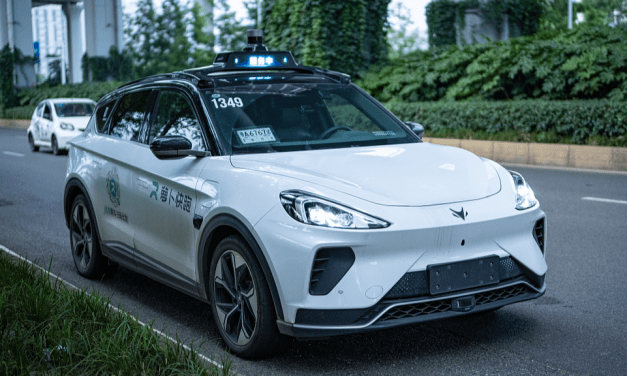
Uber is ramping up its investment in autonomous vehicle technology, launching its driverless robotaxi service in Abu Dhabi, the first of its kind in the Middle East. 

The announcement, made on Wednesday, is part of a joint venture with Chinese company and global leader in autonomous driving technologies, WeRide. The partnership was originally forged in September of 2024.  

Uber already offers robotaxi services in several US cities, including Austin, Phoenix, and Atlanta, through a partnership with Waymo, launched under Google’s Alphabet brand. The pair have also announced plans to enter Europe next year, beginning trials in London in 2026. 

Uber promises that riders will be able to book fully autonomous vehicles via the Uber app when requesting an UberX or Uber Comfort. Unlike the free autonomous trials that began operation back in December, these cars will not come equipped with an onboard safety operator. 

The news follows Uber and WeRide’s October announcement, which unveiled plans to begin a robotaxi service with safety operators on board in Riyadh, Saudi Arabia. 

Speaking in an interview with CNBC, CEO and co-founder of WeRide Tony Han discussed the company’s dual-pronged approach to autonomous innovation, saying:

“WeRide is the only autonomous driving company in the world taking both Tesla’s approach and Waymo’s approach. For Waymo’s approach, we use Level 4 robotaxis with HD maps and a traditional machine-learning framework — that part we have already put into operation. For Tesla’s approach, we have just rolled out WePilot 3.0, which is comparable to Tesla’s FSD (Full Self-Driving), and our ADAS system has already been installed in several of Chery’s mass-production passenger cars.” 

WeRide and Uber have also announced ambitious plans to scale up their robotaxi operations, with an expected 15 additional cities to be added within the next five years. 

According to WeRide’s own filings, their autonomous-vehicle products have received driving permits in eight countries: China, UAE, Singapore, Switzerland, France, Saudi Arabia, Belgium, and the US. 


Keep up-to-date with the latest mobility news by subscribing to MOVEMNT’s free newsletter


Pony.ai and Bolt launch strategic partnership to accelerate autonomy in Europe

Pony.ai and Bolt launch strategic partnership to accelerate autonomy in Europe

News

Europe’s transport and mobility landscape is edging closer to full automation, as Estonian ride-hailing giant Bolt announces a strategic partnership with Chinese autonomous driving specialist Pony.ai.

The collaboration marks a significant step toward introducing driverless vehicles to European roads and reshaping how urban mobility will function on the continent in the coming decade.

At the heart of the agreement is Pony.ai’s Level 4 autonomous driving system, a technology designed to handle all driving tasks independently within specific environments. Once integrated into Bolt’s platform, this system will power a new generation of autonomous ride services that aim to operate without human drivers under specific conditions.

Markus Villig, Bolt’s founder and CEO, spoke on the benefits of autonomous technology:

“Autonomous vehicles will transform how people and goods move around, and Bolt is proud to partner with Pony.ai as the company scales its autonomous driving technology,”

Rather than rushing straight into large-scale deployment, the two companies plan a phased approach with initial trails focusing on real-world testing, rigorous safety assessments, and refining the passenger experience. This methodical rollout reflects the complexities of launching self-driving services in a region known for strict regulatory oversight and demanding safety standards.

Although no exact timeline has been confirmed, the first autonomous vehicles are expected to appear in selected cities across both EU member states and other European nations. The objective is to expand gradually while ensuring compliance with local regulations and maintaining high safety benchmarks.

Chinese autonomous technology firms are increasingly turning their attention to Europe as access to the US market becomes more challenging. Pony.ai already operates extensive driverless robotaxi services in major Chinese cities, supported by substantial fleets of autonomous cars and trucks, and now sees Europe as a key growth territory.

Additional autonomous driving companies have also set their sights on Europe as the next battle-ground for autonomous acceleration; Waymo announced they will be beginning autonomous fleet trials in London in 2026, whilst Uber and Chinese autonomous vehicle start-up Momenta unveiled they would start testing robotaxis in Germany next year.

Bolt and Pony.ai’s strategic partnership underscores the growing momentum behind autonomous transport in Europe. With ongoing political and regulatory uncertainty in the U.S., Europe may now position itself as a key player in defining the direction of autonomous mobility on the global stage.


Keep up-to-date with the latest mobility news by subscribing to MOVEMNT’s free newsletter


AI, Captain! Investing in mobility innovation with Tim Draper, Michael Ronen and Raymond Zheng

AI, Captain! Investing in mobility innovation with Tim Draper, Michael Ronen and Raymond Zheng

Venture capitalist legend, Tim Draper was joined on the Keynote stage by Raymond Zheng and Michael Ronen to discuss how AI is changing the investment landscape.

The panellists discussed the rise of AI in the mobility sector, contextualising 2025 as a technological precipice which would usher in big changes in the both the world of manufacturing, in-car experience and city design.

Each speaker discussed their own take on where the next big investments lie, citing the importance of investing in future-looking technologies.

With the help of Pete Bigelow’s moderation, the three panellists debated the ideas of the “AI Bubble” and the “AI Hype Curve”, distinguishing solid investments as those that combat real consumer needs, such as relieving people of mundane or unsafe labour.

The discussion concluded with a consensus that, for companies to succeed in the sector, they must be thinking at least 15 years ahead.

Watch the full Keynote panel discussion below.


Keep up-to-date with the latest mobility news by subscribing to MOVEMNT’s free newsletter