Author: Eve Stevens

Tesla forced to drop “Autopilot” branding in California after “misleading” marketing ruling

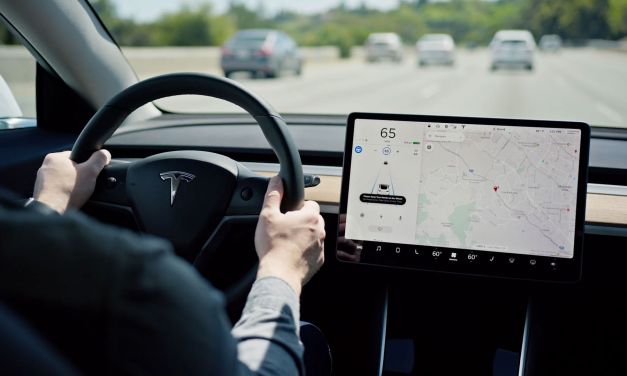
Tesla has removed the term “Autopilot” from its marketing campaign in order to comply with Californian regulators. The electric vehicle and robotics group found itself in hot water last December after the California Department of Motor Vehicles deemed its Autopilot feature misleading to potential consumers.

Tesla’s Autopilot platform includes features such as Traffic-Aware Cruise Control and Autosteer, systems designed to assist drivers with tasks like braking, steering, and accelerating, but they do not equip the car with fully autonomous capabilities, as the name may suggest.

Read More

Brussels to require 70% EU content for subsidised EVs under “Made in Europe” mandate

In a bid to stave off Chinese competition, Brussels is introducing a “Made in Europe” mandate ensuring that at least 70% of new electric vehicle components are manufactured in the EU.

The Industrial Accelerator Act will be published by the European Commission in March; however, the following predictions are based on a draft report seen and reported on by the Financial Times this week.

Read More

Affordable EVs offer lifeline for automakers amid market slowdown

As many global automakers roll back on their EV strategies in the face of an industry slowdown, the global market is showing a strong preference for affordable EVs over more expensive models.

After the end of the US federal subsidy and the Trump administration’s reversal of EV-friendly legislation, many automakers are suffering heavy losses as the market pivots away from pure EVs and back to hybrid and ICE vehicles.

Yet, in spite of this trend, cheaper EV models have proven to be a lifeline for automakers placing their bets on electric vehicles.

Read More

New report suggests software defined vehicle market will soar to almost $2,000 billion USD by 2034

The global automotive industry is entering a new phase of digital transformation, with software increasingly defining how vehicles operate, evolve and relate to the consumer. 

A new study from Allied Market Research forecasts that the software defined vehicle (SDV) market will expand dramatically over the next decade, reaching an estimated $1,902.9 billion USD by 2034. 

Read More

China’s EV sales fall for the first time in 2 years

Government subsidies and cheap manufacturing costs have long given Chinese automakers a competitive edge when it comes to EV production, facilitating the rapid expansion of manufacturers like BYD and Geely into overseas markets.

This seemingly unstoppable growth now appears to be showing signs of waning, following an announcement from the China Passenger Car Association reporting a fall in electric vehicle sales for the first time since February 2024.

Read More

Lyft follows in Uber’s footsteps, launching new ride-hailing app for teens

American ride-hailing company Lyft has announced the launch of its own teen account service, allowing minors as young as 13 to hail a taxi without an adult present.

Lyft currently has 25 million active riders and coordinates 9 million rides per day across the US, Canada, and Europe, making it the second-largest ride-hailing service in the U.S. after Uber.

The group’s teen service, launched on Monday, has rolled out in over 200 U.S. cities, including Boston, Chicago, and New York.

Read More

UN draft agenda on autonomy promises a unified approach to global self-driving regulation

As autonomous innovation accelerates towards widespread deployment and robotaxis roll out in record numbers, global regulation has historically lacked a clear or decisive approach. Instead, countries have determined their own legislation, resulting in a patchwork of fragmented regulation across geographies.

By 2030, Boston Consulting Group predicts there will be over 2.5 million robotaxis in commercial operation. If the world is to respond to this increasing demand, many sceptics have called for a more unified global strategy.

Read More

General Motors bets on unproven battery technology in a bid to drive down EV costs

In a bid to leapfrog EV competition, automaker General Motors is betting on an unproven battery technology: LMR, or lithium manganese-rich prismatic cells in its latest EV strategy.  

Originally discovered in the 1990s, LMR is a cathode chemistry that requires reduced levels of rare-earth materials such as cobalt and nickel, instead utilising manganese, a much cheaper and more abundant material. Theoretically, the technology promises higher levels of energy density at a reduced cost. 

Read More

Mark Carney unveils Canada’s revised automotive strategy, scrapping EV mandate

On Thursday, Canadian Prime Minister Mark Carney unveiled a revised national automotive strategy that has set a brand new course for Canadian electrification. Announced against the backdrop of rising trade tensions and mounting pressure from U.S. tariffs, the plan represents a shift in how Ottawa hopes to guide the country’s transition to electric mobility.

Read More

German EV makers race ahead of Chinese imports in domestic sales

Germany has long held the title of Europe’s largest and most significant automotive market, with a rich history of manufacturing and vehicle production. As the birthplace of well-loved legacy brands such as Audi and Volkswagen, the automotive sector continues to make up a significant share of Germany’s overall GDP—around 5%.

It is perhaps this legacy that explains why Germany’s domestic brands continue to outpace international competition in electric vehicle sales, led by brands like Volkswagen—currently the country’s leading EV seller—followed by BMW.

Read More

China becomes first country to ban retractable car handles over safety concerns

China is set to become the first country to ban retractable door handles on passenger vehicles. The trend, popularised by EV makers seeking sleek silhouettes and improved aerodynamics, has raised safety concerns amongst vehicle legislators.  

The new safety standards were announced by the Ministry of Industry and Information Technology (MIIT) and will take effect in 2027.

Read More

Tesla strips 2 models from its line-up in physical AI pivot

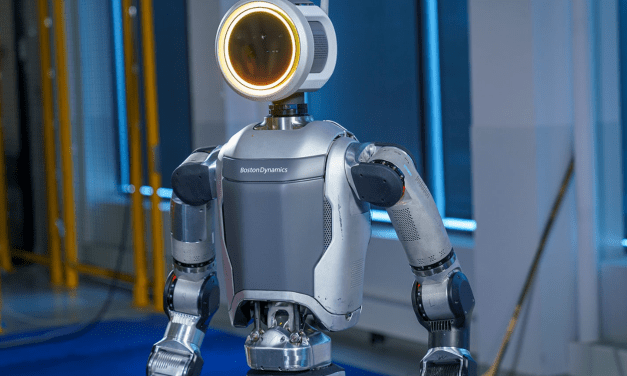
Where Tesla was once considered the leader in the electric vehicle revolution, the group, headed by billionaire Elon Musk, has announced that it is broadening its focus, pivoting towards physical AI and robotics.  

This decision comes following news that the group had conceded its crown as the biggest global seller of EVs to Chinese rival BYD. However, Musk’s bet on artificial intelligence and humanoid robots may not have paid off just yet, as the company reported its first annual decline in revenue.  

Read More

The charge point shortfall: Can the UK build charging infrastructure fast enough for 2030?

EV sales soared to a record high in Europe in 2025, with electric vehicle sales up by 30%. In the UK, the story is much the same, with EV sales surpassing petrol vehicle sales in the month of December and tracking steady growth into 2026.

However, as the market moves towards electrification, analysts have warned that the UK must double the number of electric vehicle charge points it installs annually if it is to meet its 2030 targets.

Read More

Germany to invest €3bn in electric vehicle incentives

Germany is preparing to relaunch large-scale incentives for electric vehicles, signalling a concerted governmental effort to revive demand after last year’s slowdown. 

The federal government plans to allocate around €3bn to a new support programme that will run from the beginning of this year until 2029, aiming to put roughly 800,000 additional low-emission vehicles on the road. 

Read More

The physical AI revolution: How automakers are rethinking manufacturing in 2026

Conversations around AI are dominating the tech and automotive industries as companies rush to integrate efficiency-boosting AI systems into their manufacturing processes. For many of us, our first introduction to AI is likely to have been through large language models like OpenAI’s ChatGPT or Google’s Gemini. 

Now, in 2026, the industry is pivoting from a software-focused approach to a hardware-driven one, moving towards physical applications such as robotics and advanced automation. In this period of strategic change, the question remains: are automakers reading for the physical AI revolution? 

Read More

Ford in talks with BYD to source batteries for hybrid models

Legacy OEM, Ford Motor is holding discussions with China’s BYD about a possible partnership that would allow the U.S. automaker to purchase batteries for some of its hybrid vehicle models. 

The talks are ongoing and remain fluid, with no guarantee that the two parties will arrive at a deal. The somewhat unlikely alliance could allow Ford to import batteries from BYD for use in vehicle production at factories located outside the United States.

Read More