News
In a move that could ease mounting pressure on the global auto supply chain, China has announced plans to grant export exemptions for certain semiconductor products made by Nexperia, the Dutch chip manufacturer caught in the crossfire of recent trade tensions.
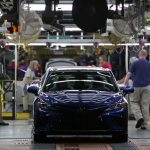
The decision, confirmed by China’s Ministry of Commerce on November 1, follows weeks of disruption in the automotive sector. The initial export ban forced Honda Motor Co. to temporarily halt production in North America and prompted warnings from other automakers about looming component shortages.
“We encourage enterprises encountering real operational difficulties to promptly reach out to the Ministry of Commerce or local trade authorities,” the ministry said in a statement posted online.
The announcement suggests a potential thaw in strained trade relations and offers cautious optimism for automakers that depend on Nexperia’s chips, which are used in a wide range of vehicle systems, from engine control units to infotainment hardware.
Global ripples and the impact of trade tensions
Nexperia, headquartered in Nijmegen, Netherlands, was acquired in 2019 by Wingtech Technology, a Chinese electronics company. The firm maintains major operations across Europe, Asia, and the United State but its testing and packaging facilities in China play a critical role in its supply chain.
In late September, the Dutch government seized control of Nexperia’s assets, citing national security concerns and the need to safeguard semiconductor availability for European industries. Beijing swiftly retaliated on October 4 with an export ban on Nexperia’s Chinese-made chips, triggering widespread supply chain turbulence.
The stand-off exposed just how intertwined the global automotive and technology sectors have become. Even a single policy decision can ripple through multiple continents, halting production lines and upending logistics networks that rely on precise coordination.
Trade diplomacy in motion
Media reports suggest that discussions between Washington and Beijing helped pave the way for China’s partial rollback of the export ban. Sources familiar with the talks indicated that an agreement reached during the recent Trump-Xi summit may have influenced Beijing’s decision to ease restrictions.
While the Ministry of Commerce did not provide a specific timeline for when export exemptions will take effect, officials emphasized that eligibility will be determined on a case-by-case basis, considering each company’s operational circumstances.
“We will comprehensively assess the situation of affected enterprises and approve exports for those meeting the required conditions,” the ministry added.
A lesson in supply chain fragility
The Nexperia episode underscores how geopolitical decisions can instantly disrupt automotive production. As manufacturers push deeper into electrification and digitalization, the demand for advanced semiconductors continues to climb, making supply chain stability more vital than ever.
Industry analysts note that this latest easing measure could help restore some confidence among global automakers. Still, it also serves as a reminder that supply chain diversification and regional chip production are becoming strategic imperatives for transportation manufacturers worldwide.
Keep up-to-date with the latest mobility news by subscribing to MOVEMNT’s free newsletter