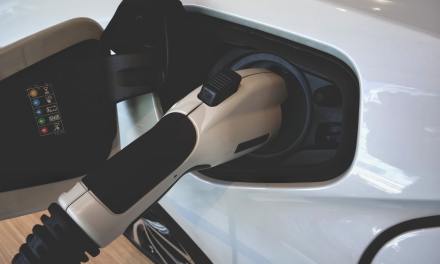
Decisionmakers at the European Parliament and members of the EU Council have announced that they have reached an agreement on a new law mandating a significant increase in electric vehicle recharging and hydrogen refueling stations across Europe’s main transport networks, aimed at enabling the transition to zero emission transport, and addressing consumer refueling concerns that could impede the switch to zero emission vehicles.
The agreement marks another step towards the completion of the European Commission’s “Fit for 55” roadmap” – the EU’s proposed strategy to cut greenhouse gas (GHG) emissions by 55% by 2030. This requires all new passenger cars and light commercial vehicles registered in the EU to be zero emission by 2035.
The proposed legislation sets requirements for publicly available charging infrastructure for cars and vans, based on the number of registered battery-electric cars in each member state, and for the deployment of fast-charging stations every 60 km along the trans-European transport network (TEN-T) by 2025, as well as for recharging stations dedicated to heavy-duty vehicles every 60 km along the TEN-T core network, and every 100 km on the larger TEN-T comprehensive network from 2025 onwards, with complete network coverage to be achieved by 2030, in addition to recharging stations at parking areas and delivery nodes.
The law will also require the deployment of hydrogen refueling infrastructure which will serve cars and trucks every 200km along the TEN-T core network by 2030.
The new legislation will also provide electricity at maritime ports and airports for vessels at berth and stationary aircraft.